Stargazing Conditions: Clear, Dark or Steady?
A cloudless forecast does not describe the whole observing sky. Compare darkness, clarity and stability, then choose a session suited to the conditions you actually find.

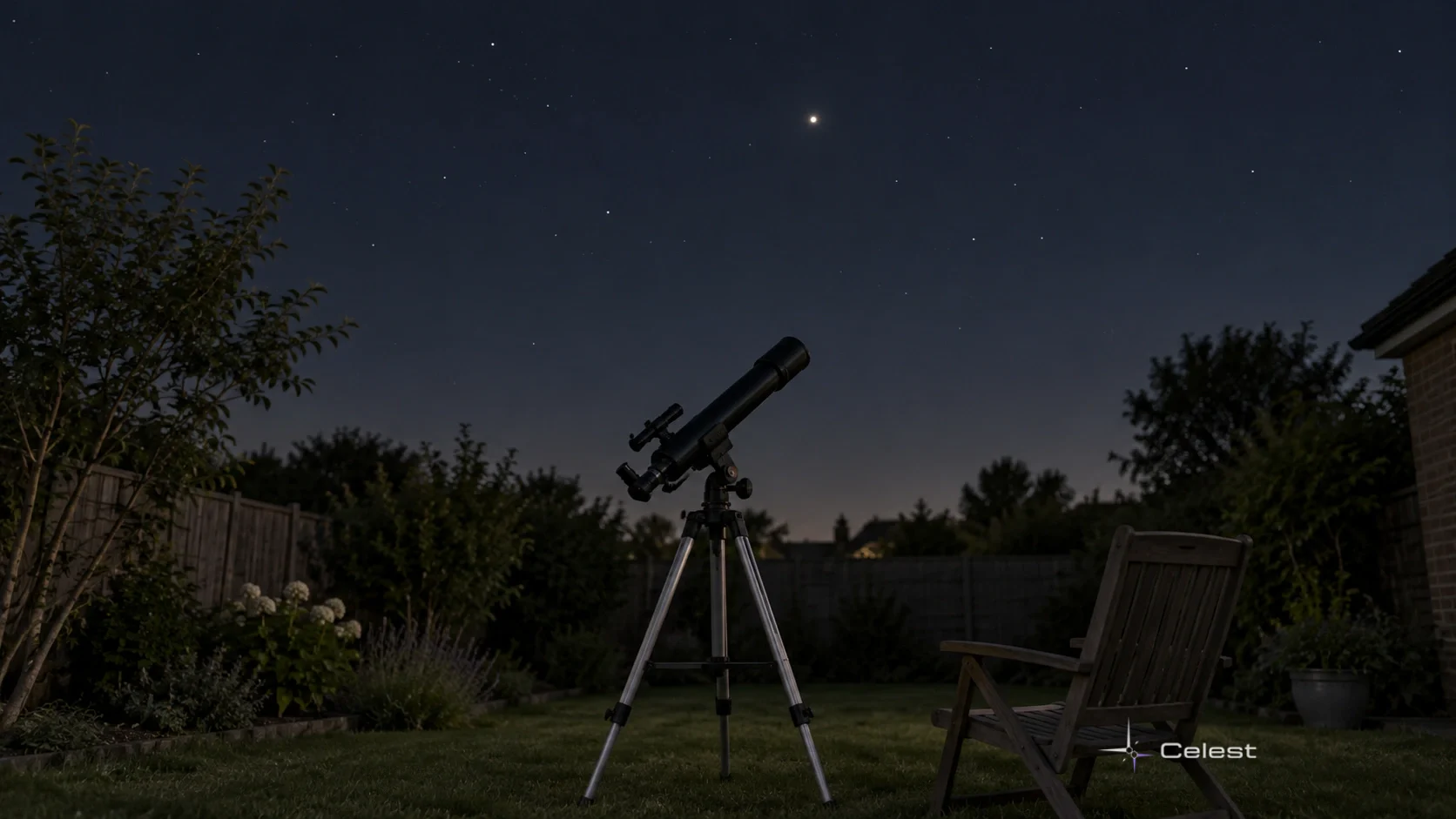
Good stargazing conditions are conditions that suit what you want to observe. You need a useful view of the sky, enough darkness for the chosen object and an atmosphere that transmits its light without excessive disturbance. A clear forecast is a starting point, rather than a complete verdict.
You can make a worthwhile decision with your eyes, a local forecast and a sky map. No telescope or specialist measuring instrument is needed for this first check.
Before You Go Outside
Choose a familiar, safely accessible place with a broad view. Then prepare these three things:
- One observing aim: a bright planet, a recognisable star pattern or a faint feature such as the Milky Way. They do not all need the same sky.
- The planned interval: compare the local observing conditions for the time you can actually be outside, including wind, temperature and any smoke.
- The relevant direction: use a sky map for your evening, set to your location and time, to identify where your chosen object should be.
If you are trying an unfamiliar site, inspect access and the surroundings during daylight. A short assessment close to home is more useful than making a long journey without knowing what the forecast means for your plan.
What Does a Clear Sky Leave Out?
Darkness, transparency and atmospheric stability describe different parts of the view.
Darkness concerns the background glow. Transparency describes how much incoming light makes it through the air: absorption and scattering can weaken it even when obvious cloud is absent.
Haze, dust and pollutants can also make artificial skyglow more noticeable. A sky can therefore look open while faint stars remain difficult to pick out. Looking toward a darker part of the horizon may give a different result from facing a distant city.
Stability matters in another way. Moving, turbulent air distorts the light and can make fine images waver or blur. Astronomers call this effect seeing. A dark background does not by itself tell you how steady a telescopic view will be.
These are separate checks, not competing names for clear weather.
Check the Sky in Five Steps
- Keep one aim in mind. Decide whether you want a broad star pattern or fine detail through an instrument. Use that aim for the rest of the check.
- Compare your time with the Moon. Look at the Moon’s phase and timing, including its local rise and set. A bright Moon present during your session can mask faint features.
- Read the local weather for that interval. Consider the pattern of cloud, wind and smoke rather than one general daily icon. Recheck close to departure if the forecast is changing.
- Look along the planned direction. Move away from a lamp shining into your eyes and compare a bright recognised star with its fainter neighbours. Notice whether the background itself looks bright or the stars fluctuate rapidly.
- Match the session to the result. If faint detail is washed out, choose a brighter object or another interval. If an instrument shows a wavering image, allow for atmospheric disturbance rather than expecting a cloudless symbol to promise sharpness.
How Do You Know the Check Helped?
You should be able to describe a specific limitation and a sensible next action. “The Moon brightens this part of the sky” tells you more than “the night is bad.” It gives you a reason to change the object or the observing time.
A visual impression is not a measured seeing value. Telescope image quality also depends on the instrument, so a brief look does not uniquely diagnose every source of blur. Record what you notice without giving it false precision.
What If the Forecast and View Disagree?
- Fewer stars stand out than expected: check for a bright background, haze or smoke before deciding the map is wrong.
- Stars stand out, but fine images waver: atmospheric turbulence may be a limitation even in a dark, open sky.
- One direction looks much brighter: compare the light dome with another part of the sky, then choose an object in a more favourable direction if available.
- The forecast looked better than the local view: treat the sky outside as a fresh observation. A model describes an area and can miss local changes.
What Is a Useful Result on an Imperfect Night?
A useful result is a session matched to the sky you actually have. Learning a large star pattern can still be worthwhile when a faint feature fails to emerge. Another night may offer the steadier view needed for small detail.
Professional observatories also match observations to different atmospheric requirements.
The beginner version follows the same practical idea: instead of asking whether the whole night deserves one score, ask which observation the present sky can support.
Leave a comment
Comments appear after moderation.