Keep the sky close

Add Celest to your Home Screen and open your astronomy calendar in one tap.

The automatic install prompt is not available right now. You can use your browser's menu instead.

  1. Look for Install in your browser

    In Chrome or Edge, use the install icon in the address bar or the browser menu. In Safari on Mac, choose File → Add to Dock.

  2. Confirm Add or Install

    If your browser does not offer installation, you can bookmark Celest instead.

The Celest journal

Stories about the sky and universe.

Sky events, practical guides and clear explanations.

Explore by topic

Latest stories

Newest first
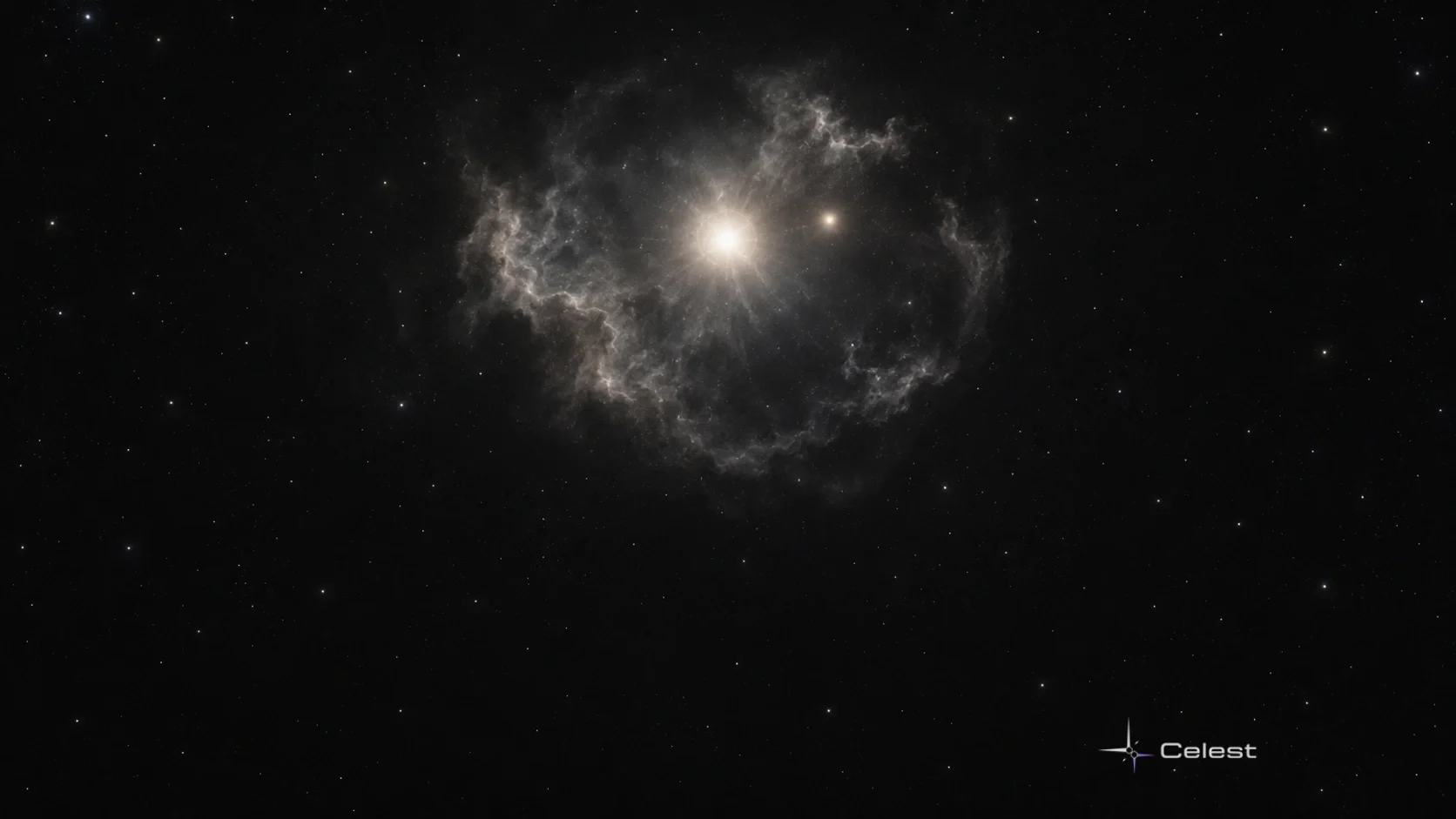
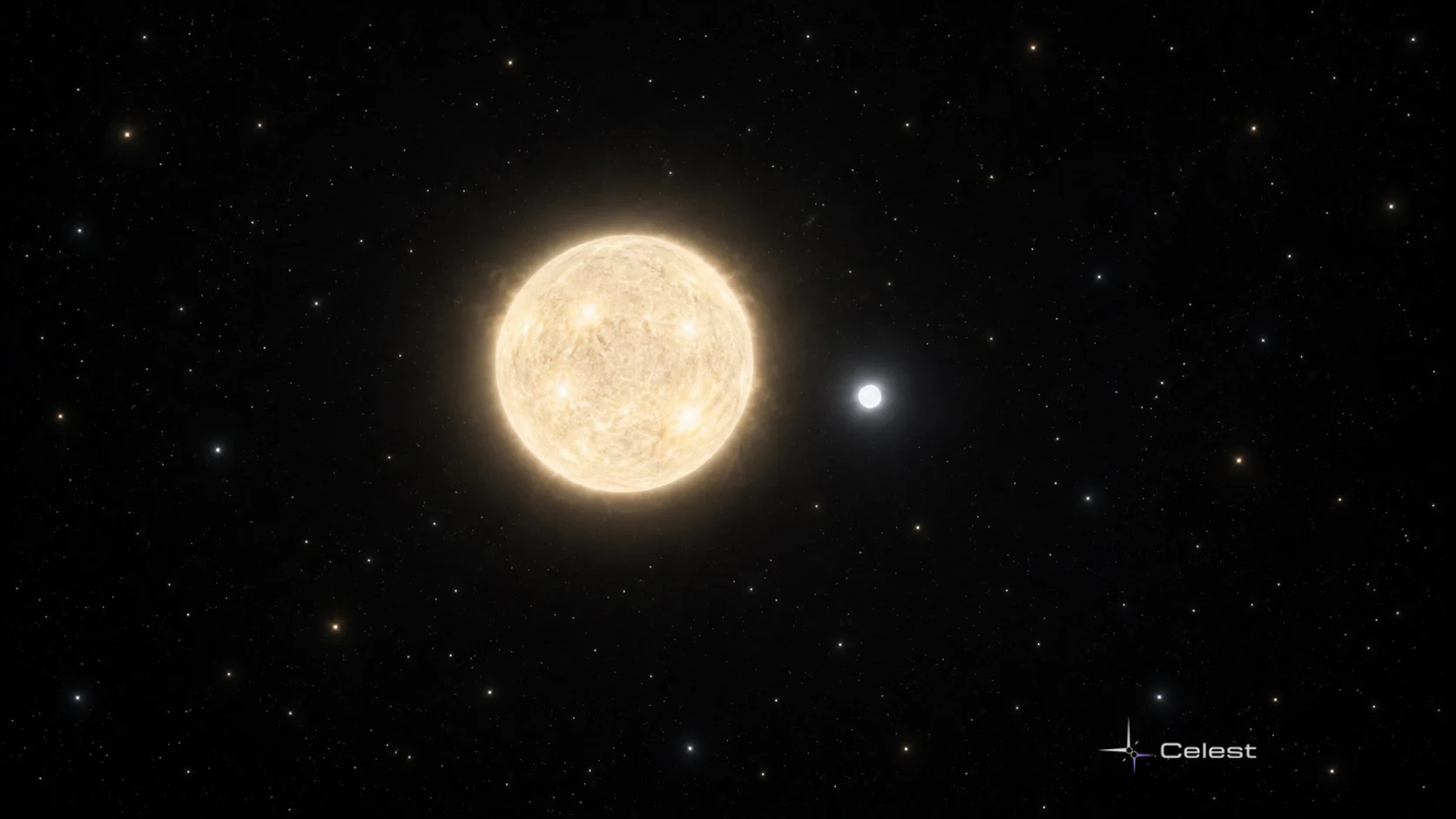
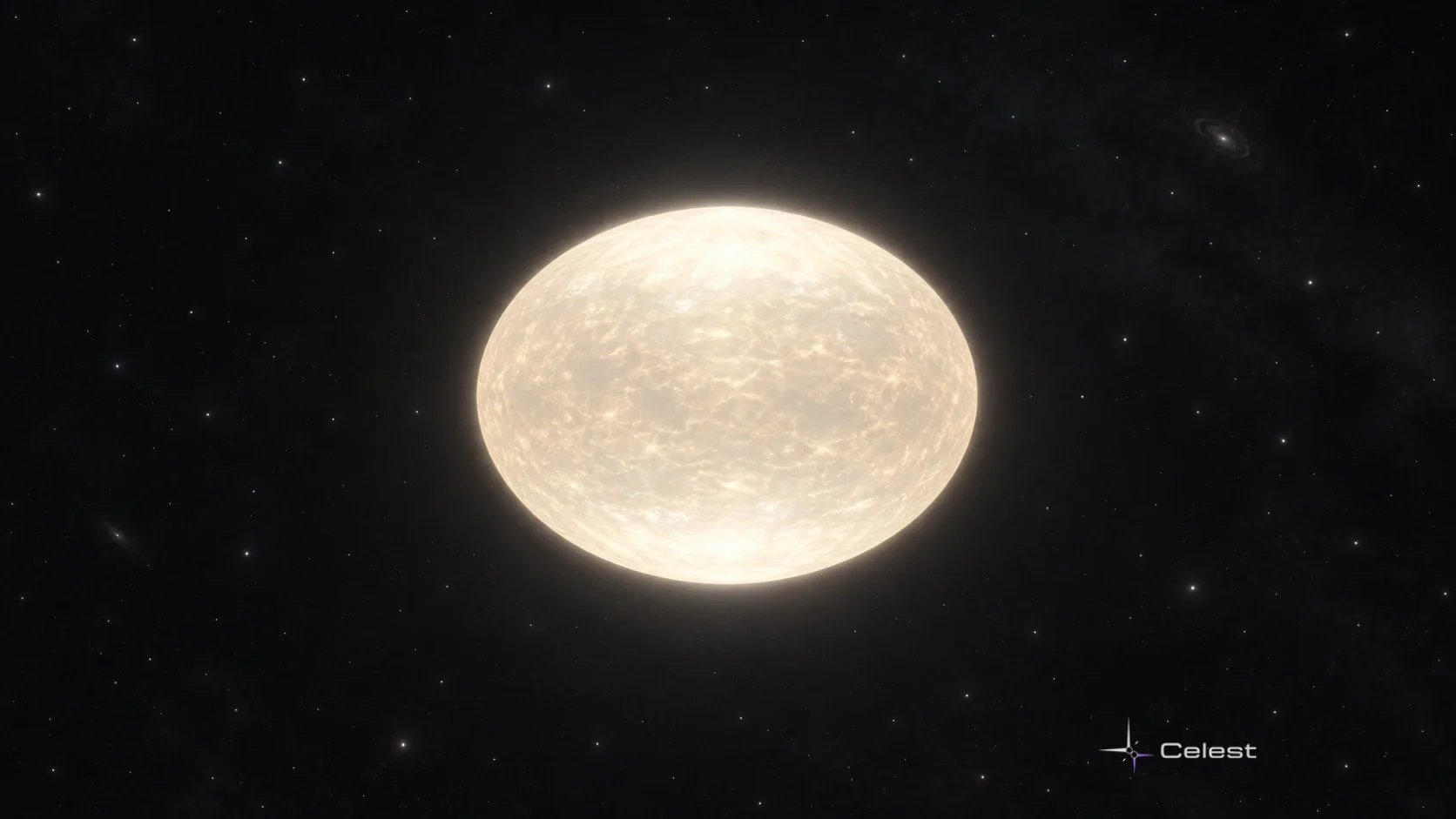
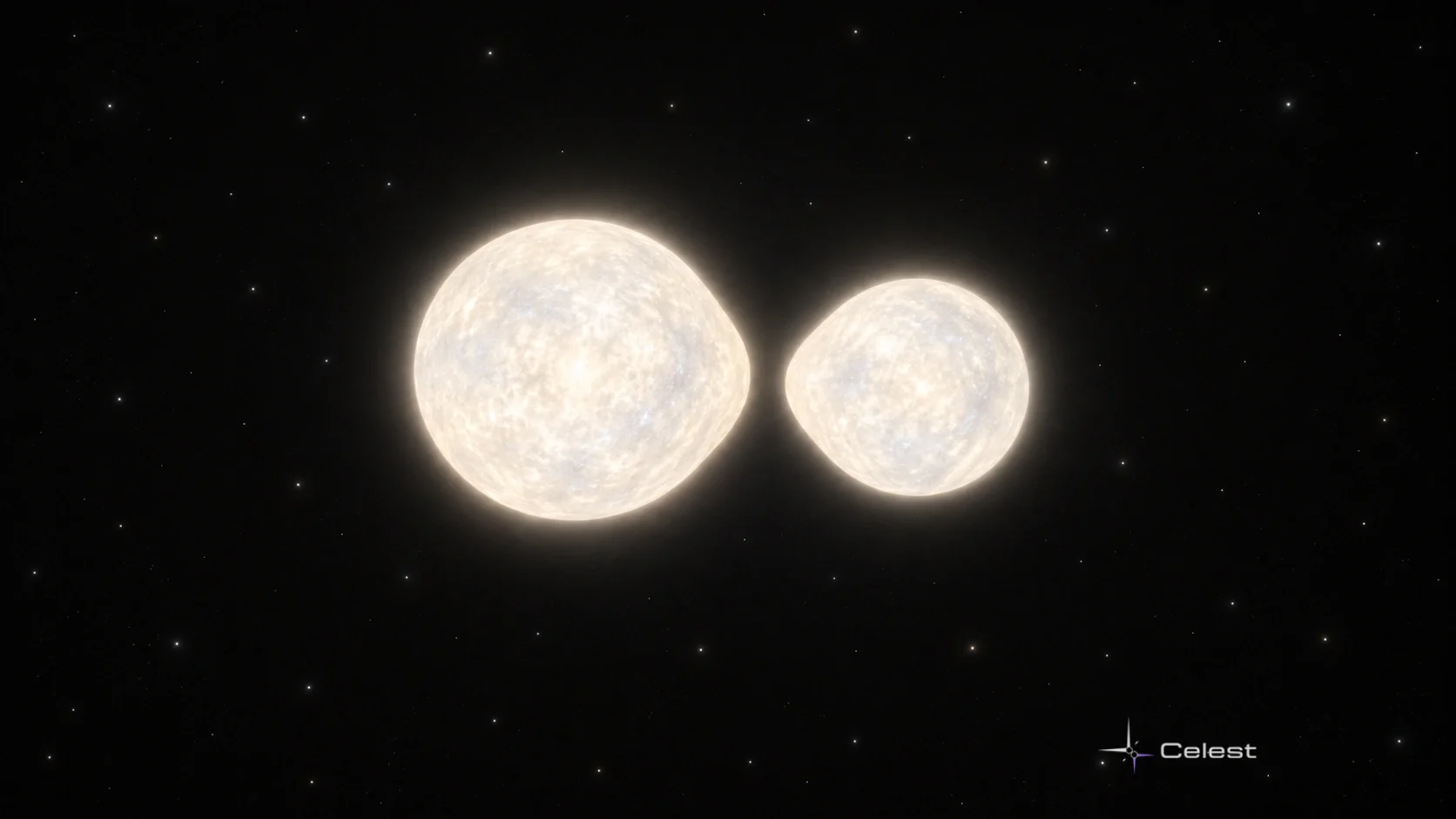
Conceptual view of two close pale blue-white stars with subtle tidal shape distortion against restrained dark space.
Stars & Deep Sky

Spica: Two Hot Stars That Reflect Each Other’s Light

The bright landmark of Virgo is two hot stars completing an orbit in about four days. Their mutual gravity changes their shapes, and a small reflected-light signal offers another way to study the pair.

3 Nov 2026 · 5 min read
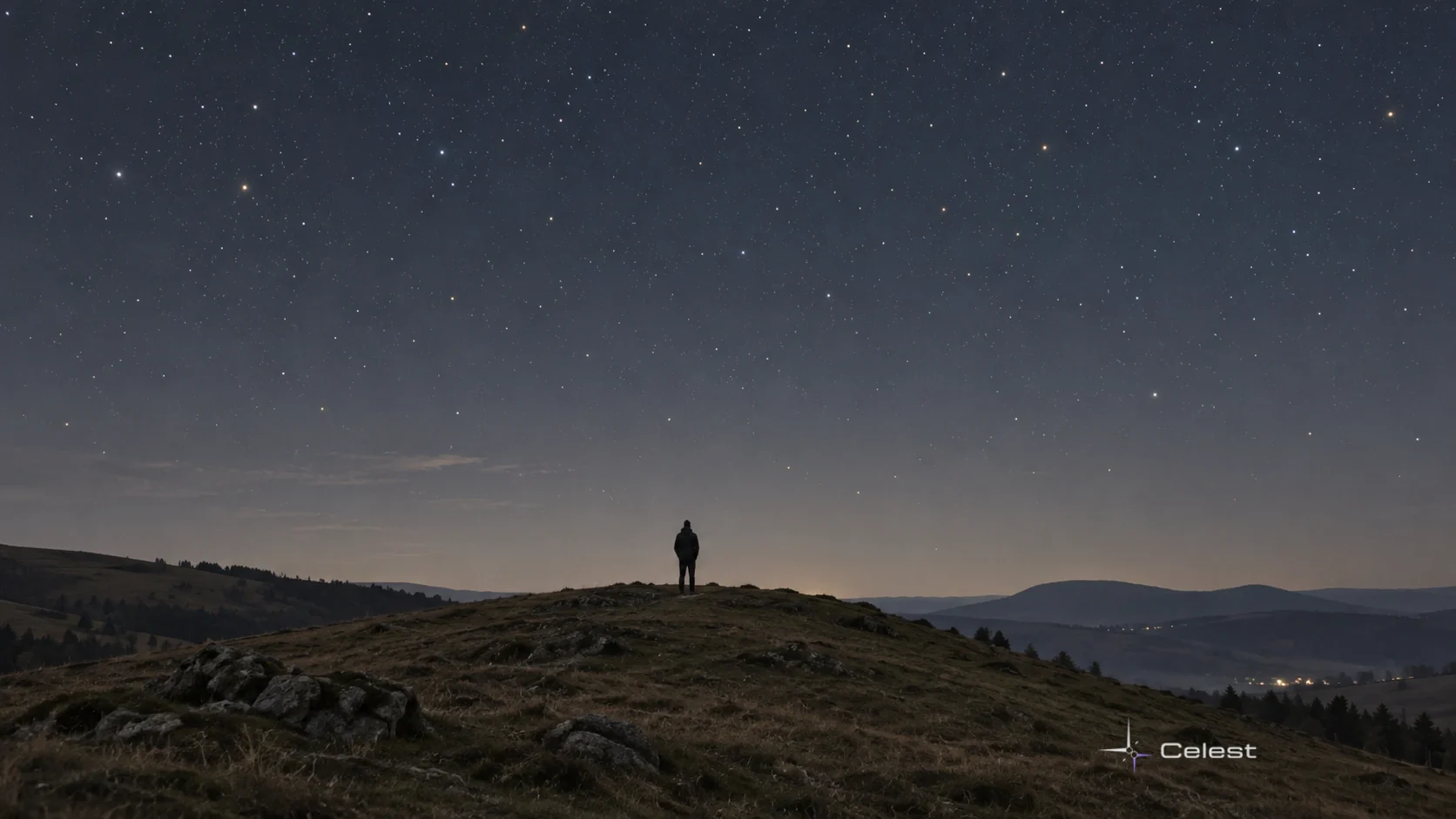
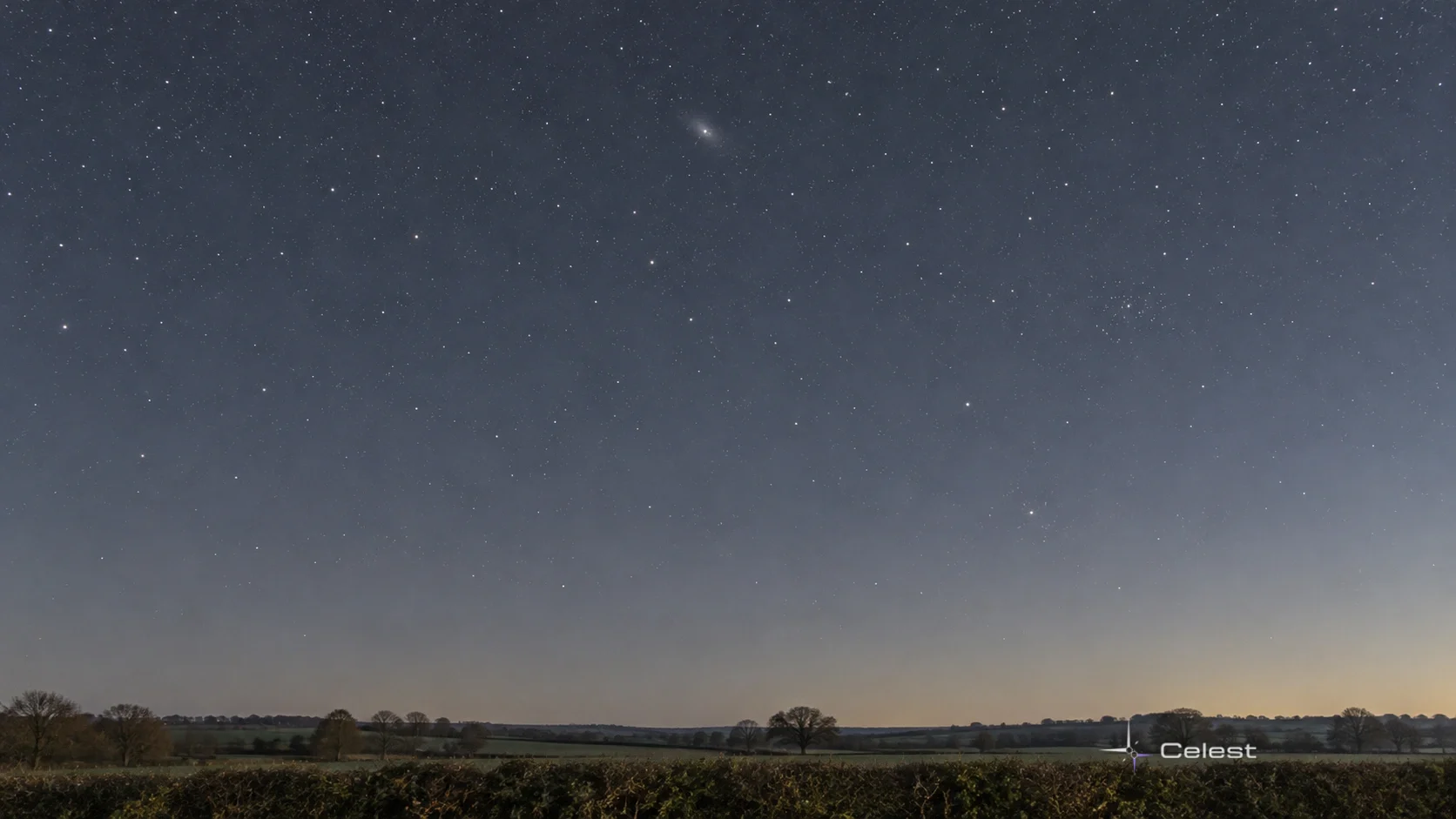
An ordinary observer under a broad subdued night sky with a few modest bright stars and low distant hills.
Observing Guides

Stargazing Without a Telescope: Your First Clear Look

Your first observing session can begin with a few bright points and a familiar shape. Learn a simple route, protect your night vision and set realistic expectations for what you will see.

3 Nov 2026 · 4 min read
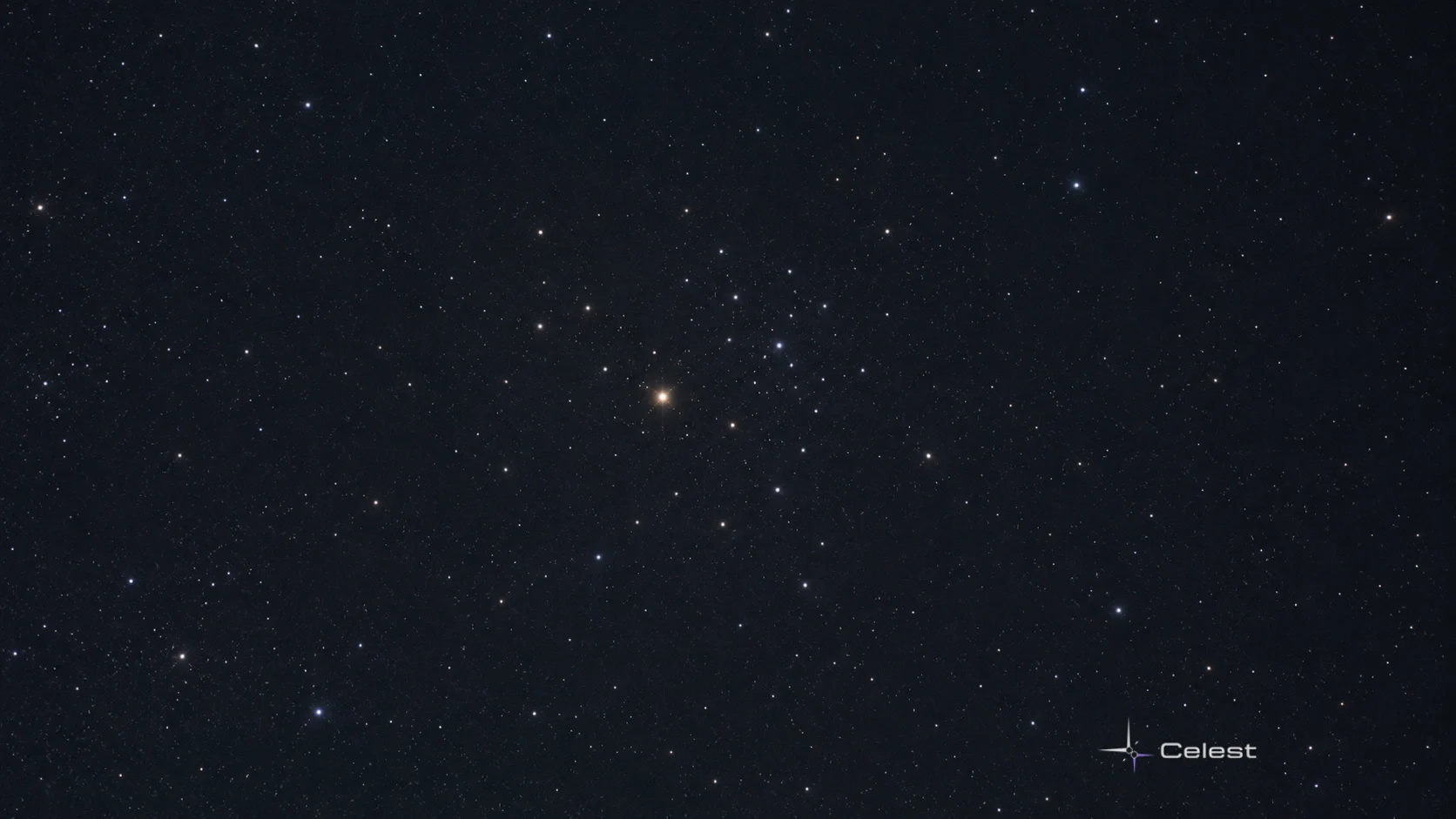
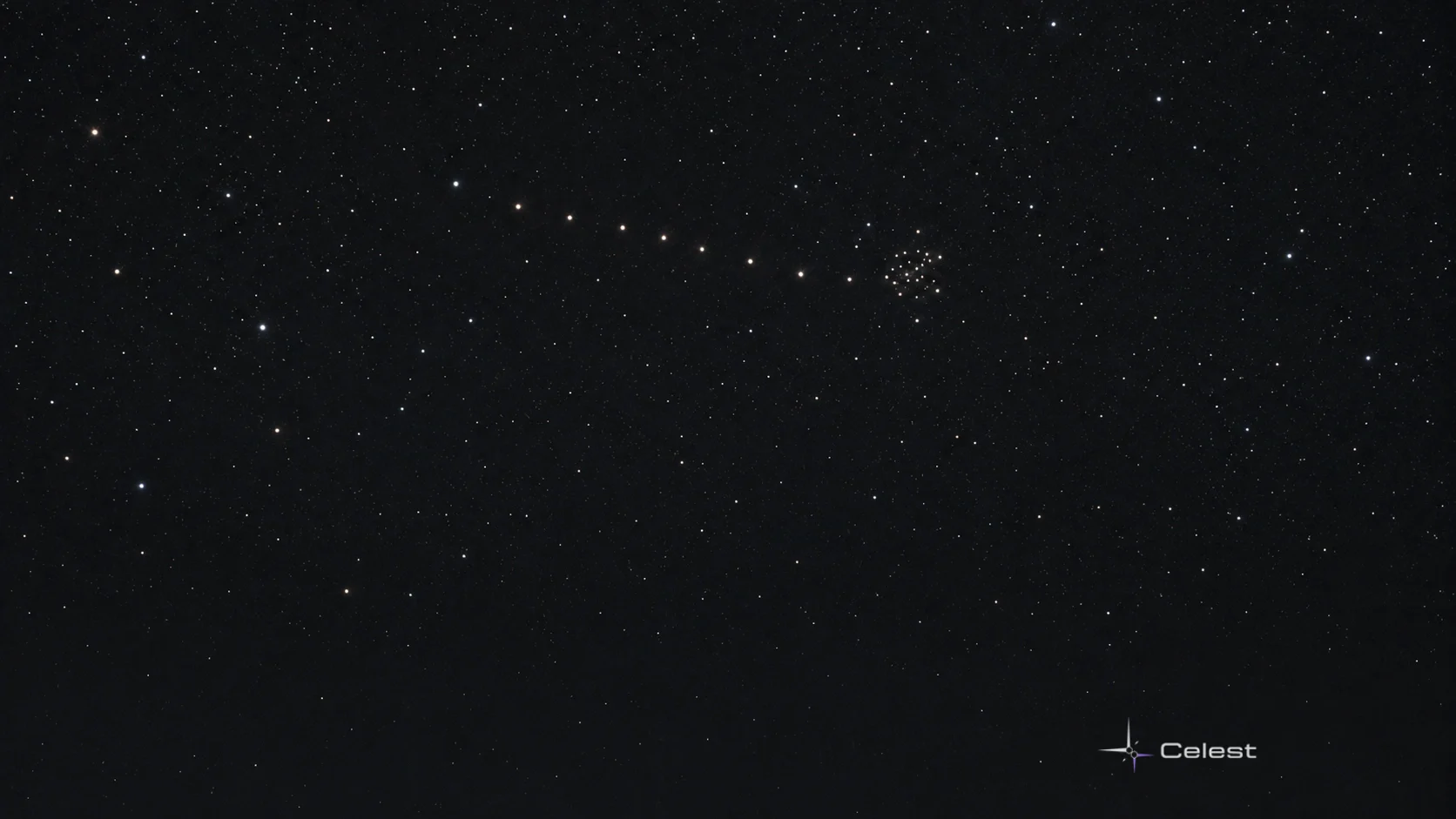
A subdued conceptual stellar field with a loose row of small pale points beside a modest open-cluster concentration, without exact Kemble’s Cascade positions.
Stars & Deep Sky

Camelopardalis Constellation: A Cascade of Stars

The Giraffe has few bright naked-eye landmarks, but binoculars uncover a striking chain of stars. A compact cluster, a spiral galaxy and the remnants of a stellar eruption add different physical stories behind the apparent pattern.

3 Nov 2026 · 5 min read
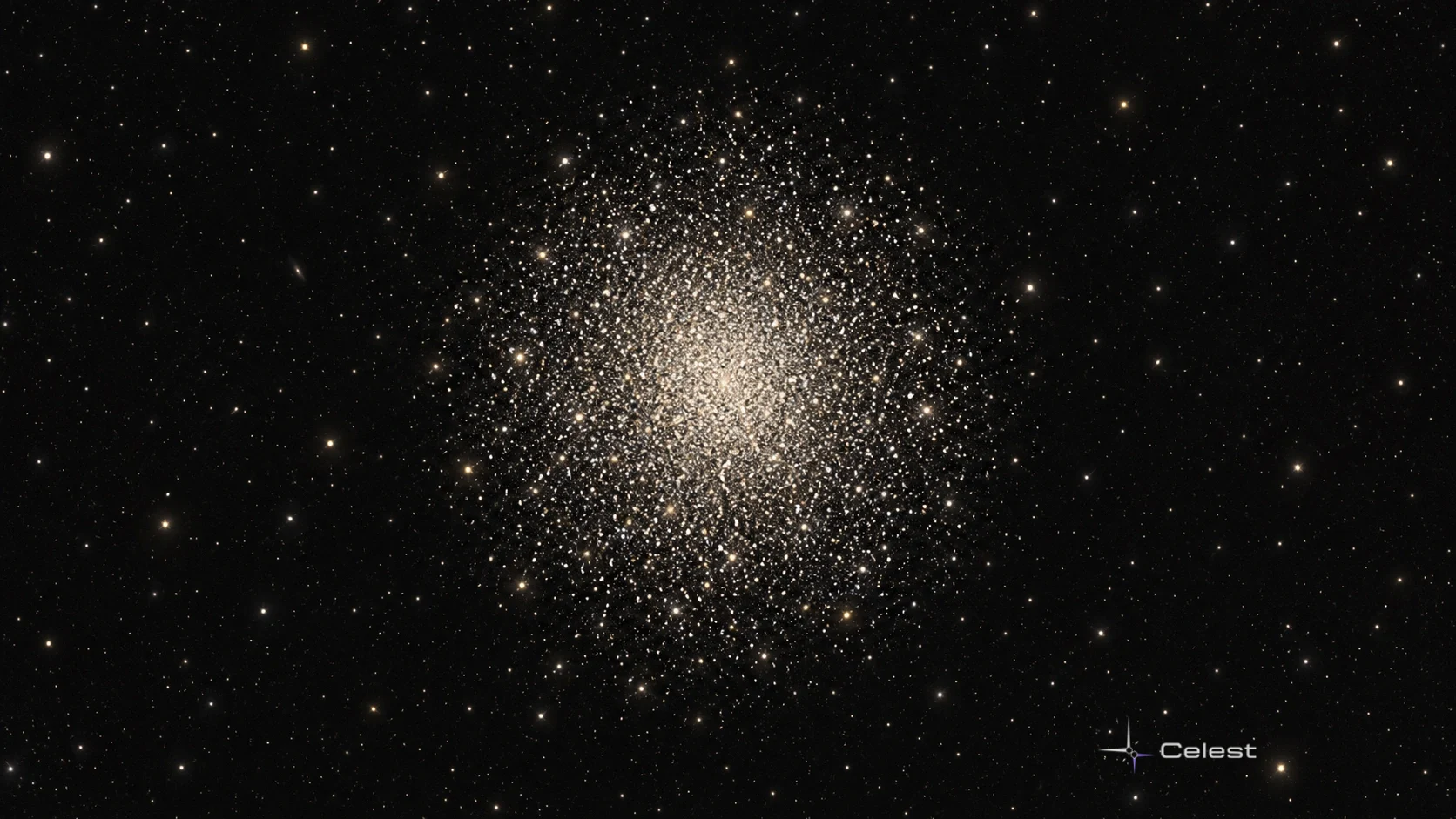
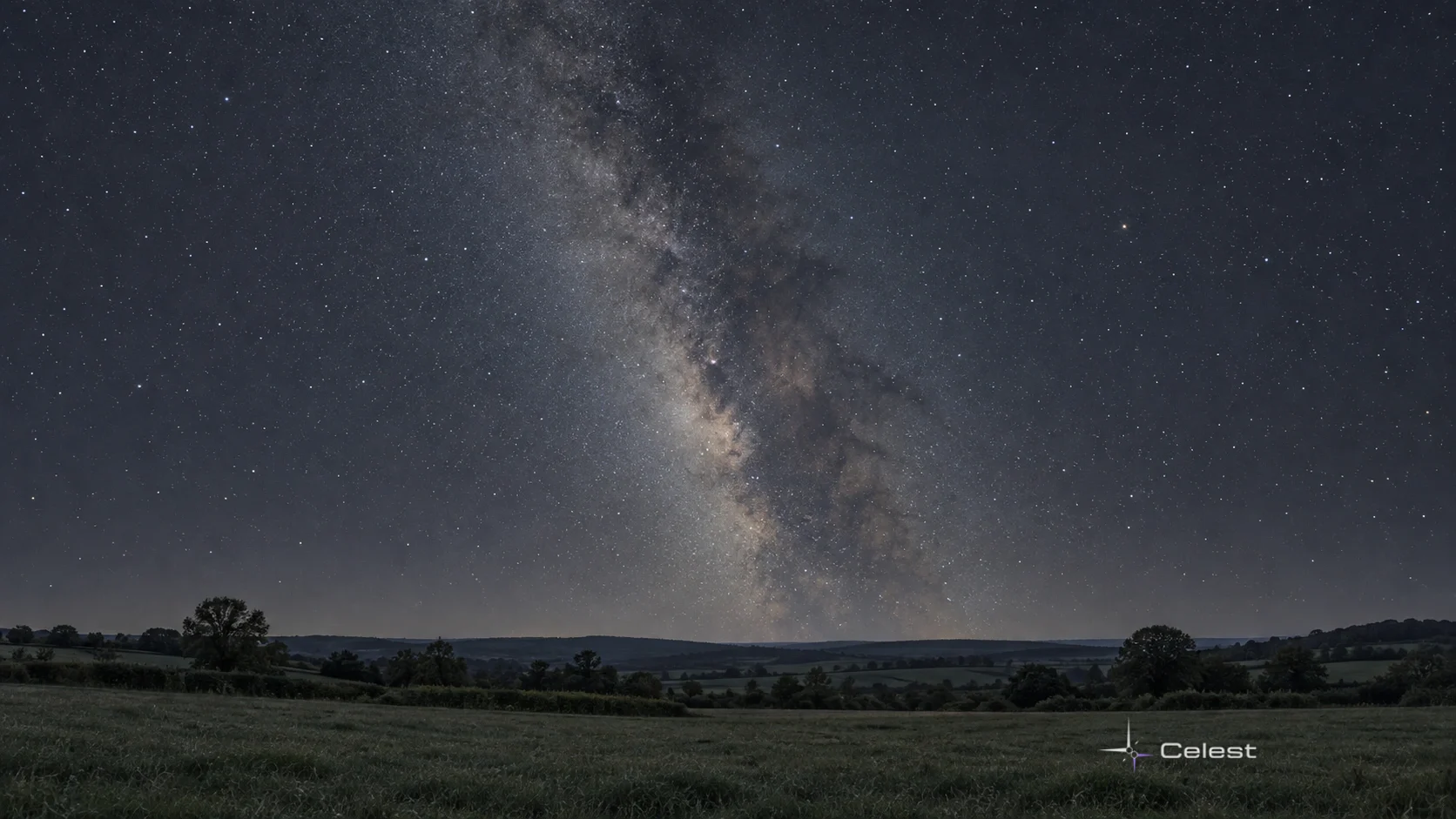
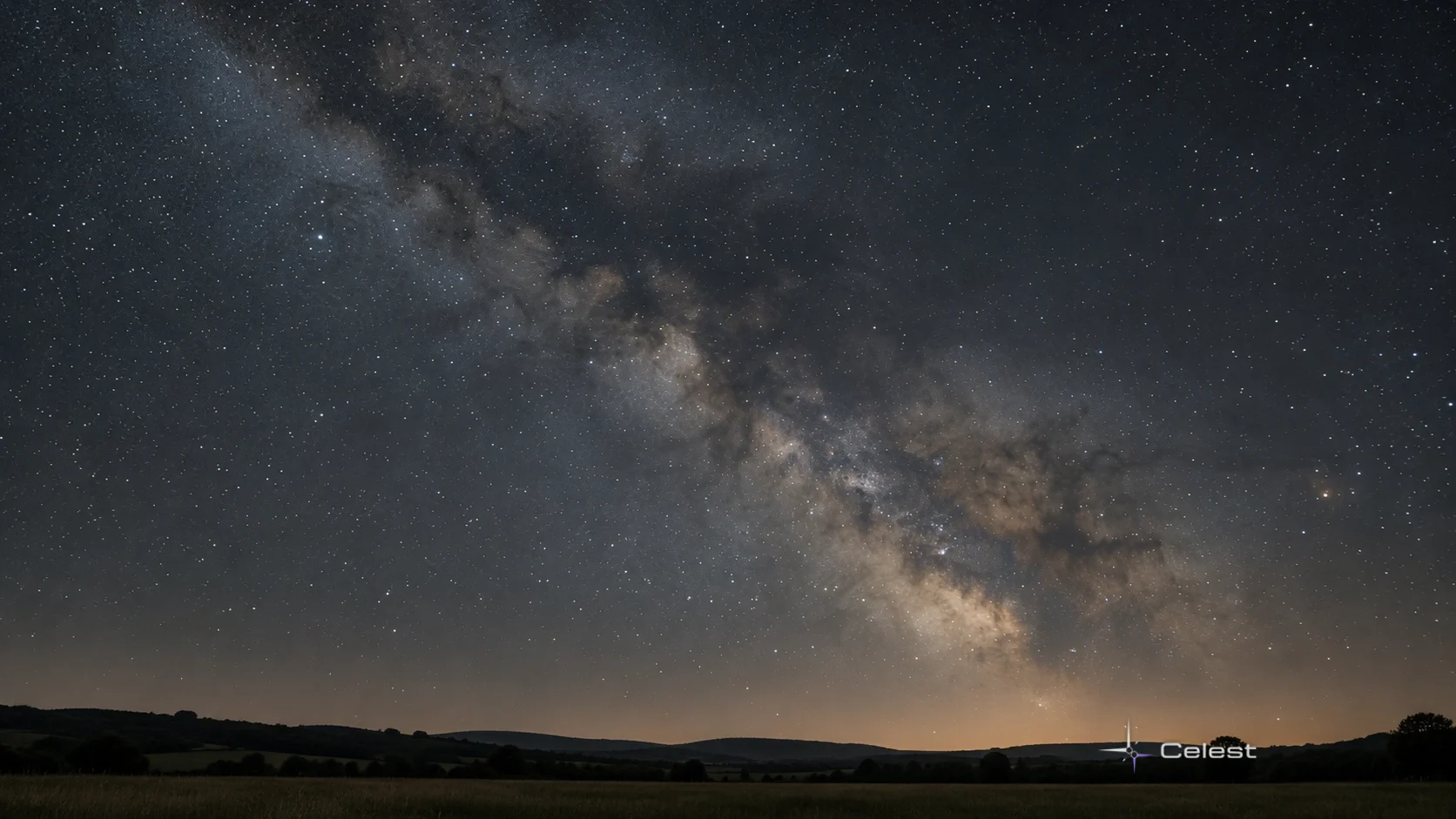
A restrained pale Milky Way band and irregular dark dust patches above a low rural horizon.
Stars & Deep Sky

Milky Way: Our Galaxy Seen From Within

The pale band across a dark sky is part of the galaxy we live in. Its dark patches are often clouds hiding background starlight, and those same clouds can become bright subjects for infrared telescopes.

3 Nov 2026 · 5 min read
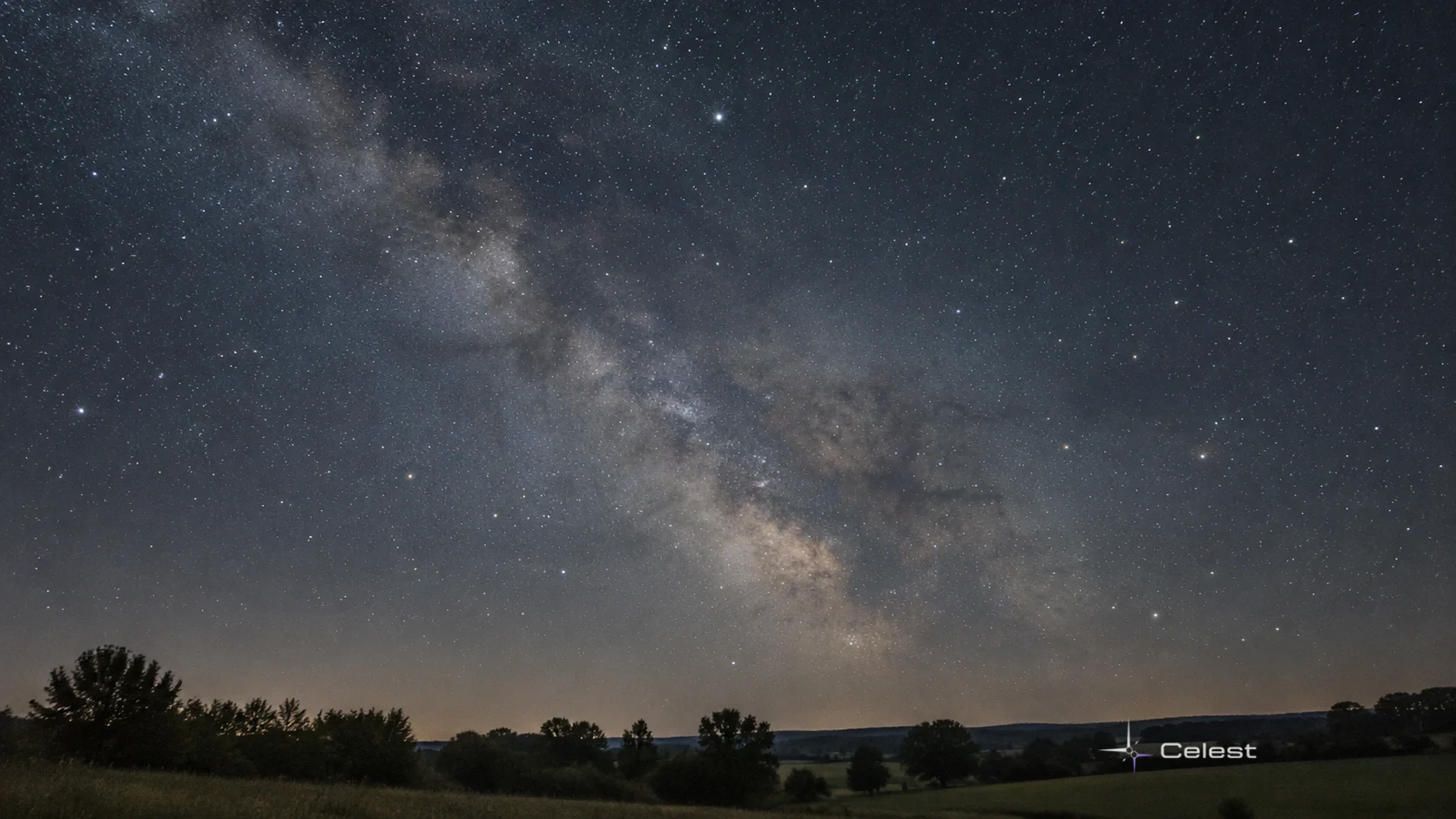
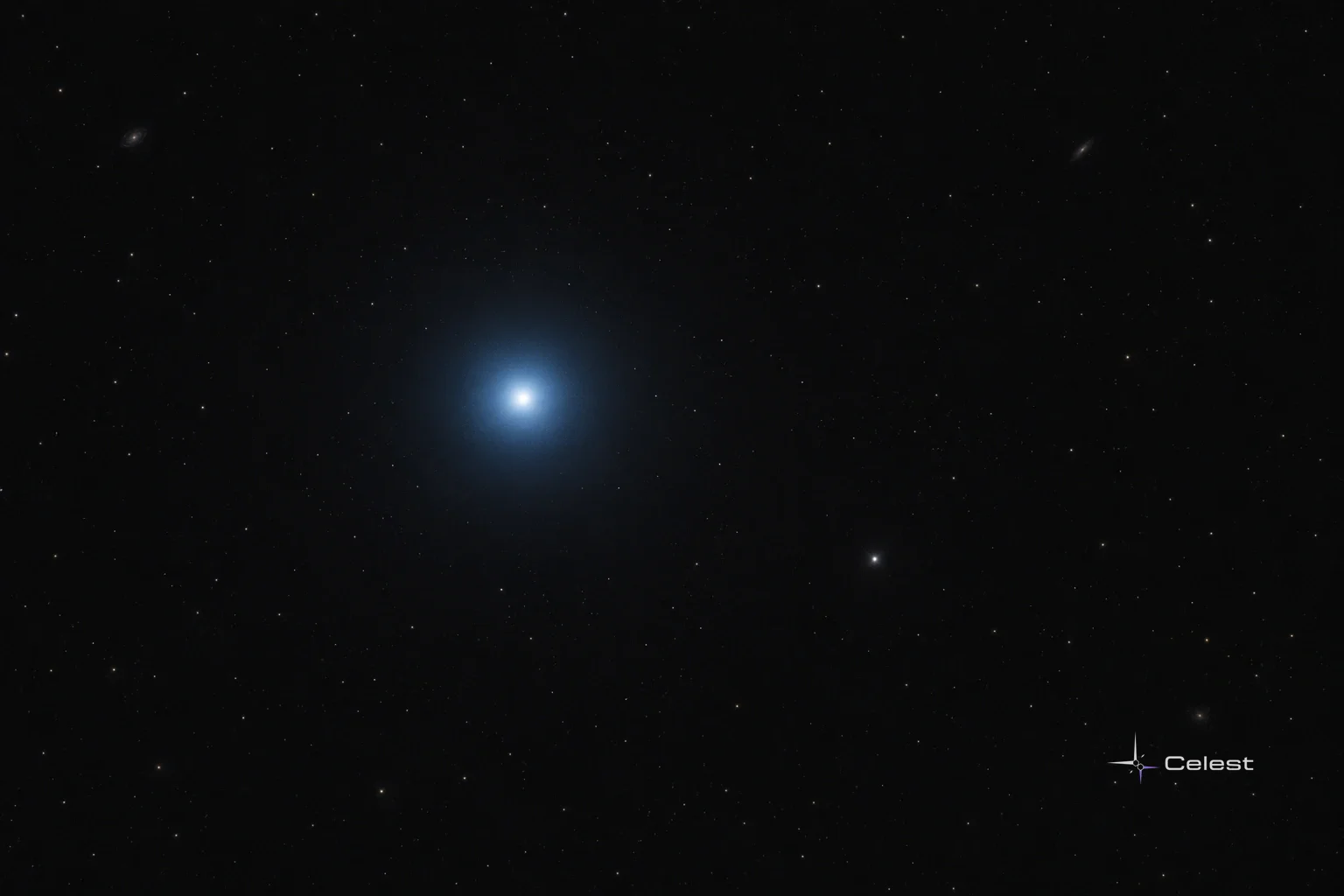
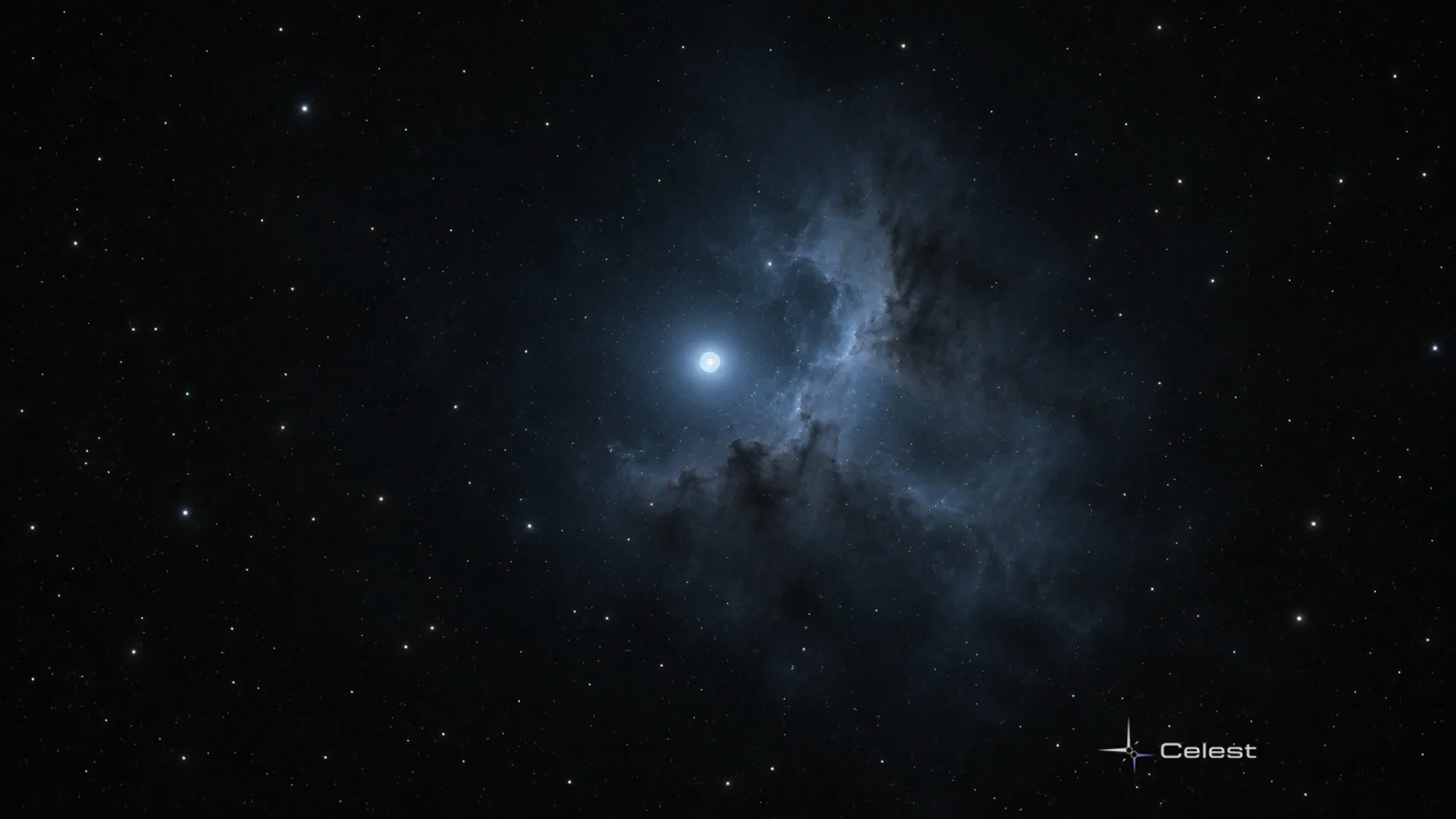
Conceptual view of a bright blue-white star and a much fainter companion against a sparse star field.
Stars & Deep Sky

Sirius: The Brightest Star Has a Hidden Companion

The brilliant star below Orion is easy to notice. Separating its faint companion is much harder, and that contrast tells two very different stellar stories.

2 Nov 2026 · 4 min read
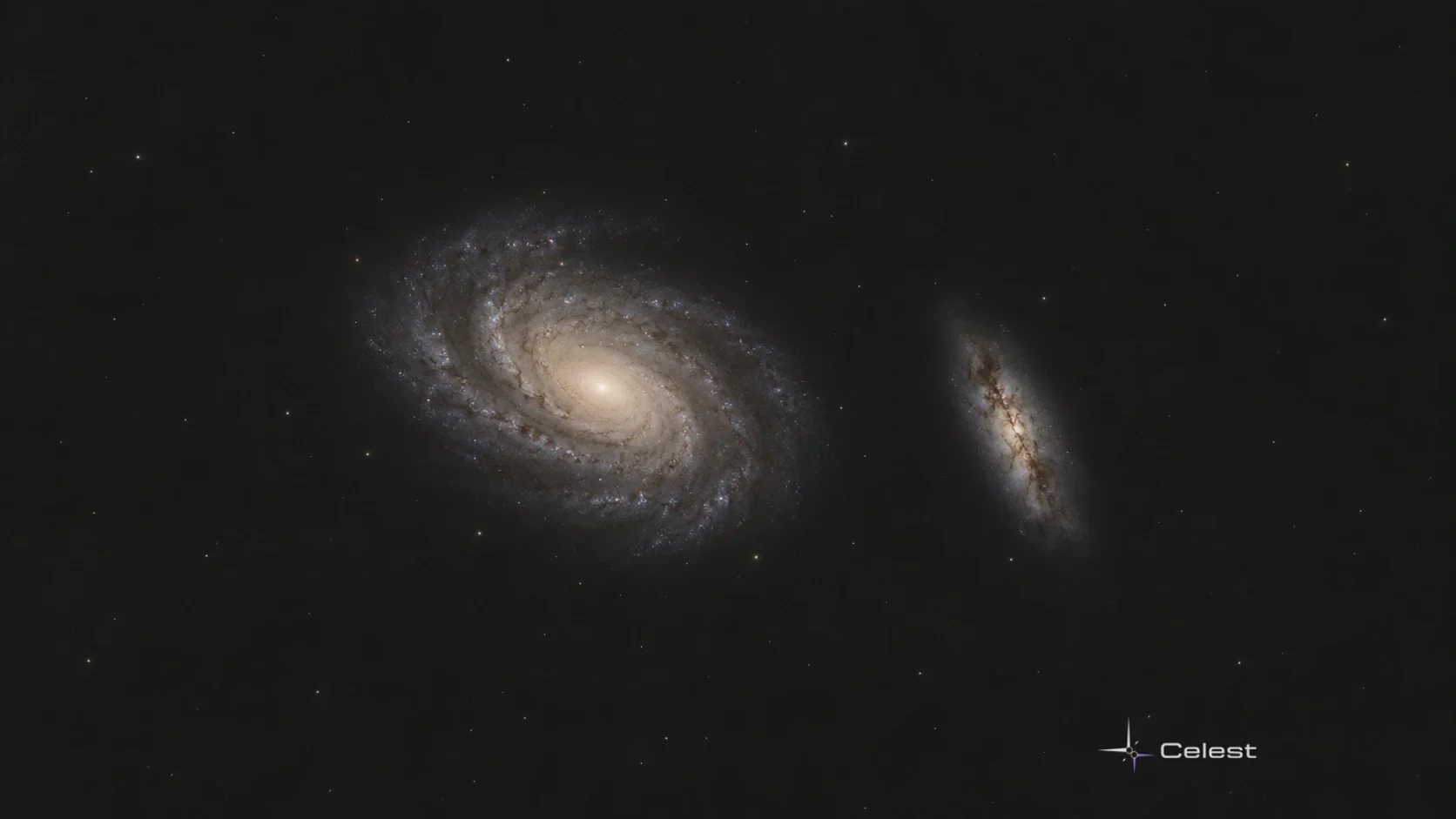
Conceptual subdued inclined spiral galaxy and elongated dusty neighbour, not measured M81–M82 separation, orientation or true telescope colours.
Stars & Deep Sky

M81 and M82: Two Galaxies, One Gravitational Story

A spiral galaxy and its elongated neighbour share a view near the Great Bear. Their connection reaches beyond appearance: gravity, newborn stars and powerful gas flows.

2 Nov 2026 · 5 min read
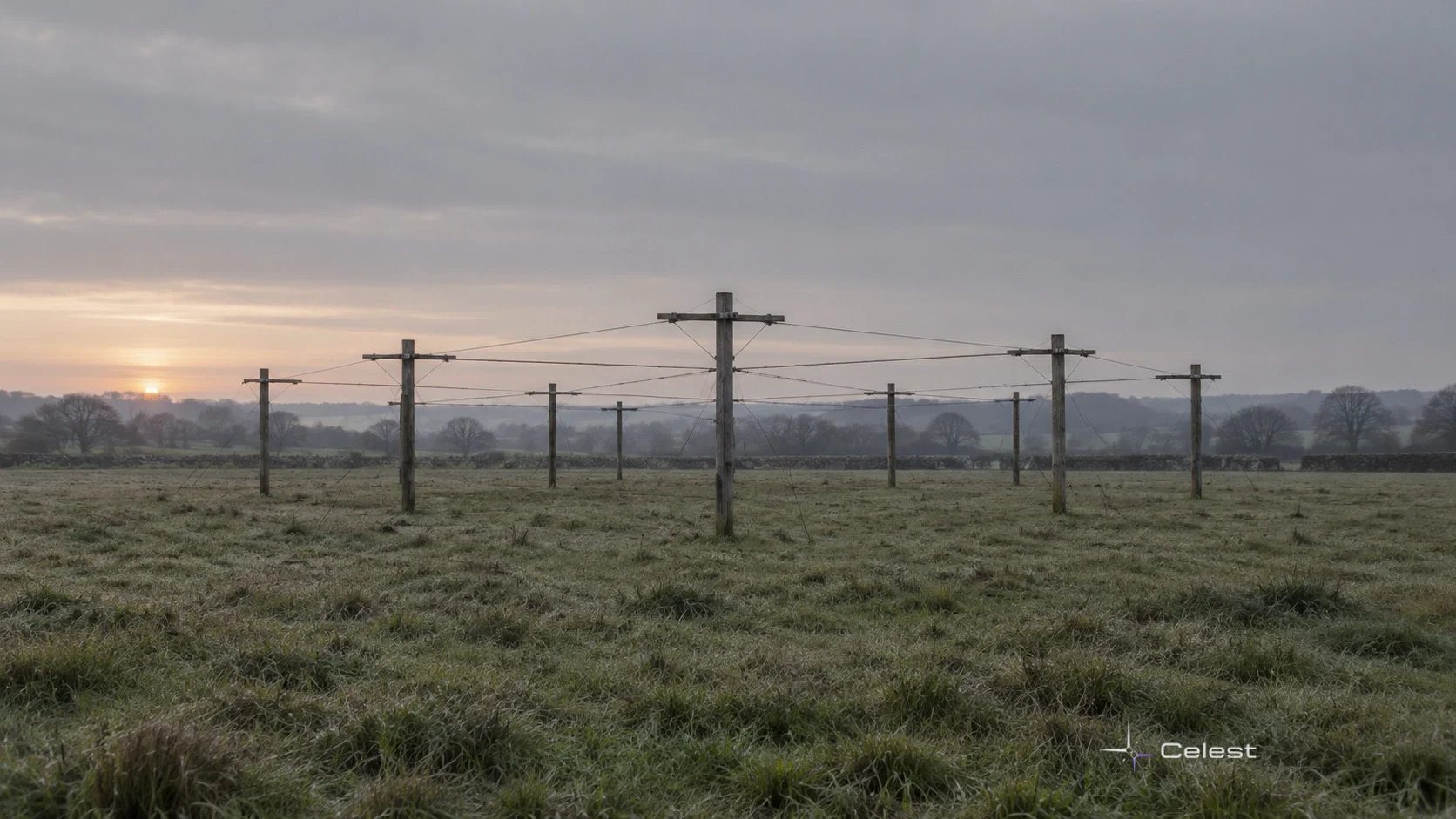
A restrained historical artist concept of a wire-and-post radio array beneath a quiet sky, inspired by the equipment used in the first pulsar discovery.
Stars & Deep Sky

Vulpecula Constellation: The Fox and the First Pulsar

The faint Fox holds the Dumbbell Nebula and the sky direction of a landmark radio discovery. The first pulsar emerged from an odd trace, a faster recorder and careful checks.

2 Nov 2026 · 4 min read
A conceptual pale blue-white supergiant with very faint dust illuminated nearby against dark space.
Stars & Deep Sky

Rigel: Orion’s Blue Supergiant and Its Reflected Light

A bright point at Orion’s foot is an enormous hot star. Its light also reveals interstellar dust nearby, while small changes measured over time offer clues about the star’s interior and escaping gas.

2 Nov 2026 · 5 min read
A small generic dark meteorite specimen rests on a neutral laboratory surface, with a discreet visible broken interior.
Astronomy Explained

Meteor, Meteoroid or Meteorite: What Changes?

The object in space, the streak overhead and the rock on the ground are different parts of one possible journey. Learn what changes—and what a surviving sample can reveal.

2 Nov 2026 · 4 min read
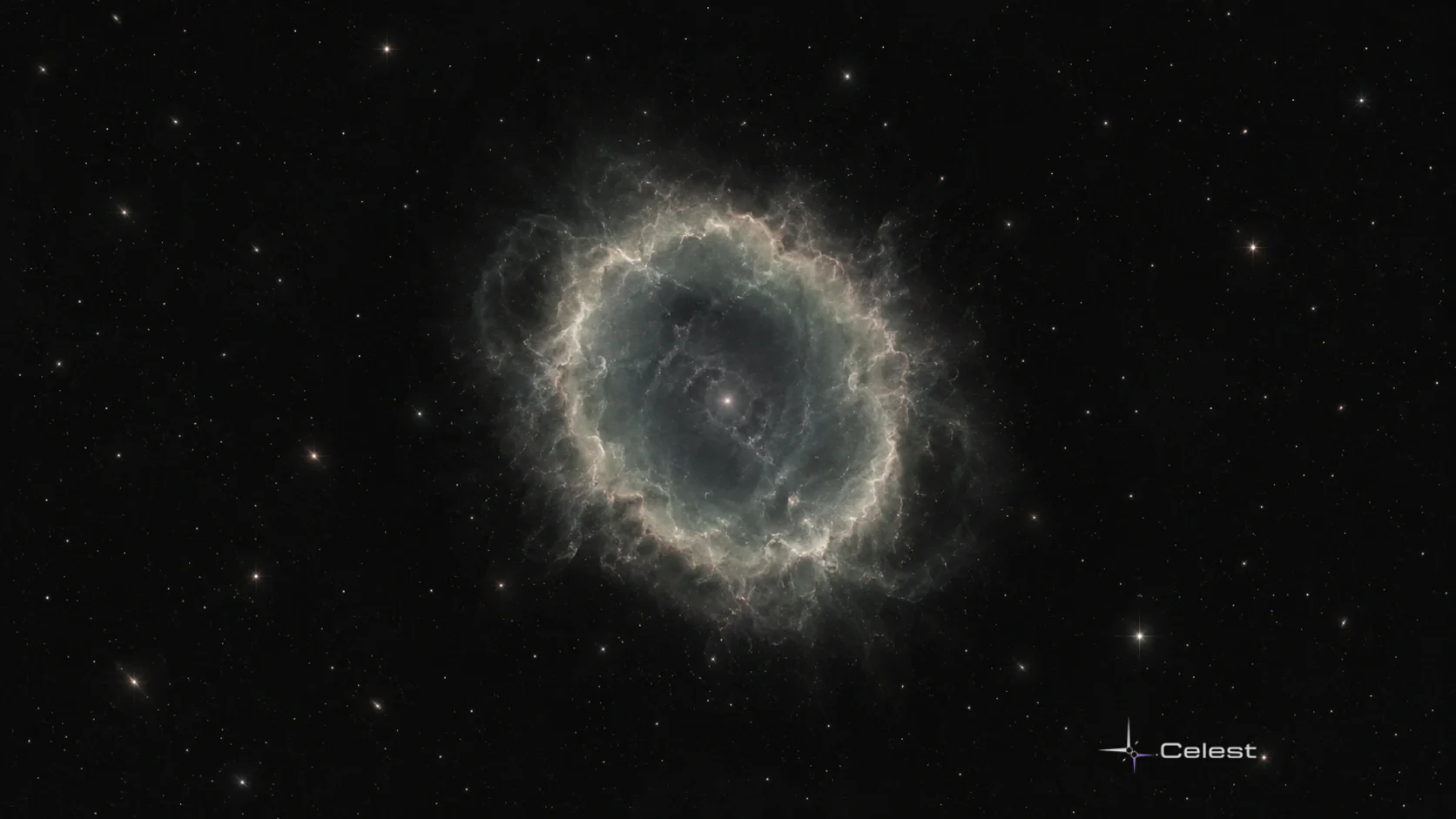
A modest pale oval ring of diffuse gas with a faintly filled centre and a small restrained central stellar point against dark sparse space.
Stars & Deep Sky

Ring Nebula (M57): More Than a Glowing Ring in Space

The small ring in Lyra is a view into a three-dimensional cloud. Images, infrared observations and spectra reveal gas through its apparently open centre and structures whose origins are still being investigated.

1 Nov 2026 · 5 min read
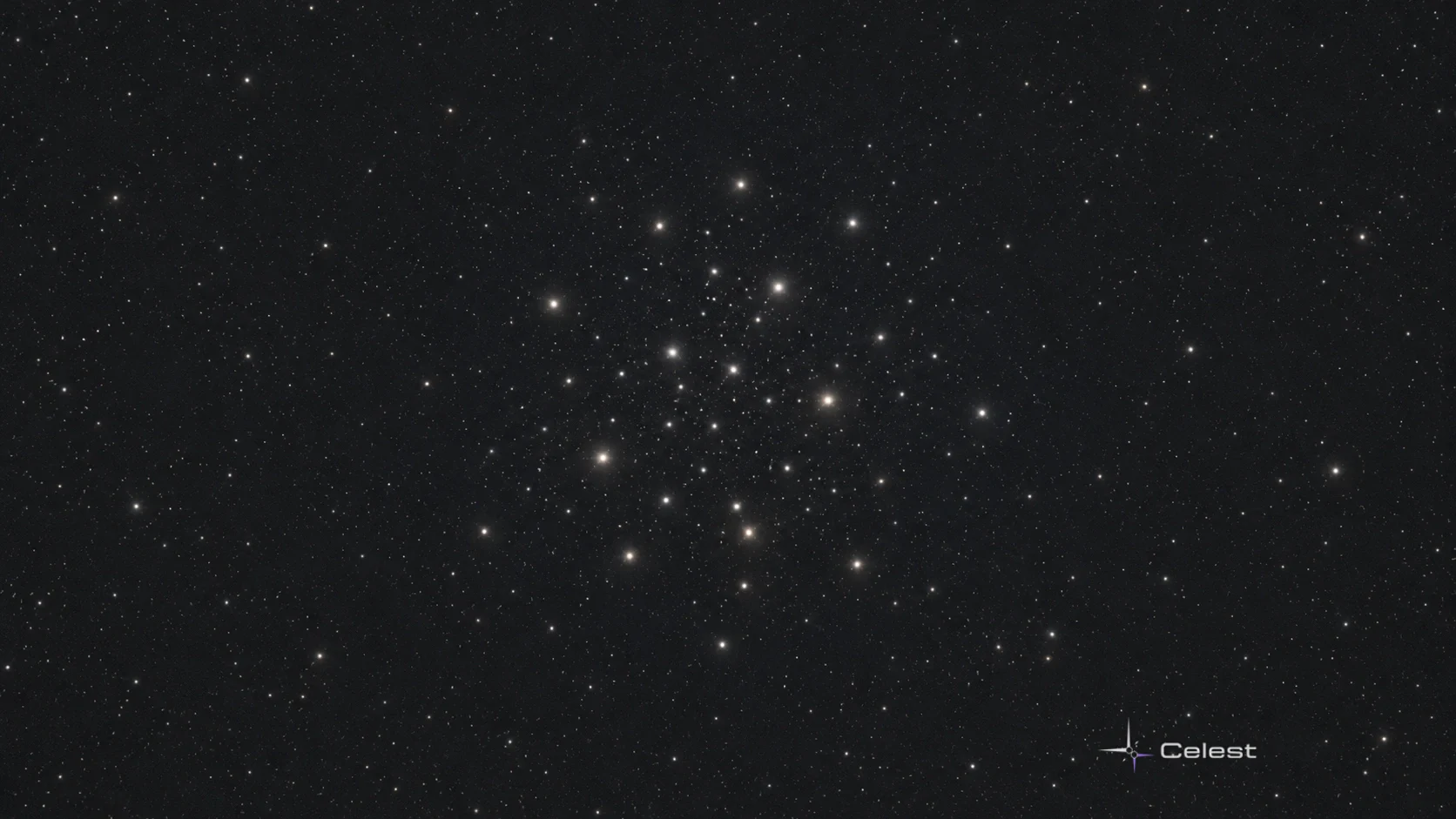
A subdued conceptual summer Milky Way field above a low rural horizon, with one modest white stellar landmark and faint dark dust texture.
Stars & Deep Sky

Aquila Constellation: The Eagle and a Star That Isn't Round

Altair gives the Eagle an easy starting point, but its fainter outline takes a more careful look. The same direction contains dust clouds that block background starlight and hold material for new stars.

1 Nov 2026 · 4 min read
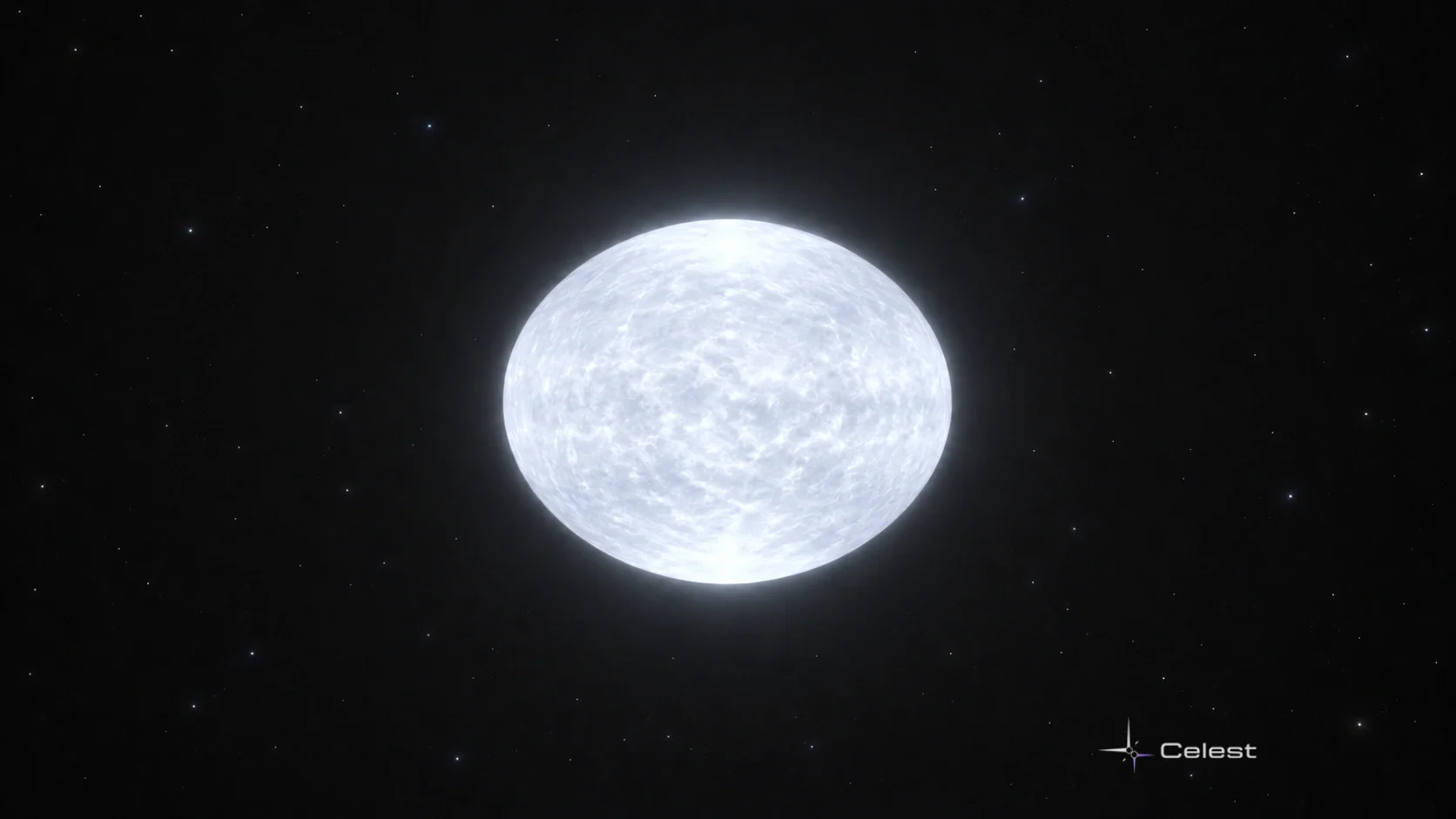
A restrained artist's illustration of a pale blue-white star with a broadened equator and subtly brighter polar regions.
Stars & Deep Sky

Regulus: The Star Distorted by Its Rapid Spin

The bright point beneath Leo's curved head is not a neat stellar sphere. Measurements reveal a swollen equator, unequal surface temperatures and a faint companion connected with its history.

1 Nov 2026 · 5 min read
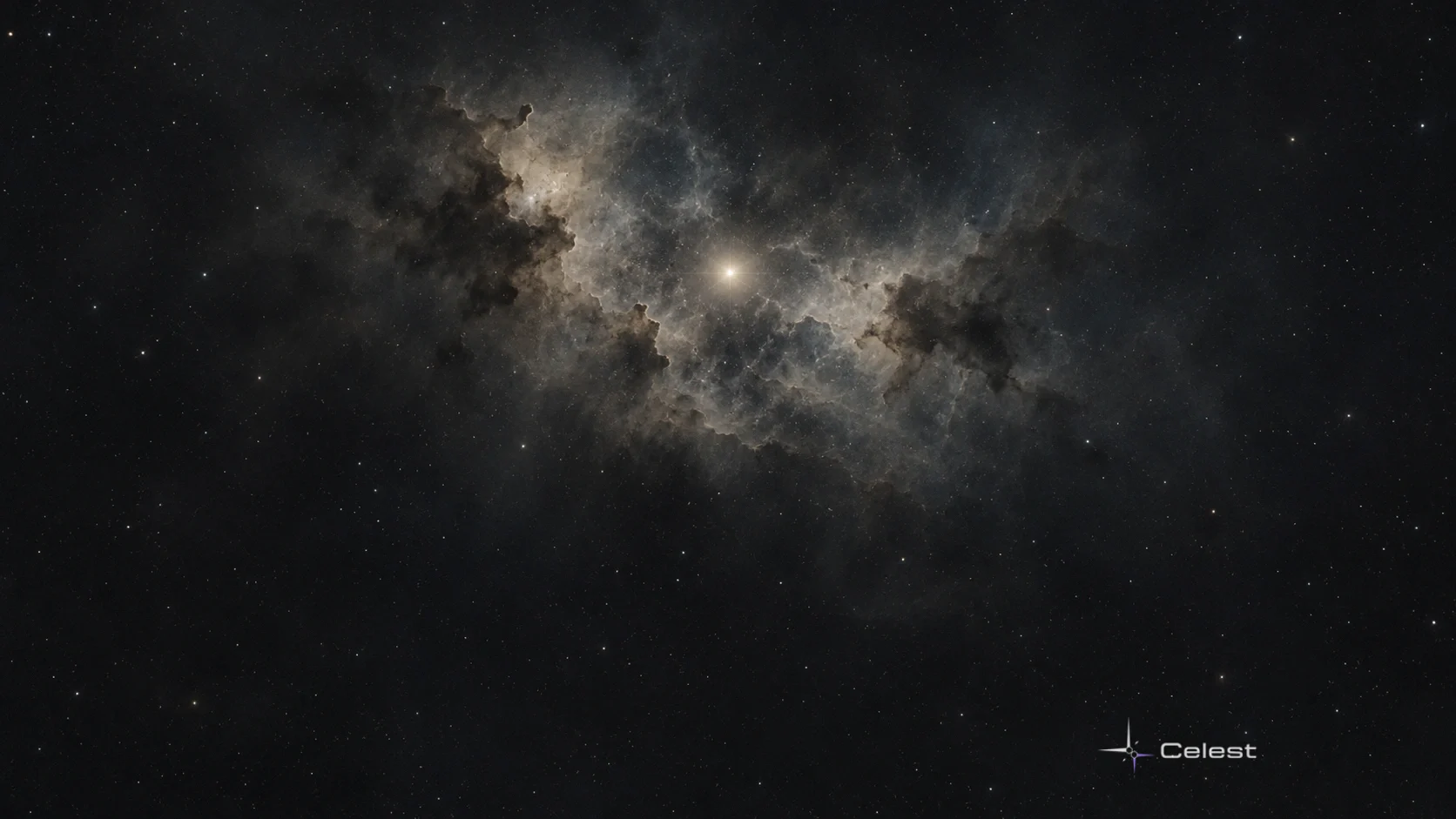
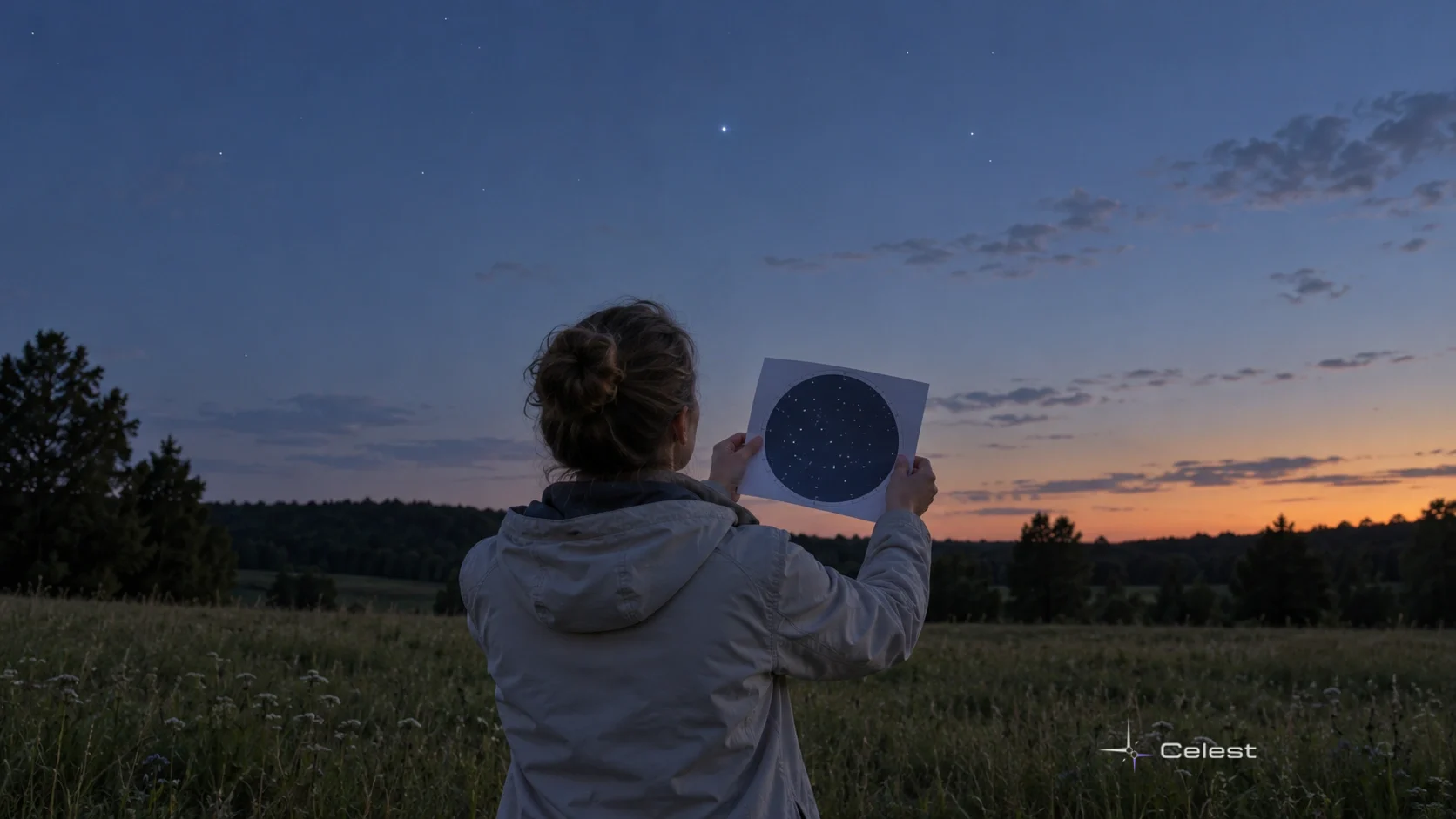
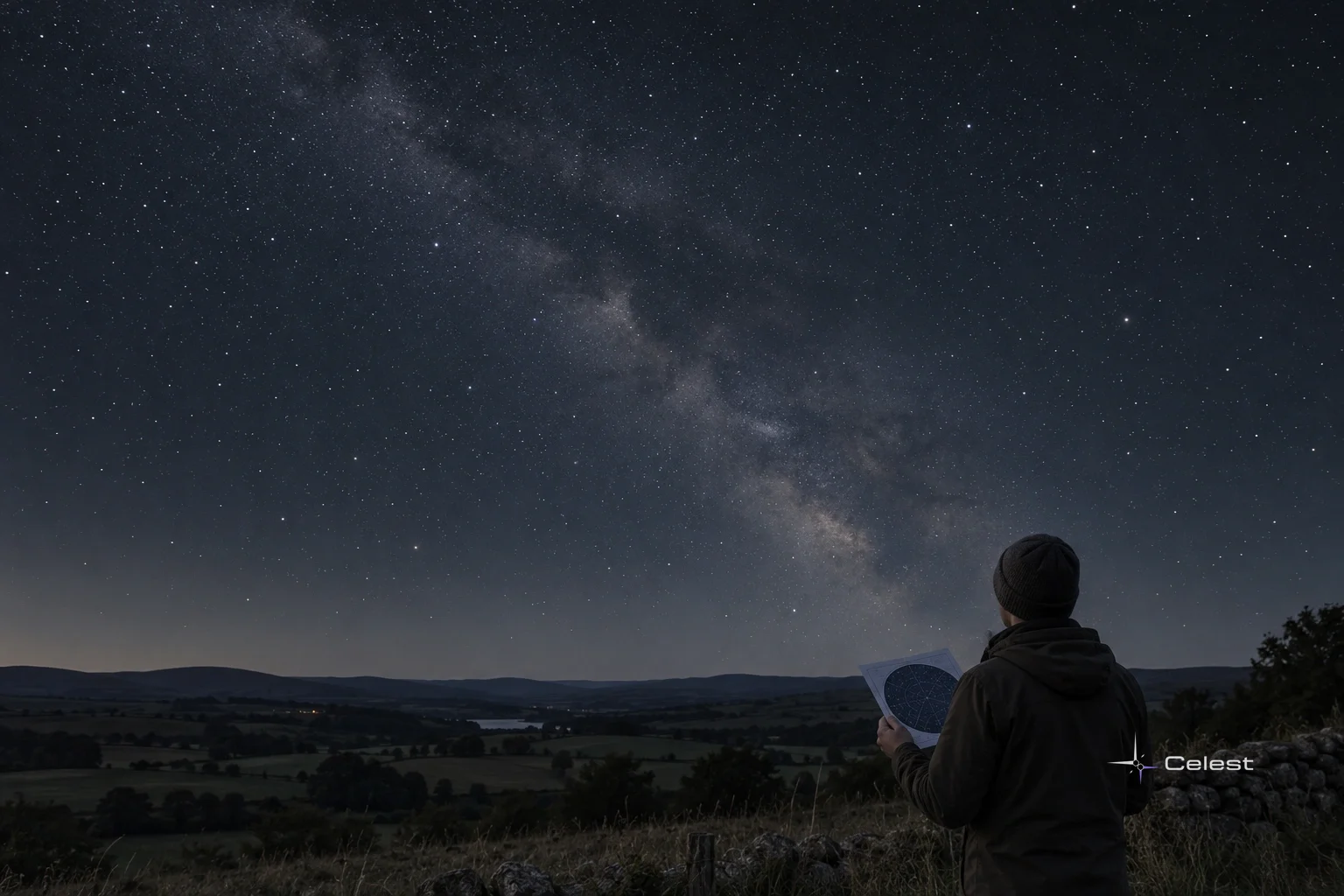
An observer compares a printed star chart with a quiet summer sky and a small bright stellar landmark.
Stars & Deep Sky

Lyra Constellation: Vega, a Four-Star System and M57

Vega is the easy landmark, but the small constellation around it holds a multiple-star system and the remains of a star. Different observing tools reveal different parts of the story.

1 Nov 2026 · 5 min read
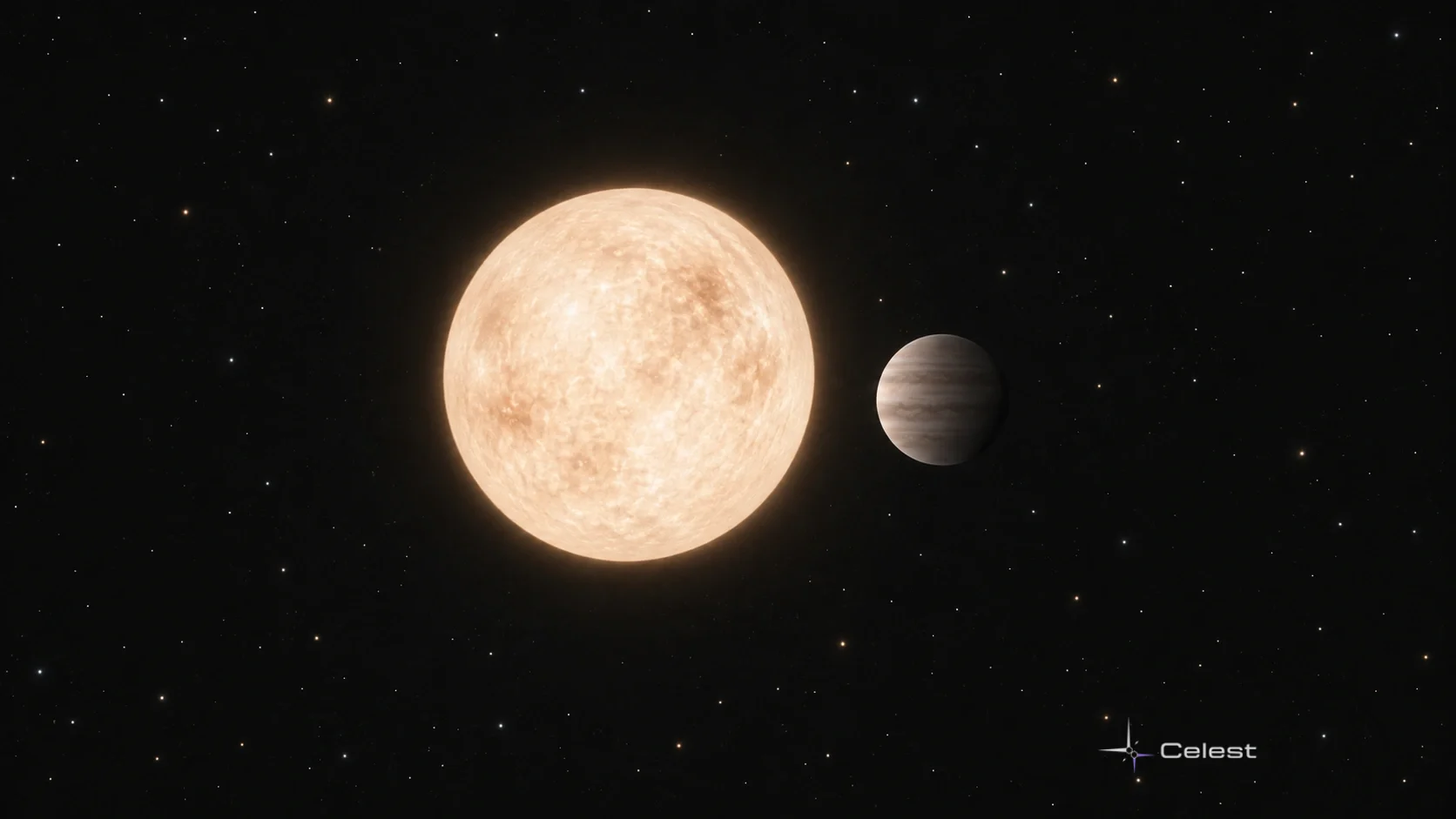
Conceptual softly rendered ancient globular cluster with many restrained ivory star points and a gently concentrated centre.
Stars & Deep Sky

Messier 5: Ancient Stars and Millisecond Pulsars

The old star cluster in Serpens contains rapidly rotating neutron-star remnants. Optical images and patient radio measurements reveal different parts of a much longer stellar story.

31 Oct 2026 · 5 min read
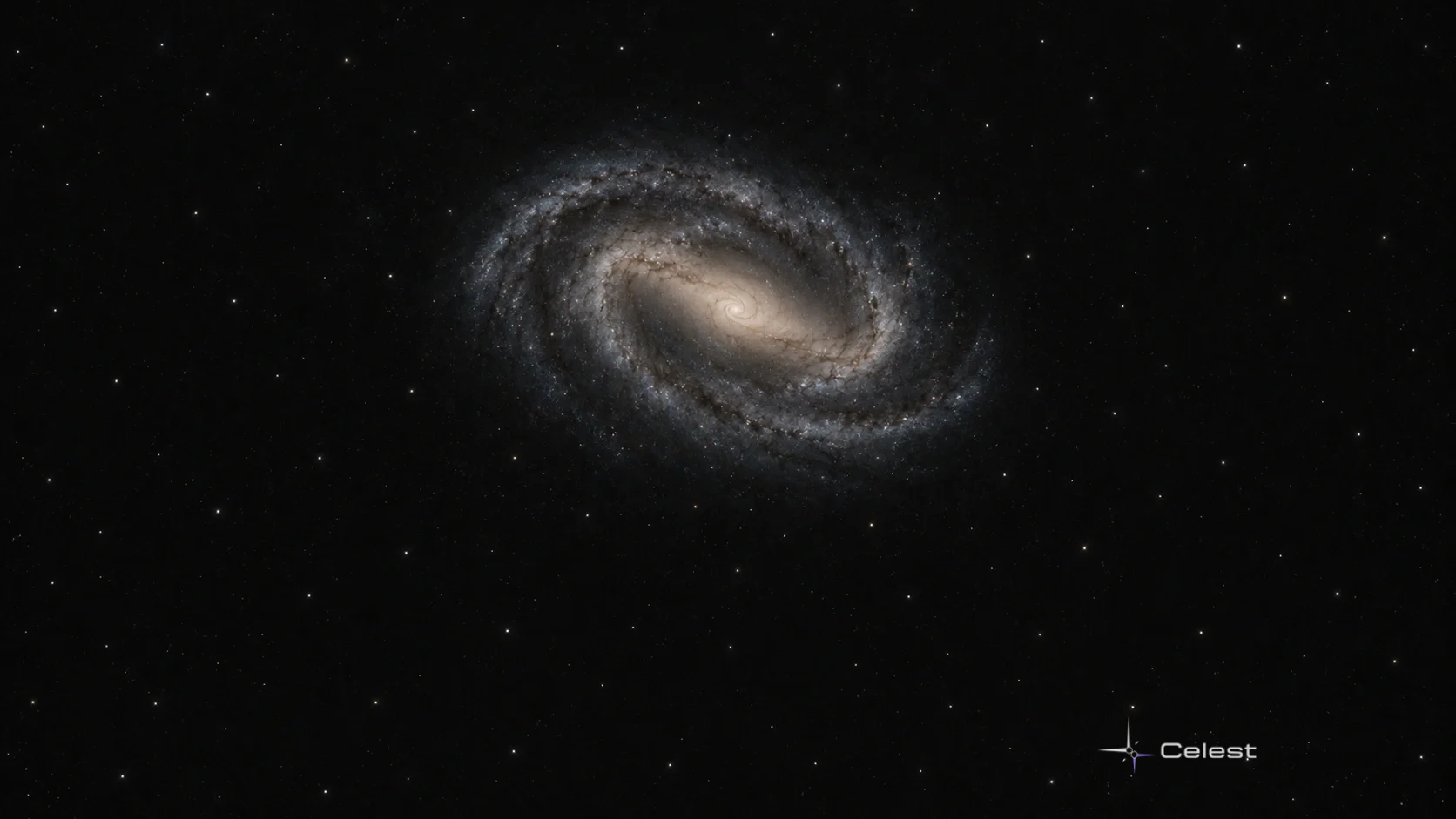
A restrained conceptual summer Milky Way star field above a dark low horizon, with natural pale stellar points.
Stars & Deep Sky

Cygnus Constellation: The Swan Across the Milky Way

A cross-shaped pattern gives you an entrance to a crowded part of the Milky Way. Following the Swan introduces a colourful stellar pair, clouds where stars form and the remains of a stellar explosion.

31 Oct 2026 · 4 min read
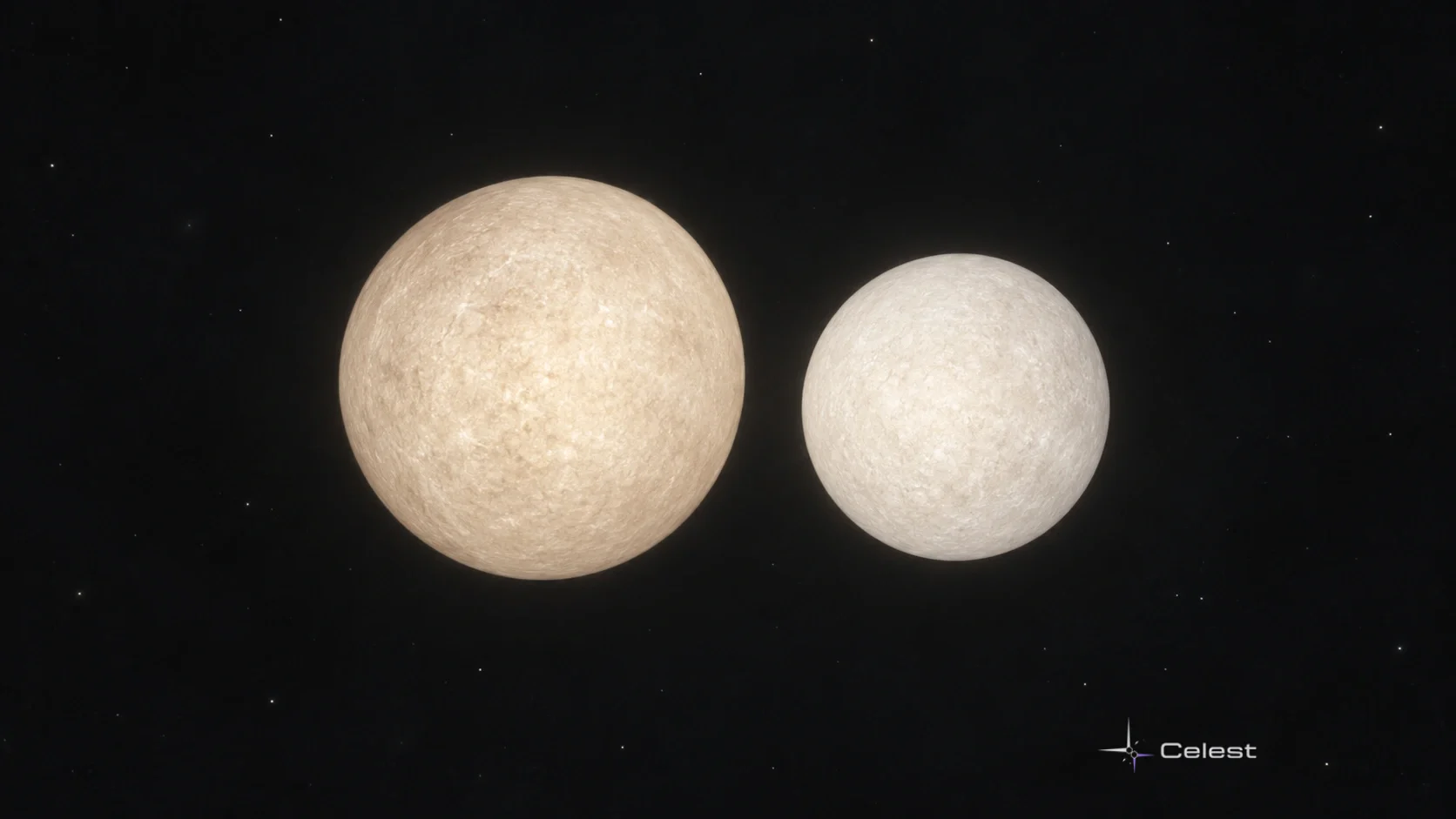
Conceptual view of a pale F-type star with a much smaller, faint white-dwarf companion against quiet dark space.
Stars & Deep Sky

Procyon: A Bright Star with an Older Stellar Remnant

A nearby winter landmark contains a bright subgiant and a faint white dwarf. The smaller star used to be the more massive one, making the pair a useful test of how stars change.

31 Oct 2026 · 5 min read
Two restrained stellar points of different apparent brightness in a quiet wide night sky, without a calibrated ratio.
Astronomy Explained

Magnitude: Why Smaller Numbers Mean Brighter Stars

A smaller magnitude means a brighter appearance, but one number cannot tell the whole story. Learn the scale, the role of distance and the difference between a sharp point and a faint extended glow.

31 Oct 2026 · 4 min read
Muted conceptual galactic nucleus with a compact bright disk and a restrained particle jet seen obliquely; no exact BL Lacertae structure or measured radiation map.
Stars & Deep Sky

Lacerta Constellation: A Cluster and a Galaxy in Disguise

A northern sky region contains a real stellar family and a galaxy whose jet once made it seem like a variable star. Start with the neighbouring constellations, then discover what the light reveals.

31 Oct 2026 · 4 min read
Illustrative broad loose star cluster with subdued ivory points in a quiet field, not exact measured M44 member positions.
Stars & Deep Sky

Beehive Cluster (M44): Its Stars and Hidden Planets

The Beehive’s broad patch resolves into individual stars through binoculars. Precise measurements add another layer: planets revealed by the motion of their host stars.

31 Oct 2026 · 5 min read
Restrained conceptual view of an orange giant star with a much smaller gas-giant planet separated in dark space.
Stars & Deep Sky

Pollux: Gemini’s Orange Giant and Its Planet Signal

Gemini’s two bright heads look paired, but Pollux and Castor have different distances and histories. Pollux is an evolved giant whose changing light also carries evidence of an unseen planet.

30 Oct 2026 · 4 min read
Generated qualitative view of a modest urban light dome under a night sky with a few visible stars, not a calibrated light-pollution measurement.
Astronomy Explained

Light Pollution: Why Faint Stars Disappear

A brighter sky can reveal fewer stars. Follow scattered light from a streetlamp to the background sky, then learn why maps and observations tell different parts of the story.

29 Oct 2026 · 4 min read
Restrained conceptual hot star with a thin faint gaseous disc extending around its equator in quiet space.
Stars & Deep Sky

Canis Minor Constellation: Procyon and a Star With a Disc

Procyon makes the Little Dog easy to begin with. Nearby on the sky, Gomeisa offers a different stellar story: rapid rotation, material outside the star and delicate measurements of its light.

29 Oct 2026 · 5 min read
A restrained illustration of a winter observing sky with one modestly bright pale star above a low rural skyline.
Stars & Deep Sky

Canis Major Constellation: Sirius and the Great Dog

Sirius makes the Great Dog easy to begin recognising. The surrounding region connects a nearby stellar pair, groups born together and a much less conspicuous star shedding enormous amounts of material.

29 Oct 2026 · 4 min read
A restrained conceptual close view of a pale blue-white supergiant against a dark, sparsely starred background.
Stars & Deep Sky

Deneb: A Distant Supergiant in the Summer Triangle

The faintest corner of the Summer Triangle is an enormous star. Deneb connects a simple naked-eye landmark with a difficult question about how massive stars change late in their lives.

29 Oct 2026 · 4 min read
Generated qualitative artist illustration of an inhabited space-station structure and solar arrays above Earth, not a documented mission photograph.
Observing Guides

How to Spot the ISS: A Bright Moving Point

A current pass listing turns a moving light into an identifiable orbiting laboratory. Follow five simple steps, then understand the shadow and free fall behind the view.

29 Oct 2026 · 4 min read
A subdued conceptual winter sky with two modest pale stellar landmarks above a low rural horizon.
Stars & Deep Sky

Gemini Constellation: Two Landmarks, Very Different Stars

Castor and Pollux mark the Twins on a chart, but they do not share one physical system. Their contrast leads from easy winter landmarks to hidden stellar pairs and a cluster whose stars really did form together.

28 Oct 2026 · 4 min read
A restrained tilted spiral galaxy with a pale central glow and subdued dust lanes against quiet space.
Stars & Deep Sky

Andromeda Galaxy (M31): Beyond Its Visible Stars

The faint patch in Andromeda contains a spiral galaxy, but its familiar stellar light shows only part of the system. An enormous gas envelope is studied through the light of even more distant objects.

28 Oct 2026 · 5 min read
A restrained conceptual winter star field over a low rural horizon, with a modest warm-white landmark and faint clustered points.
Stars & Deep Sky

Auriga Constellation: Capella, Clusters and a Runaway Star

Capella makes Auriga easy to start, while binoculars open a richer field of star clusters. The same sky region holds a star thought to have escaped from Orion and illuminated the cloud it now crosses.

28 Oct 2026 · 5 min read
Conceptual six-star hierarchy shown as two pale bright stars with tiny companions and a separate faint warm-coloured pair.
Stars & Deep Sky

Castor: Six Stars Behind One Bright Point in Gemini

The whiter head of Gemini is a hierarchy of three stellar pairs. Some members move around companions in days, while the bright visual pair follows an orbit lasting centuries.

28 Oct 2026 · 4 min read
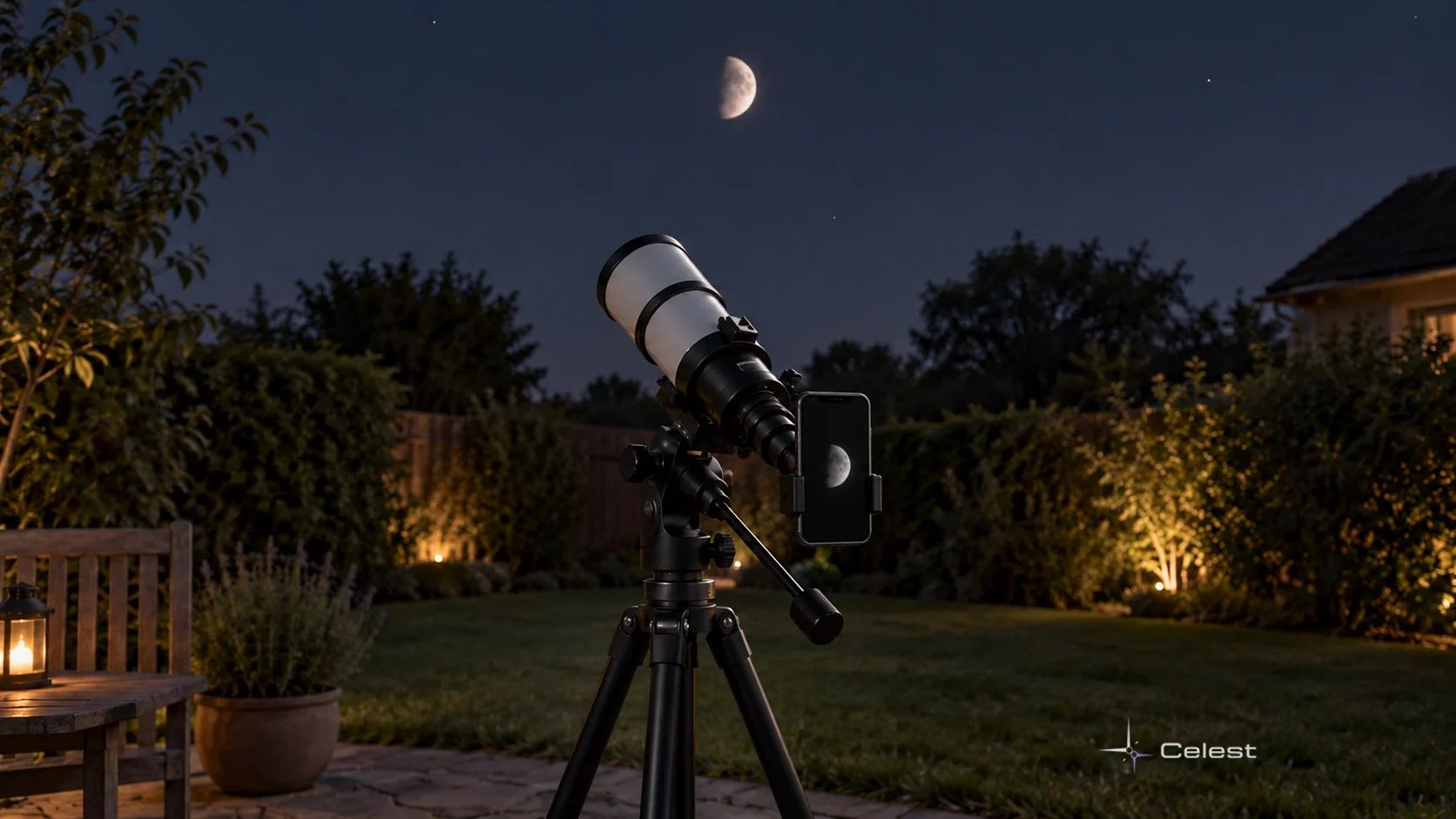
Generated small telescope on a stable support under a restrained night sky with a modest Moon; an observing illustration rather than an actual measured view.
Observing Guides

How to Use a Telescope: Start With the Moon

A lunar edge, a few craters and changing shadows make a useful first telescope session. Learn one repeatable route from finding the Moon to interpreting its terrain.

28 Oct 2026 · 5 min read
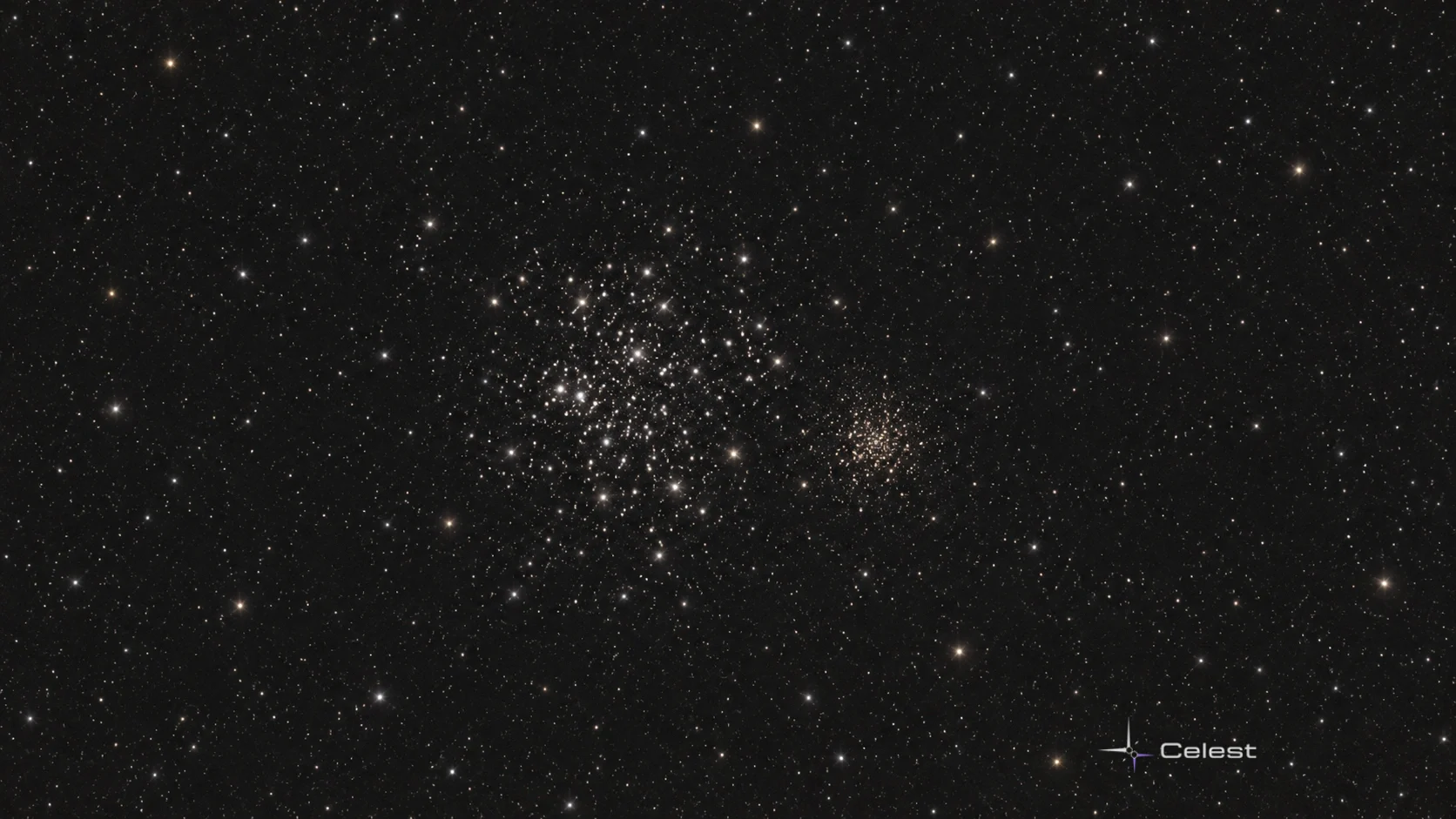
A restrained rounded concentration of small pale stars against dark space, with a softly luminous centre and no annotated brightness curves.
Stars & Deep Sky

Messier 3: Changing Starlight Helps Measure Distance

The hazy cluster in Canes Venatici contains a large population of stars that change brightness. Measurements across their cycles make those variations useful for studying stellar behaviour and the cluster’s distance.

27 Oct 2026 · 5 min read
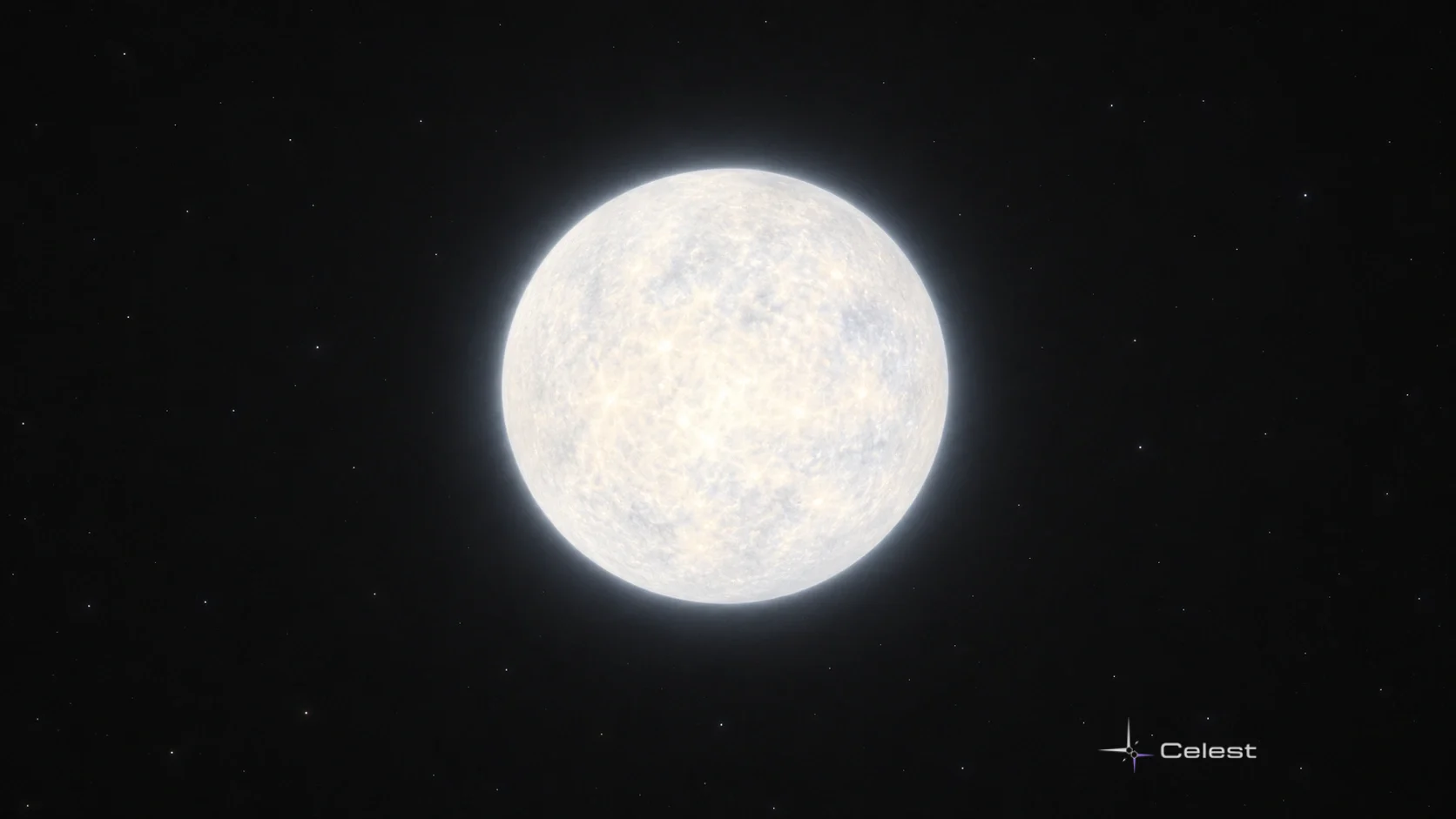
A softly rendered solar-type star with two dim conceptual companions, illustrating a possible orbital system without measured scales.
Stars & Deep Sky

Capricornus Constellation: Faint Stars and a Hidden Angle

Capricornus combines faint evening stars with a nearby-looking but distant cluster. A separate system in its direction shows why measuring motion and understanding its geometry are different steps.

27 Oct 2026 · 5 min read

A modest pale golden stellar point shines above a quiet winter landscape with natural subdued colour.
Stars & Deep Sky

Capella: A Bright Point With Two Giant Stars

Two giant stars dominate the familiar bright point in Auriga. Their orbit and different stages of evolution turn a naked-eye landmark into a useful test of how stars change.

27 Oct 2026 · 5 min read
Restrained conceptual expanding shell of pale grey-blue gas around a small faint central stellar remnant, representing late stellar evolution without exact Helix geometry.
Stars & Deep Sky

Aquarius Constellation: Clouds Left Behind by Sun-Like Stars

Aquarius contains dense groups of stars and clouds expelled by stars nearing the end of their lives. The Helix and Saturn nebulae turn this sky region into a place to explore a possible distant future for our Sun.

27 Oct 2026 · 5 min read
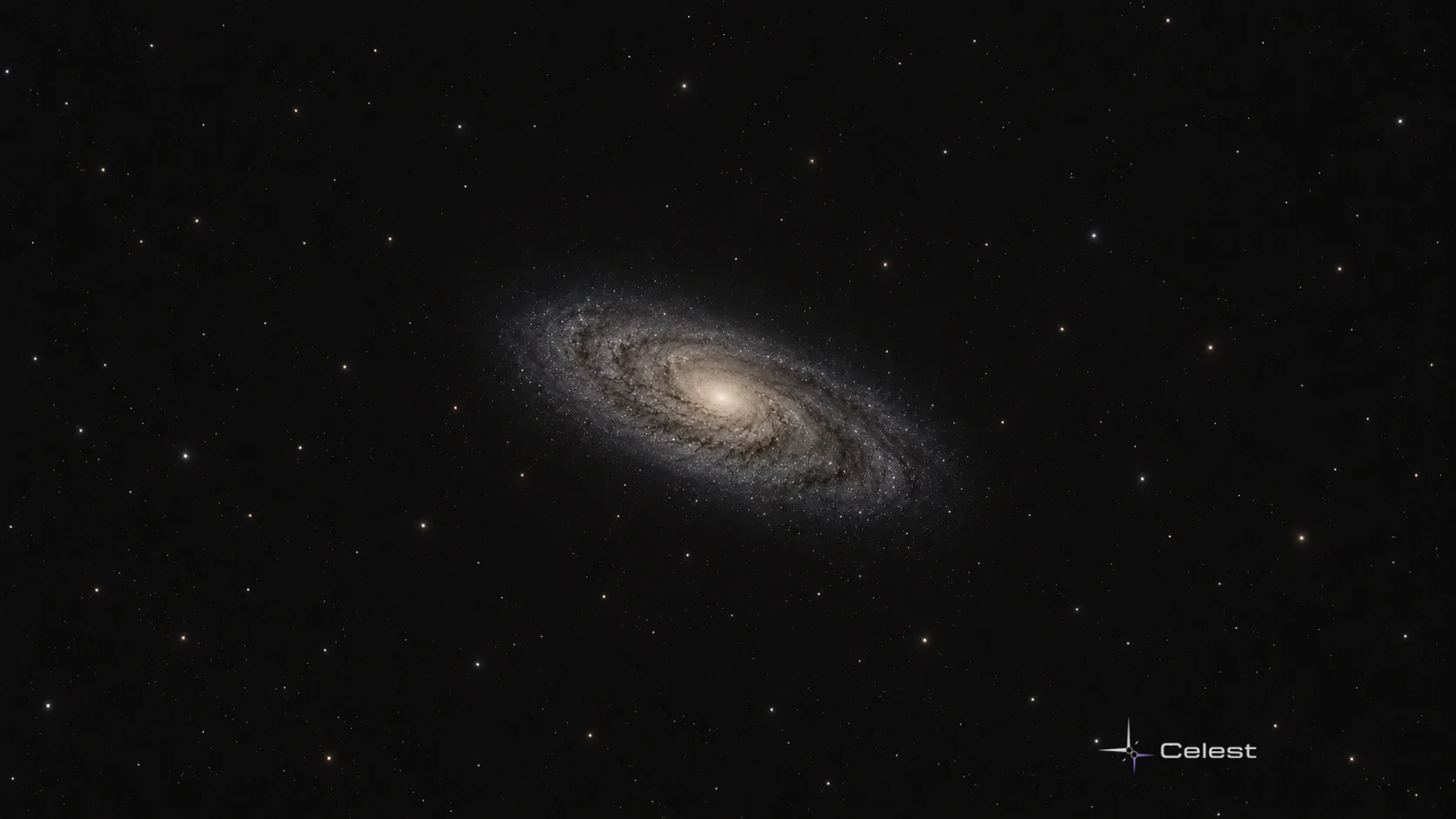
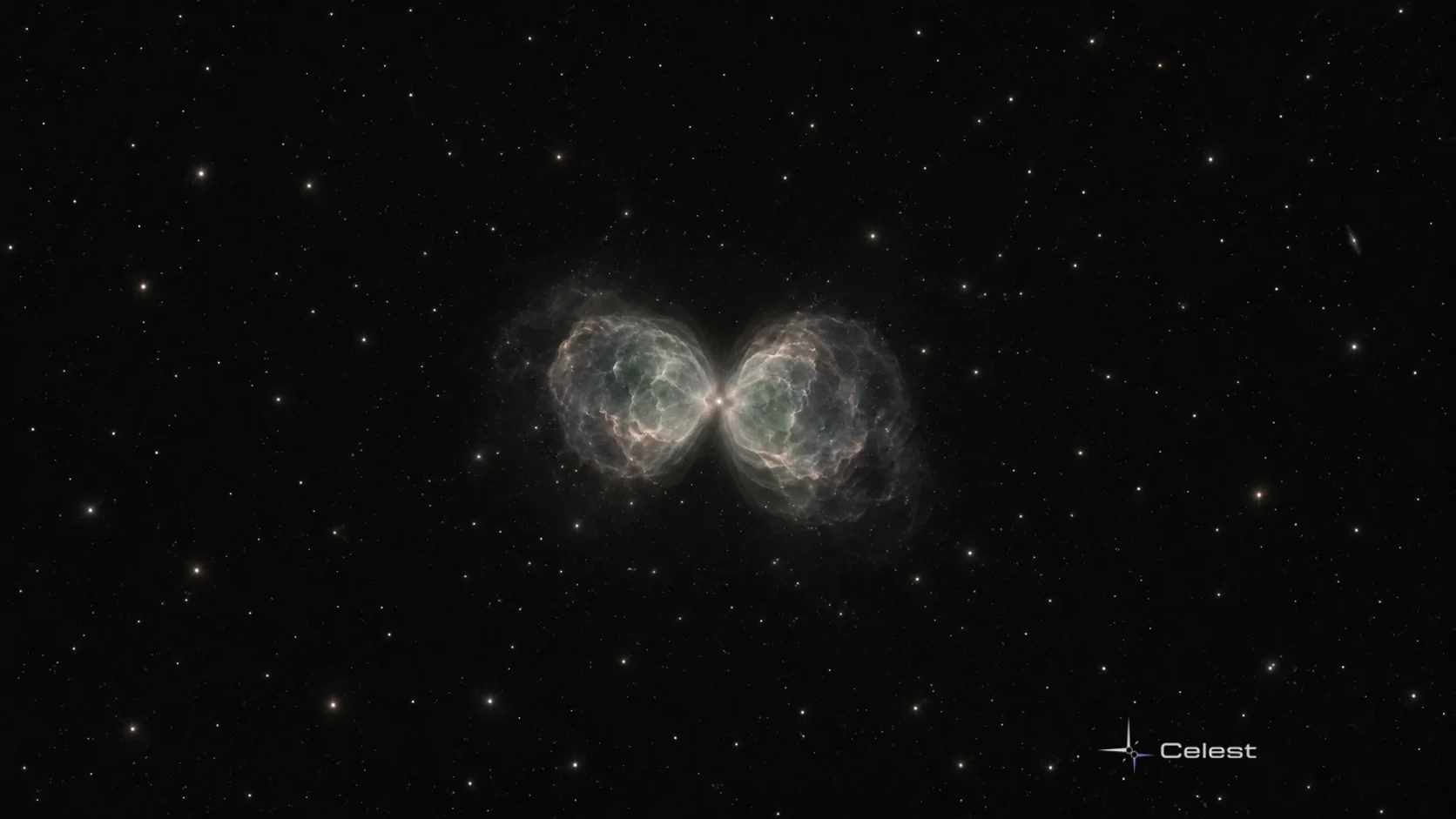
A softly luminous two-lobed pale nebula against a sparse dark star field, with restrained grey-green colour and subtle uneven texture.
Stars & Deep Sky

Dumbbell Nebula (M27): A Star’s Gas Becomes a Nebula

A small telescope reveals a two-lobed cloud in Vulpecula. Close-up and infrared observations show a more complicated story: a star’s lost material is being reshaped, illuminated and gradually returned to the space between stars.

26 Oct 2026 · 5 min read
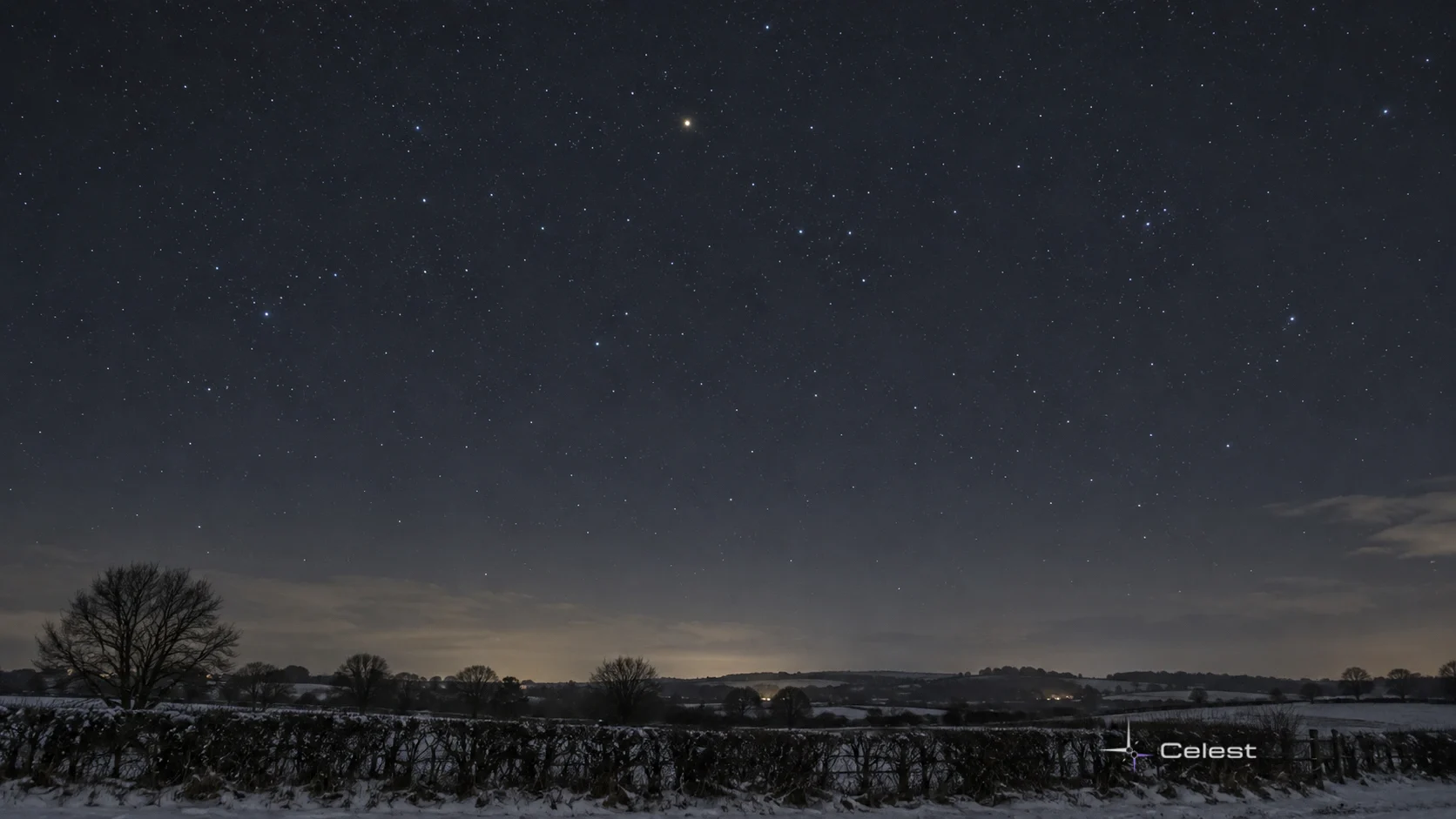
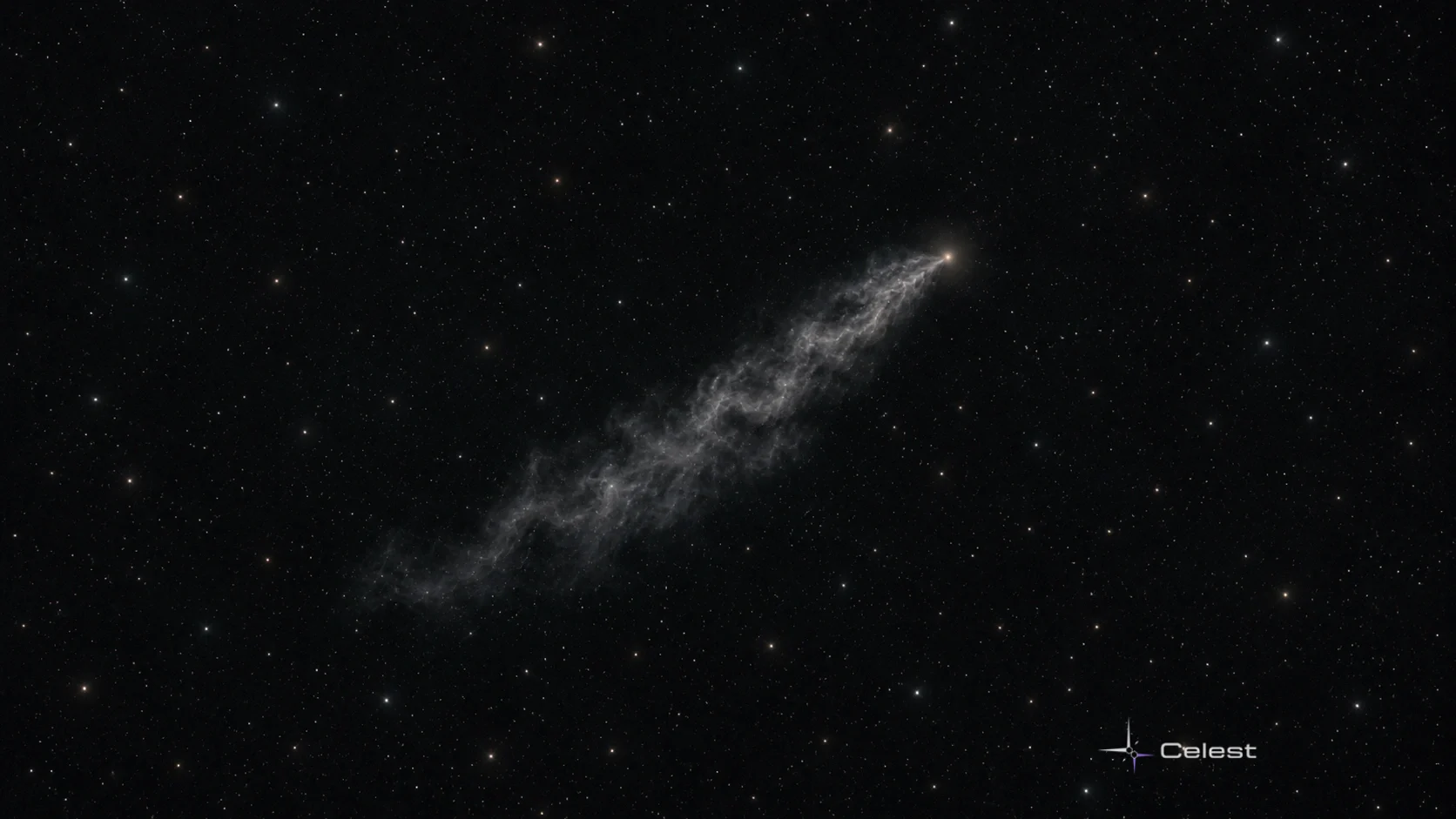
Subdued conceptual evolved star with a long faint grey gas wake across dark space, illustrating material detected in ultraviolet rather than a naked-eye blue trail.
Stars & Deep Sky

Cetus Constellation: A Changing Star With a Long Tail

Cetus contains Mira, a star whose brightness changes over months, and the active spiral galaxy M77. Ultraviolet observations revealed a long trail of material behind Mira, showing how a familiar stellar point can hold a much larger story.

26 Oct 2026 · 5 min read
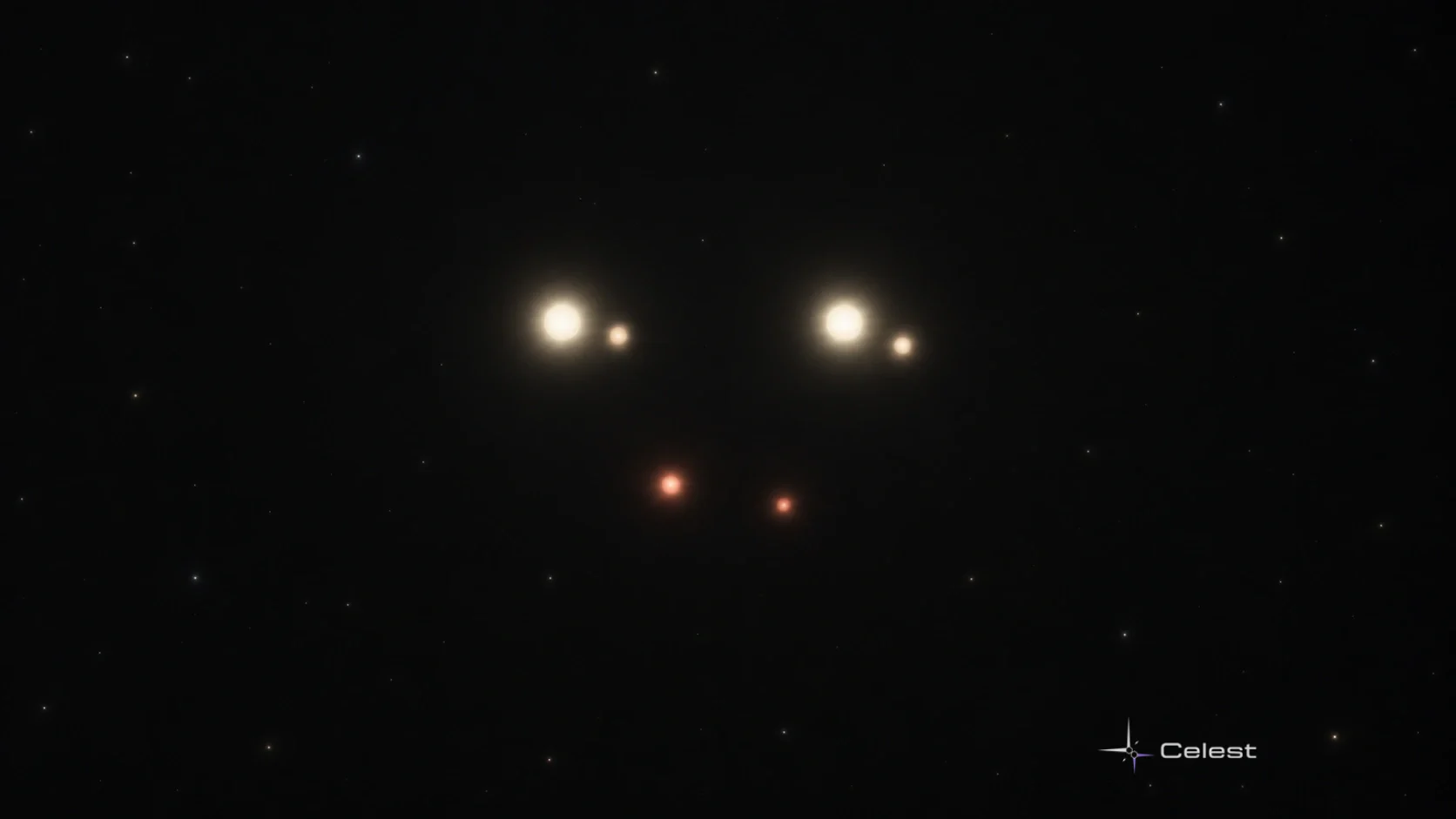
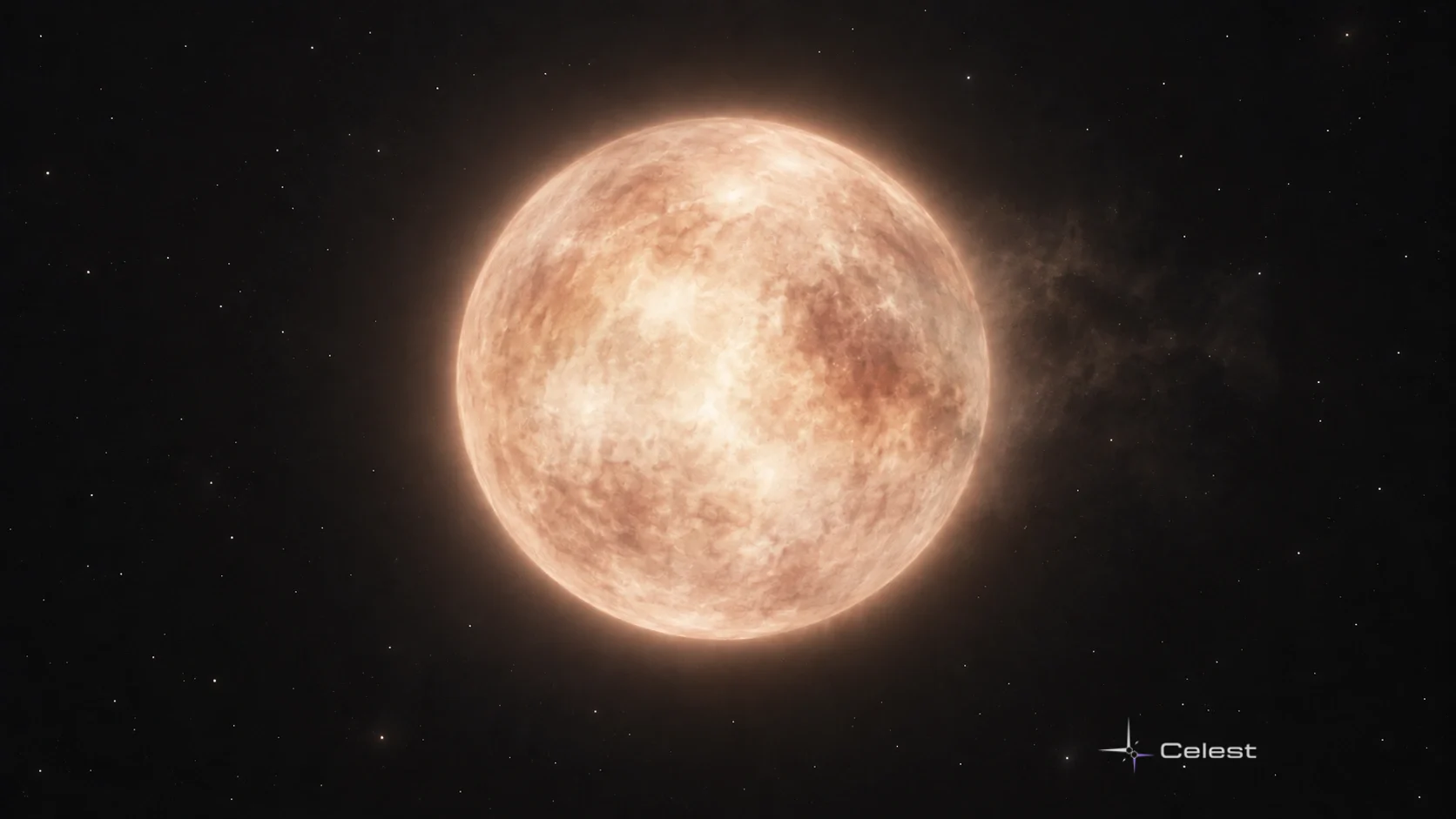
A conceptual orange-red supergiant with a softly uneven luminous surface and a faint nearby dust veil.
Stars & Deep Sky

Betelgeuse: Orion’s Red Supergiant and Its Changing Light

The orange-red shoulder of Orion changes for more than one reason. Its dramatic fading exposed dust forming near the star, while newer observations suggest a faint companion disturbs its extended atmosphere.

26 Oct 2026 · 5 min read
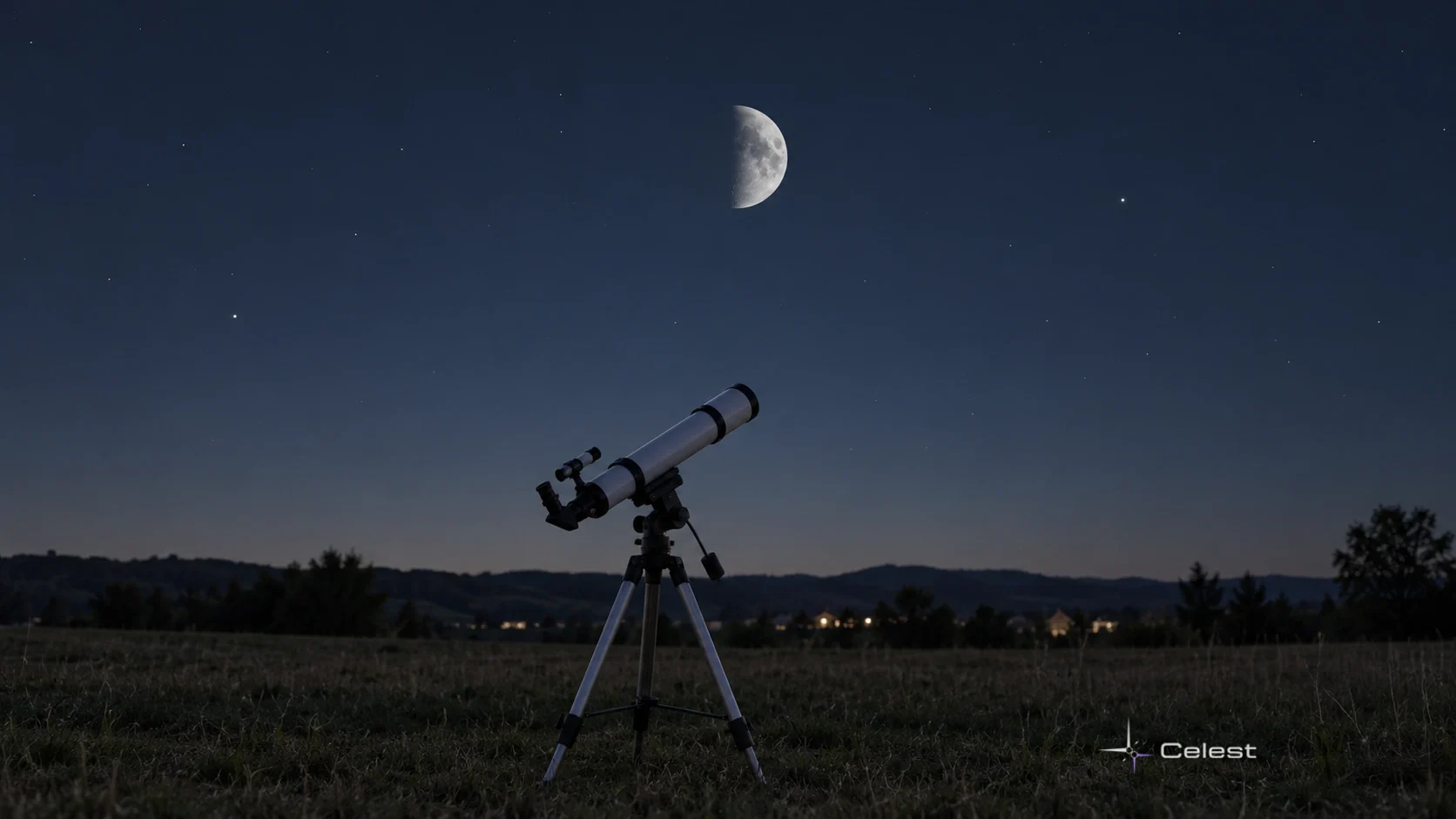
An illustrative old astronomical glass plate in a quiet archive setting, without a reproduced measured stellar spectrum.
Stars & Deep Sky

Pisces Constellation: A Planetary Clue From 1917

Pisces links familiar sky geometry with an archival puzzle. A faint stellar remnant’s recorded light became evidence to reconsider long after the glass plate was made.

26 Oct 2026 · 4 min read
Restrained conceptual spiral galaxy with one extended asymmetric dusty arm and a much smaller diffuse companion, without exact NGC772 geometry or measured separation.
Stars & Deep Sky

Aries Constellation: A Giant Star and a Distorted Spiral

Aries holds a bright stellar landmark and a distant spiral with an uneven shape. Hamal reveals an orbiting planet through small changes in its light; NGC 772 shows how a neighbouring galaxy can alter an entire spiral arm.

25 Oct 2026 · 4 min read
Two small bright planetary points appear near each other above a quiet twilight horizon in a qualitative illustration.
Astronomy Explained
Conjunctions: Why Worlds Appear to Meet in the Sky

Two planets can share a tiny part of the sky while remaining enormously far apart. Learn what their apparent meeting means and why the observer’s viewpoint matters.

25 Oct 2026 · 4 min read
A restrained rounded concentration of small pale stars with a softly denser centre and a few subtle warm-coloured members against dark space.
Stars & Deep Sky

Messier 13: An Ancient Cluster With Varied Stars

A hazy patch becomes a crowded ball of stars under closer observation. Measurements of individual giants reveal that this ancient stellar group contains more chemical variety than its smooth outline suggests.

25 Oct 2026 · 5 min read
A restrained conceptual northern autumn star field with small pale stellar points above a low rural horizon, without exact Cepheus geometry.
Stars & Deep Sky

Cepheus Constellation: A House of Stars and a Distance Clue

Many observers recognise Cepheus as a simple house near the North Star. Its famous variable, Delta Cephei, connects a change you can follow across several nights with the measurement of much larger distances.

25 Oct 2026 · 5 min read
Conceptual pale rust-coloured red supergiant with softly uneven luminous texture and a faint extended gaseous atmosphere.
Stars & Deep Sky

Antares: The Red Supergiant with a Restless Atmosphere

The bright red heart of the Scorpion hides an extended, moving atmosphere. Maps of its light reveal gas motions and long-lived surface structures that help explain how massive stars lose material.

24 Oct 2026 · 4 min read
A modest telescope beside an open field under a restrained night sky, suggesting a practical assessment of conditions.
Observing Guides

Stargazing Conditions: Clear, Dark or Steady?

A cloudless forecast does not describe the whole observing sky. Compare darkness, clarity and stability, then choose a session suited to the conditions you actually find.

24 Oct 2026 · 4 min read
Restrained conceptual grey-brown gas giant in distant space, with a small pale host star; not a photograph of 51 Pegasi b.
Stars & Deep Sky

Pegasus Constellation: An Autumn Square, a Surprise Planet

Pegasus is easy to approach through four stars forming a large square. The same sky region leads toward a dense star cluster, a distant galaxy and the Sun-like star whose unexpected planet helped transform astronomy.

24 Oct 2026 · 5 min read
A broad loose grouping of modest pale stars above a low winter countryside horizon, without exact plotted coordinates.
Stars & Deep Sky

Hyades: A Nearby Star Cluster Slowly Spreading Out

The broad V in Taurus is the bright part of a physical stellar group. Former members extend much farther through the galaxy, leaving clues to the cluster’s history and the gravitational forces around it.

24 Oct 2026 · 5 min read
Conceptual quiet star field with two modest loose concentrations of tiny pale stars, representing the Double Cluster without exact coordinates or star counts.
Stars & Deep Sky

Perseus Constellation: Young Clusters and an Eclipsing Star

Perseus offers several ways to read a star field: a bright landmark with a surrounding cluster, two young groups that may share a birthplace and a star system whose eclipses change the light we receive.

24 Oct 2026 · 5 min read
Conceptual view of a pale rapidly rotating star, broader at its equator, with softly brighter polar regions against dark space.
Stars & Deep Sky

Altair: The Nearby Star Spun Out of Shape

One familiar point in the Summer Triangle hides a flattened stellar surface. Combining light from separated telescopes lets astronomers measure a shape your eyes cannot resolve.

24 Oct 2026 · 4 min read
A restrained conceptual autumn star field above a low rural horizon, with an unobtrusive faint diffuse patch.
Stars & Deep Sky

Andromeda Constellation: The Pattern That Names a Galaxy

Andromeda is a region of sky with recognisable stellar landmarks, not another name for one enormous object. Its stars help you navigate toward both a nearby stellar remnant and a separate galaxy.

23 Oct 2026 · 5 min read
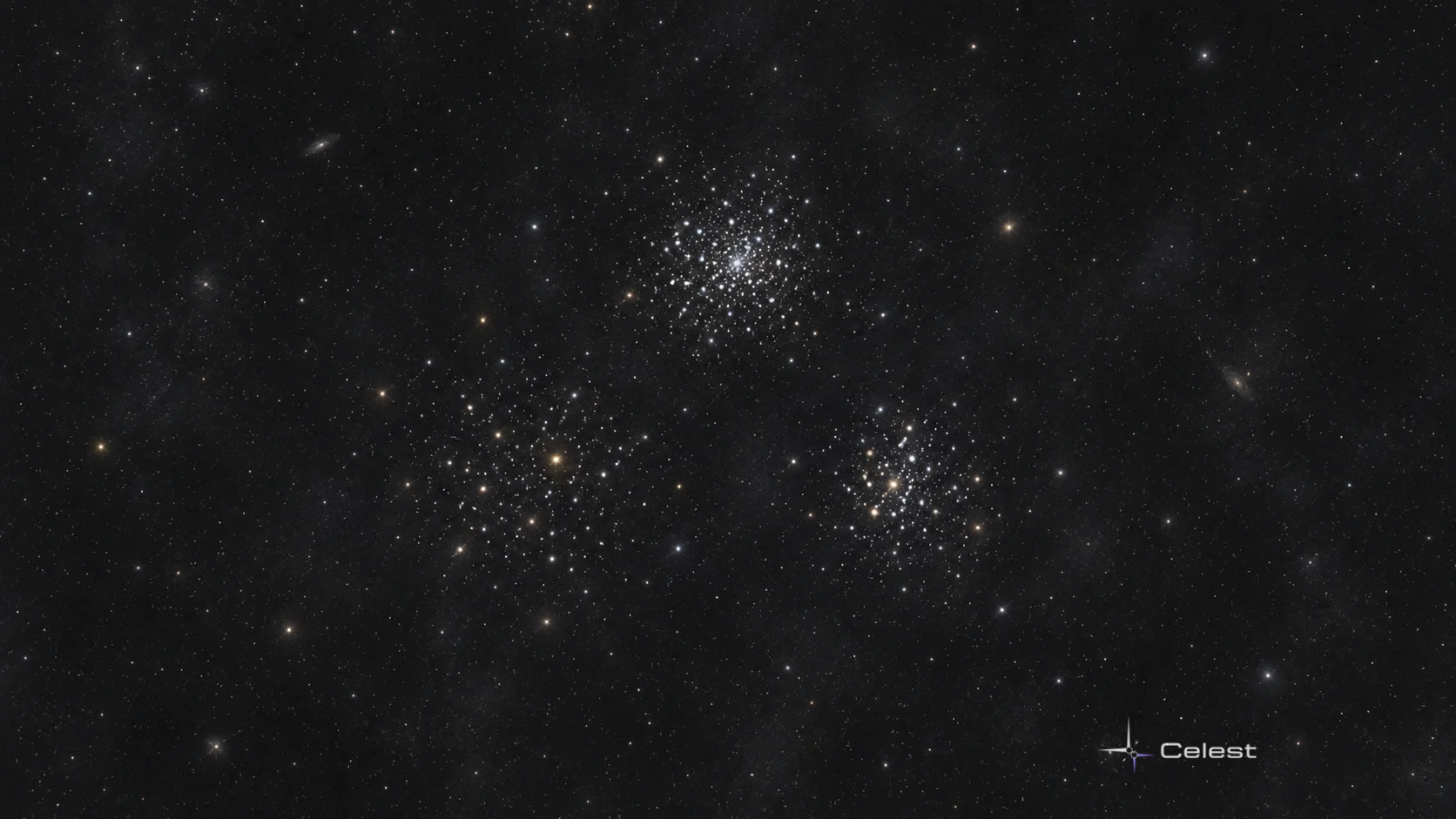
Conceptual three loose open star clusters with restrained ivory stars and a few muted warmer points, not an exact Auriga finder chart.
Stars & Deep Sky

Auriga’s Star Clusters: M36, M37 and M38

Three open clusters brighten the winter sky around Auriga. Their different appearances and stellar populations make them useful places to notice how stars change over time.

23 Oct 2026 · 5 min read

A conceptual modest warm stellar point beside a loose field of cooler points, illustrating a foreground star seen toward a cluster.
Stars & Deep Sky

Aldebaran: The Red Giant in Front of the Hyades

The bright eye of Taurus seems to belong to the surrounding V-shaped cluster. Its nearer position reveals the depth hidden in that sky drawing, while measured stellar changes pose another problem of interpretation.

22 Oct 2026 · 4 min read
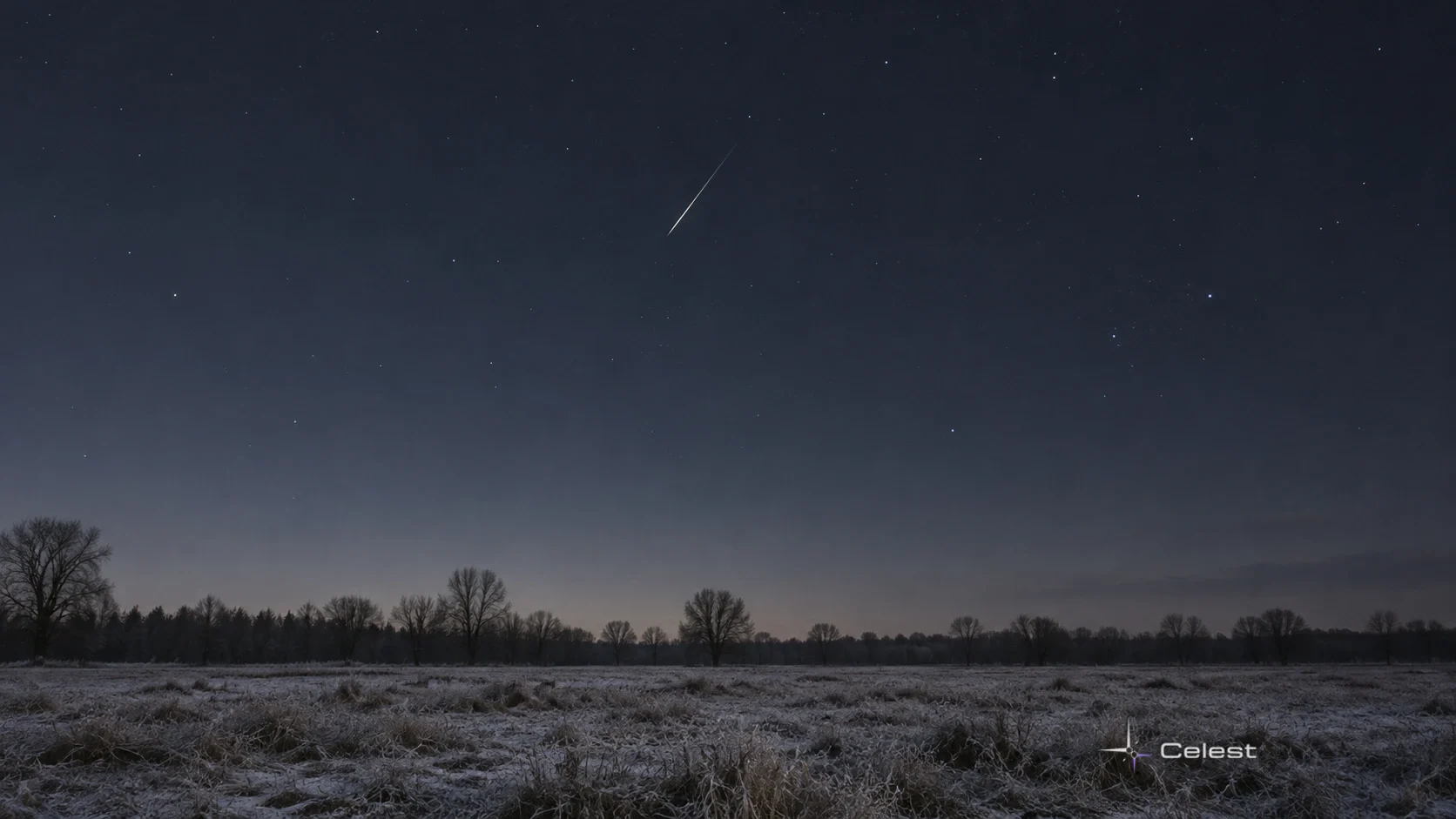
One restrained white meteor above a bare winter orchard and a low northern horizon.
Sky Events

Ursids Meteor Shower: December Meteors With a Distant Comet

This modest northern shower has occasionally strengthened while its parent comet was far from the Sun. The particles follow their own orbital history, rather than travelling as one cloud beside the nucleus.

21 Oct 2026 · 4 min read
A warmly dressed observer watches one thin meteor above a quiet late-autumn rural landscape.
Sky Events

Leonids Meteor Shower: Fast Meteors and Rare Storms

A familiar November shower has produced extraordinary meteor storms, but an ordinary observing night can be much quieter. The comet’s debris and the conditions of each encounter explain the difference.

21 Oct 2026 · 4 min read
A single modest bright meteor above a muted autumn field and a low line of trees.
Sky Events

Taurids Meteor Shower: Two Streams and Autumn Fireballs

Two overlapping streams explain the long Taurid season. Low activity can still include a striking bright meteor, while different observations reveal different parts of the debris family.

20 Oct 2026 · 5 min read
AI illustration for Halley's Comet: The Comet That Proved Its Own Return
Solar System

Halley's Comet: The Comet That Proved Its Own Return

It returns roughly every 76 years, was the first comet ever imaged up close by spacecraft, and won't be near Earth again until 2061 — here's what makes 1P/Halley worth knowing now.

20 Oct 2026 · 6 min read
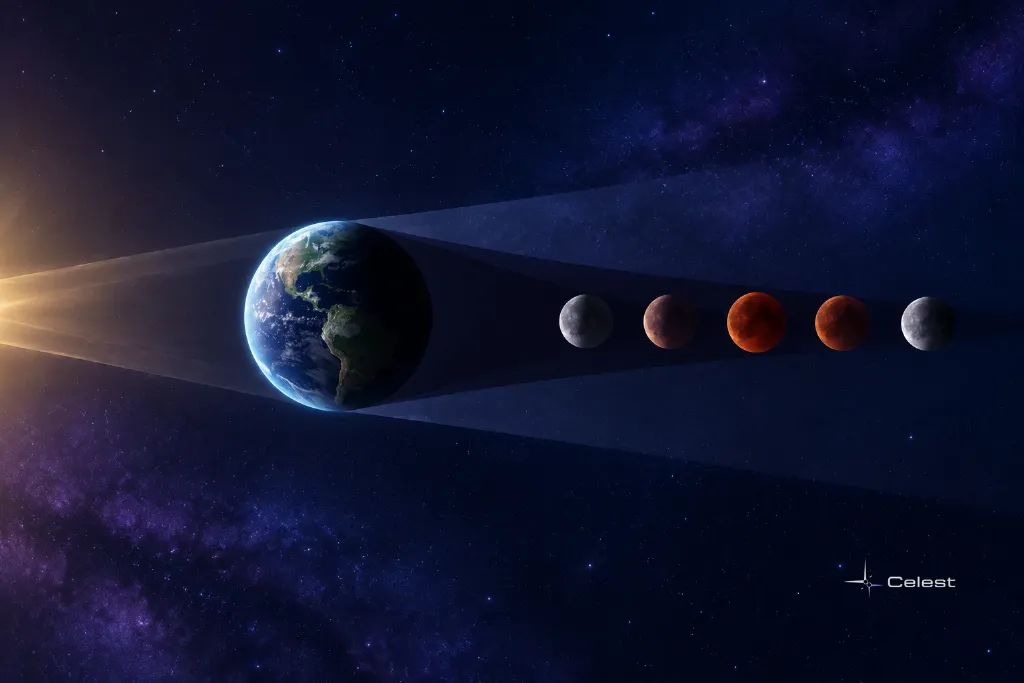
A lunar eclipse illustration shows Earth at left casting a dark shadow toward several reddish Moon phases against a star-filled purple-blue sky.
Astronomy Explained

What Is a Lunar Eclipse? The Shadow Explained

Earth's shadow has two zones, and which one the full Moon crosses decides everything you see — from a faint dimming to a rust-red Moon.

20 Oct 2026 · 5 min read
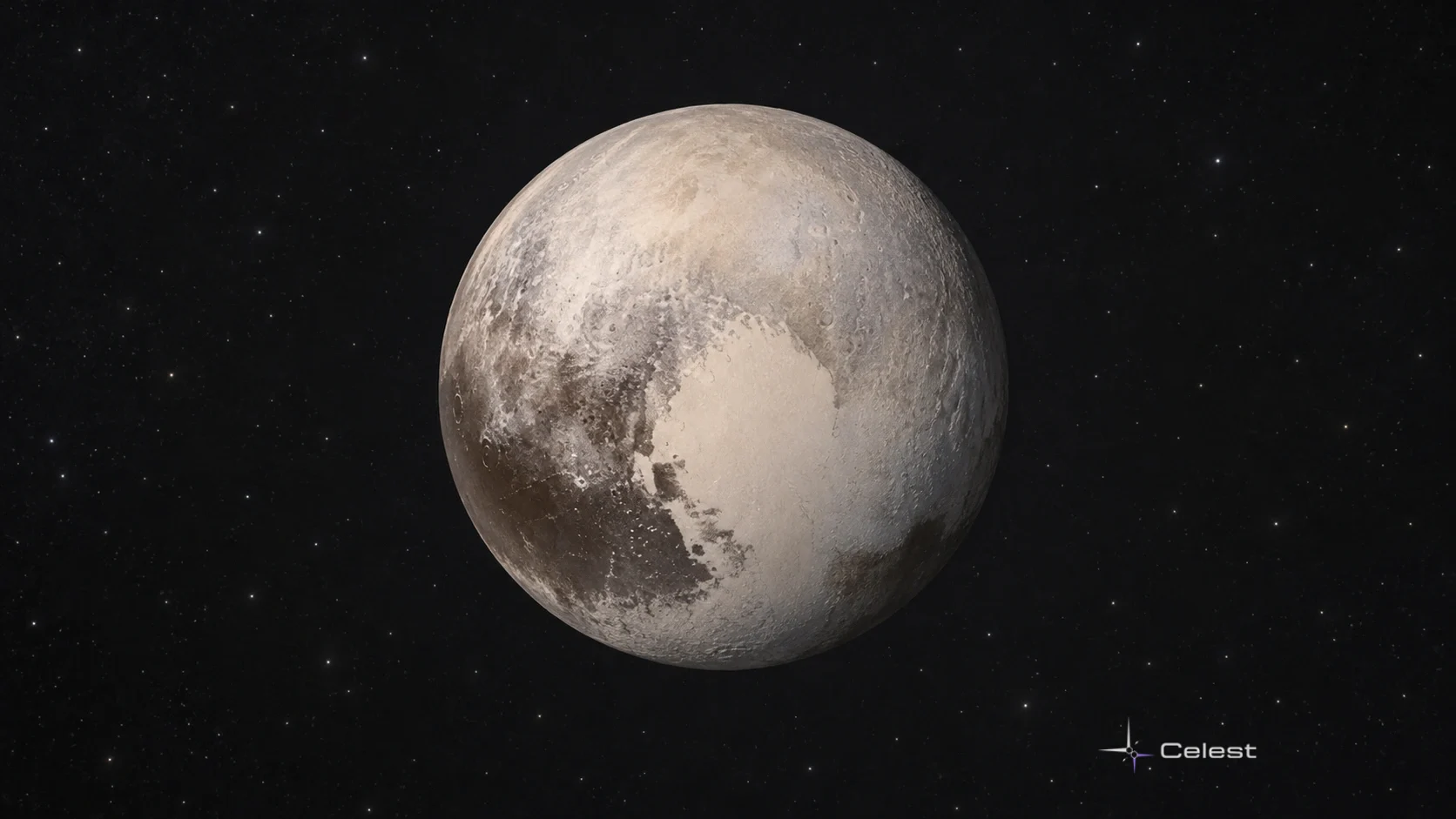
Conceptual muted Pluto globe with pale nitrogen-rich plains and darker icy terrain against quiet space.
Solar System

Pluto: A Small Icy World With an Active Surface

Pluto is smaller than our Moon, but its landscape is far from featureless. Water-ice mountains, nitrogen plains and a thin atmosphere make this distant dwarf planet a useful lesson in how different kinds of ice can behave.

20 Oct 2026 · 4 min read

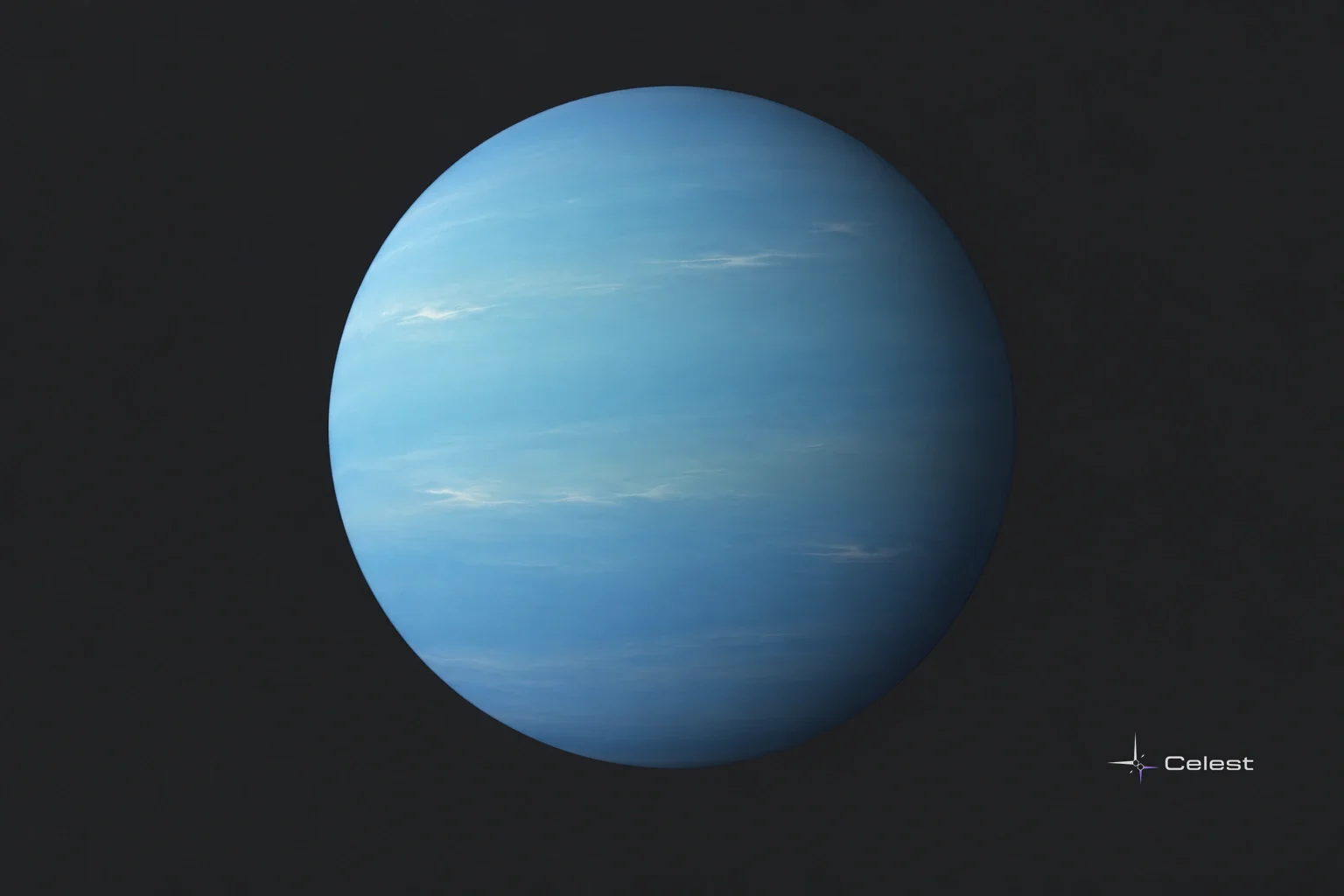
Conceptual pale blue-green Neptune globe with faint atmospheric streaks and no fixed dark-spot marker.
Solar System

Neptune: A Pale Planet With Fierce Winds

The most distant of the eight planets is a cold, pale blue-green world with an active atmosphere. Its quiet-looking colour hides fast winds and changing storms.

19 Oct 2026 · 4 min read
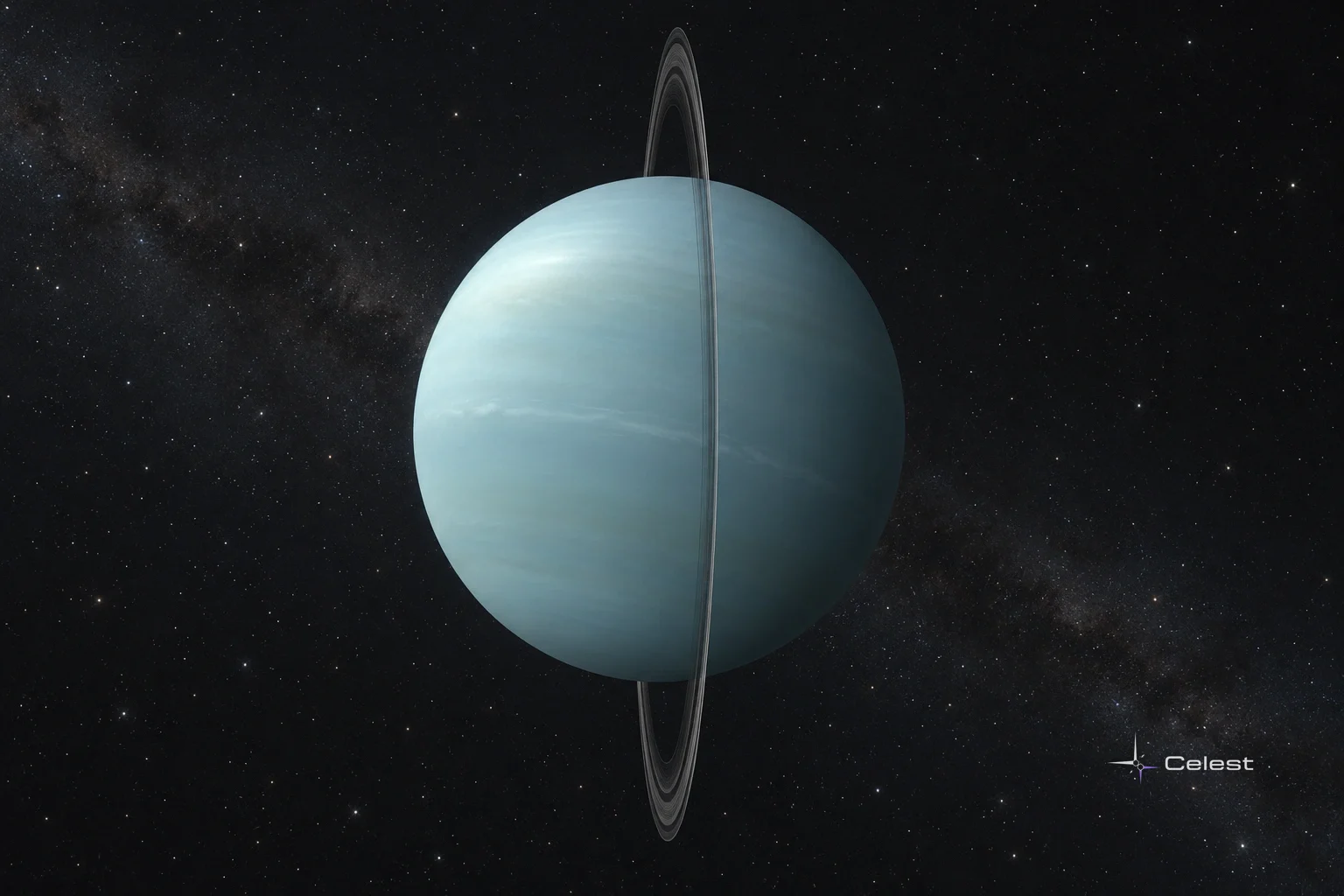
Conceptual illustration of pale blue-green Uranus with its narrow rings inclined across the globe.
Solar System

Uranus: The Planet That Spins on Its Side

A pale blue-green planet has one of the strangest orientations in the Solar System. Its tilted axis changes how sunlight reaches its poles for decades at a time.

19 Oct 2026 · 4 min read
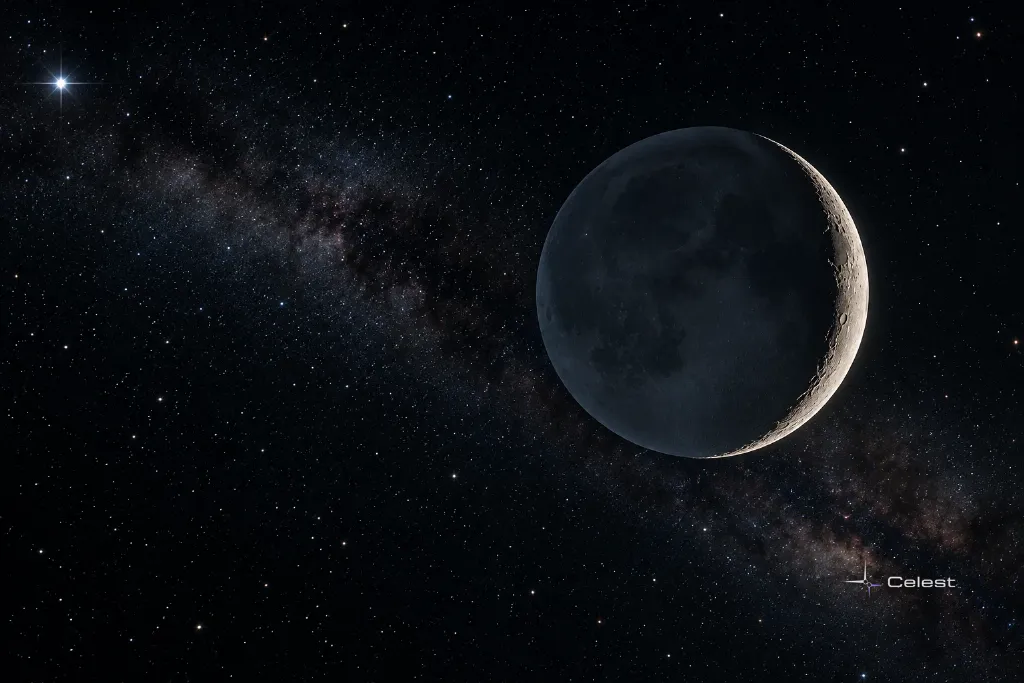
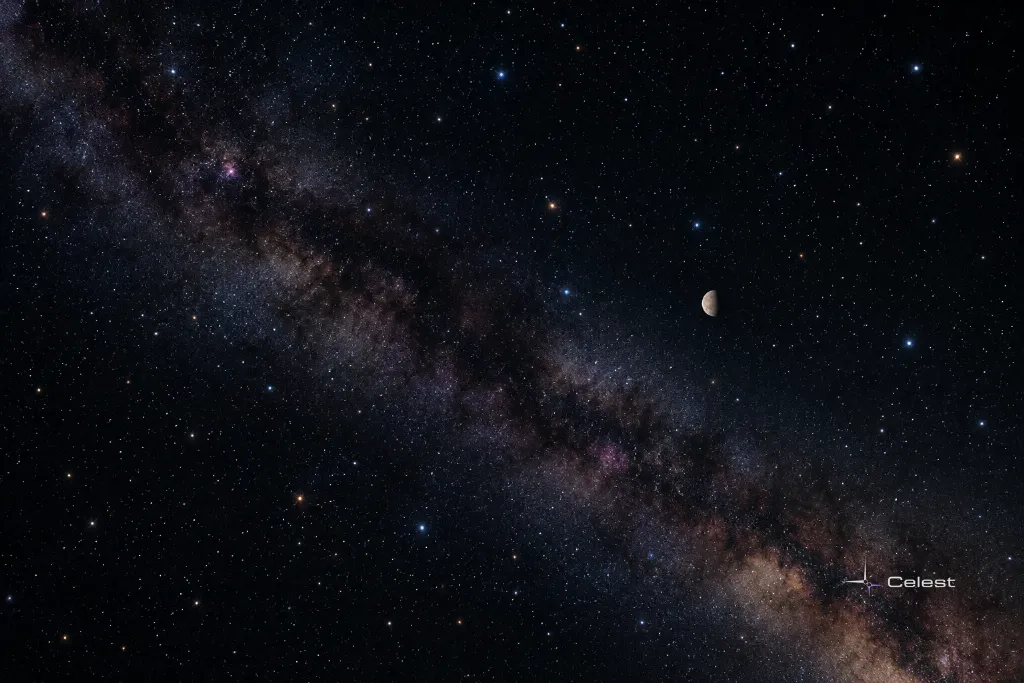
A crescent moon with a faintly illuminated dark disk hangs against a star-filled sky and the Milky Way.
Solar System

What Is Earthshine on the Crescent Moon?

A crescent Moon isn't fully dark, even in its shadowed half. Here's the phase, the timing and the old name behind that faint glow.

19 Oct 2026 · 4 min read
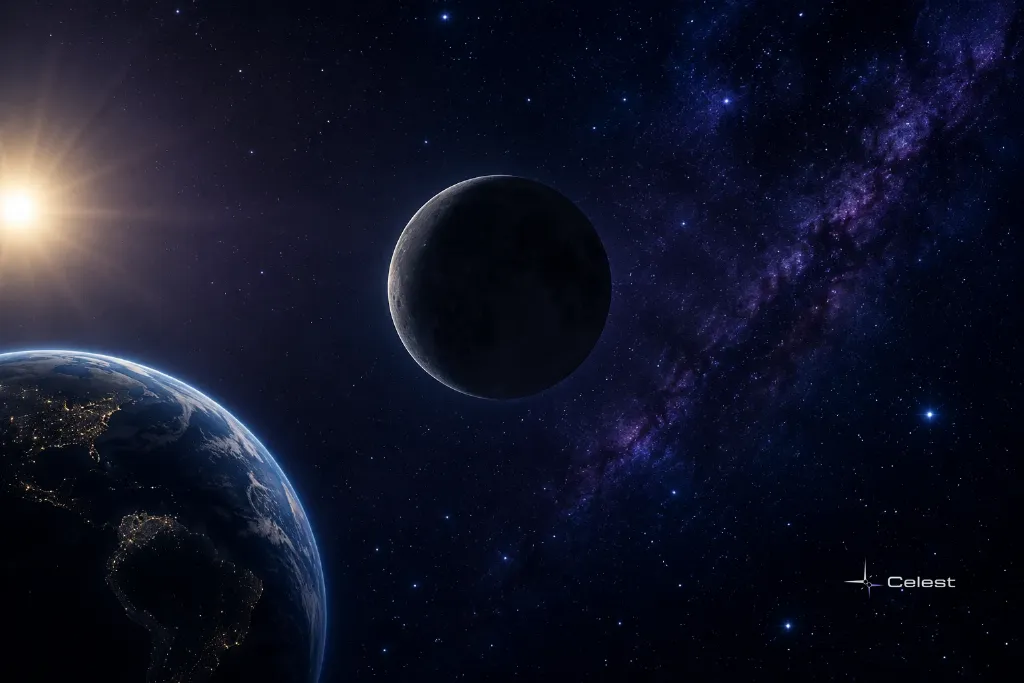
The new moon appears as a dark sphere with a slim lit edge above Earth, against a star-filled purple Milky Way and bright Sun.
Solar System

What Is a New Moon, and Why It Matters

Here's what actually happens when the Moon seems to vanish each month — and why that instant isn't the same as the thin crescent everyone pictures.

19 Oct 2026 · 4 min read
AI illustration for What Is a Galaxy? A Beginner's Explanation
Astronomy Explained

What Is a Galaxy? A Beginner's Explanation

A galaxy holds stars, gas, dust and dark matter together through gravity. Its shape and changing star population reveal a history far bigger than one star.

19 Oct 2026 · 5 min read
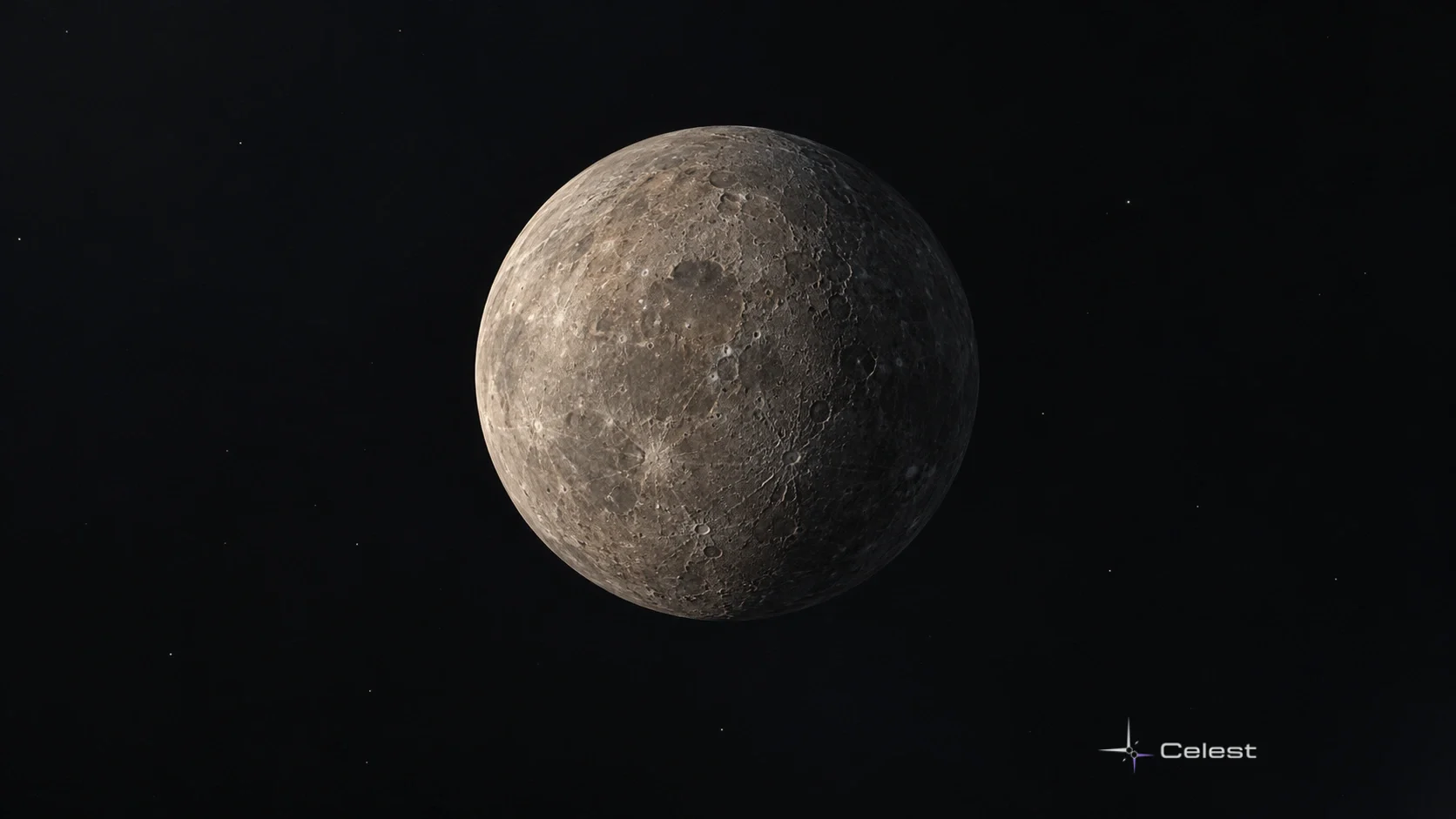
A subdued grey-brown, cratered Mercury globe with one sunlit hemisphere against a dark background.
Solar System

Mercury: The Small Planet With Ice Near the Sun

The innermost planet combines a heavily cratered exterior with an active metallic interior. Its polar shadows show why distance from the Sun alone cannot describe the conditions across a whole world.

18 Oct 2026 · 5 min read
AI illustration for What Is a Deep-Sky Object, Really?
Astronomy Explained

What Is a Deep-Sky Object, Really?

A grey smudge at the eyepiece and a glowing nebula in a photo can be the same object. The gap between them comes down to how light behaves, not what you're doing wrong.

18 Oct 2026 · 5 min read
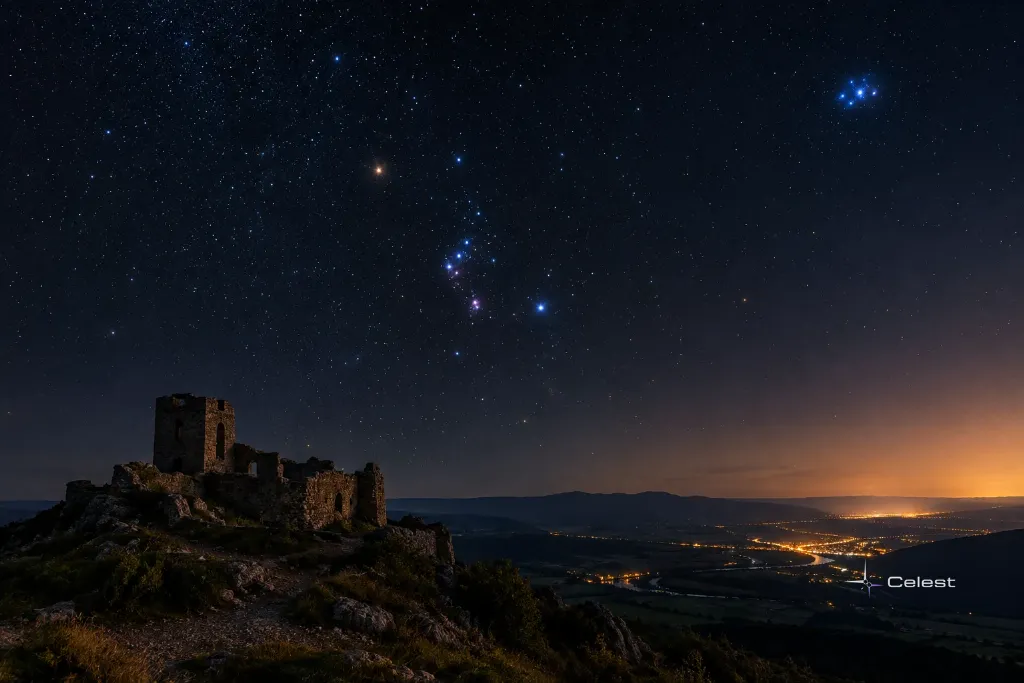
The Orion Nebula glows pink and violet at center, surrounded by dark blue space, wispy clouds and scattered stars.
Stars & Deep Sky

Orion Nebula: A Nearby Nursery for Massive Stars

A fuzzy patch in Orion’s Sword is the nearest region where massive stars are forming. Binoculars reveal a glowing cloud; a telescope shows the bright stars shaping it.

18 Oct 2026 · 6 min read
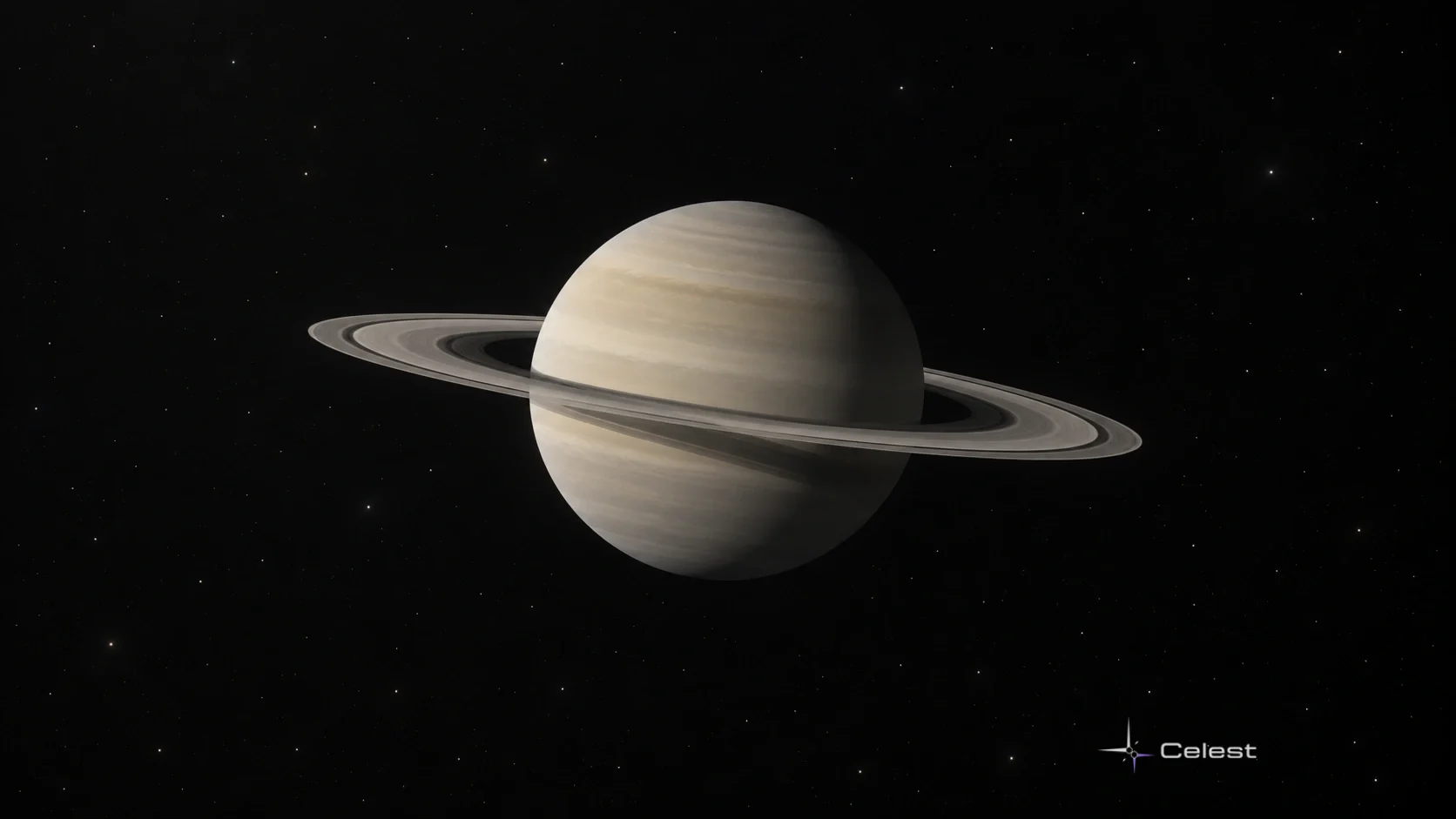
Conceptual muted beige Saturn with broad pale rings and subtle atmospheric bands.
Solar System

Saturn: A Giant Planet With Rings of Ice and Rock

The sixth planet is far more than a ringed globe. Its moving ice particles, unusual moons and thick atmosphere form a system that changes how you look at a familiar planetary image.

18 Oct 2026 · 5 min read
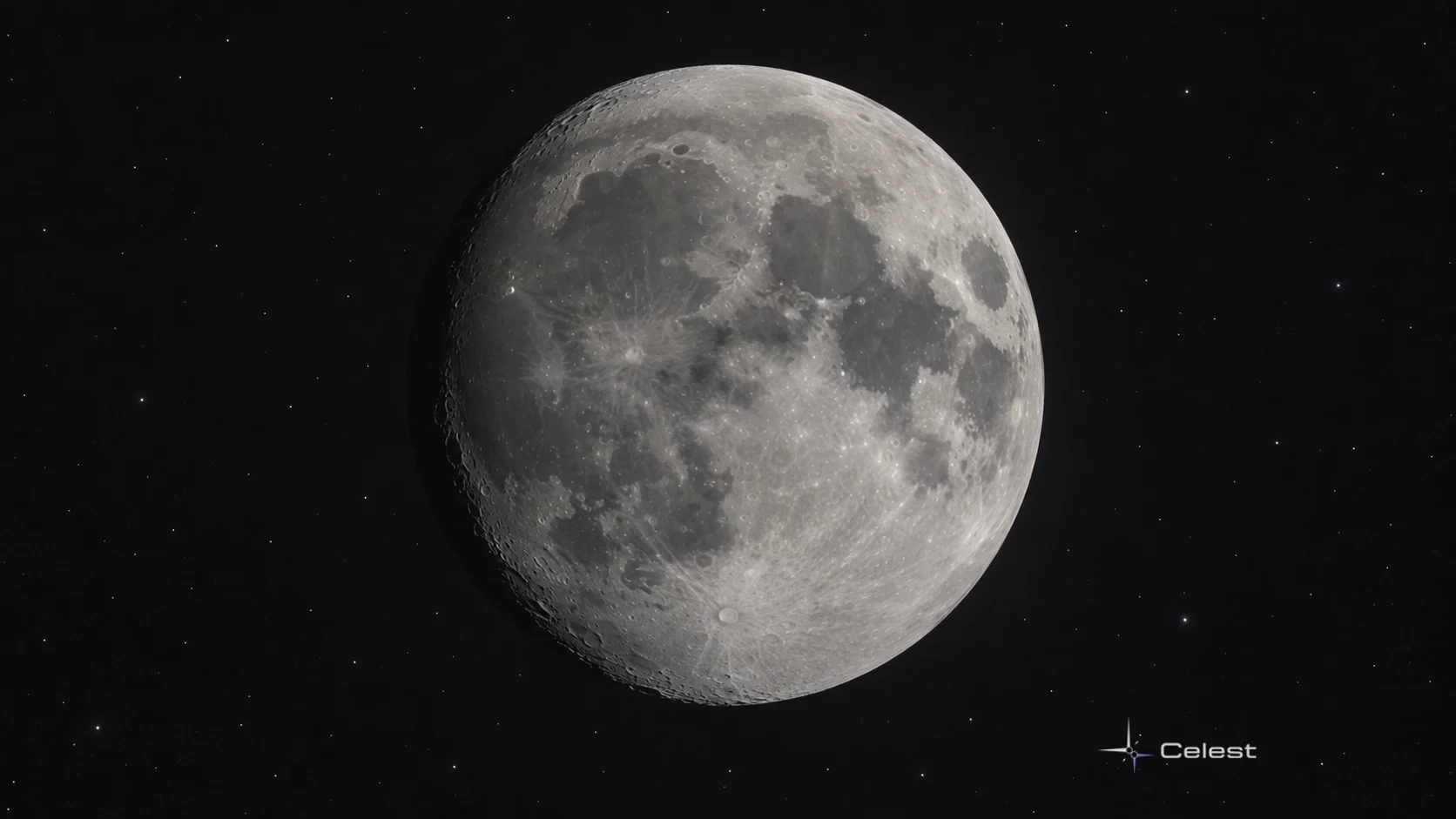
Conceptual grey gibbous Moon showing broad dark plains and brighter cratered terrain.
Solar System

The Moon: Our Nearest World and Its Changing Light

The Moon keeps a familiar face toward Earth, yet a different angle of sunlight can transform the view. Its dark plains and bright craters tell parts of a much older story.

17 Oct 2026 · 5 min read
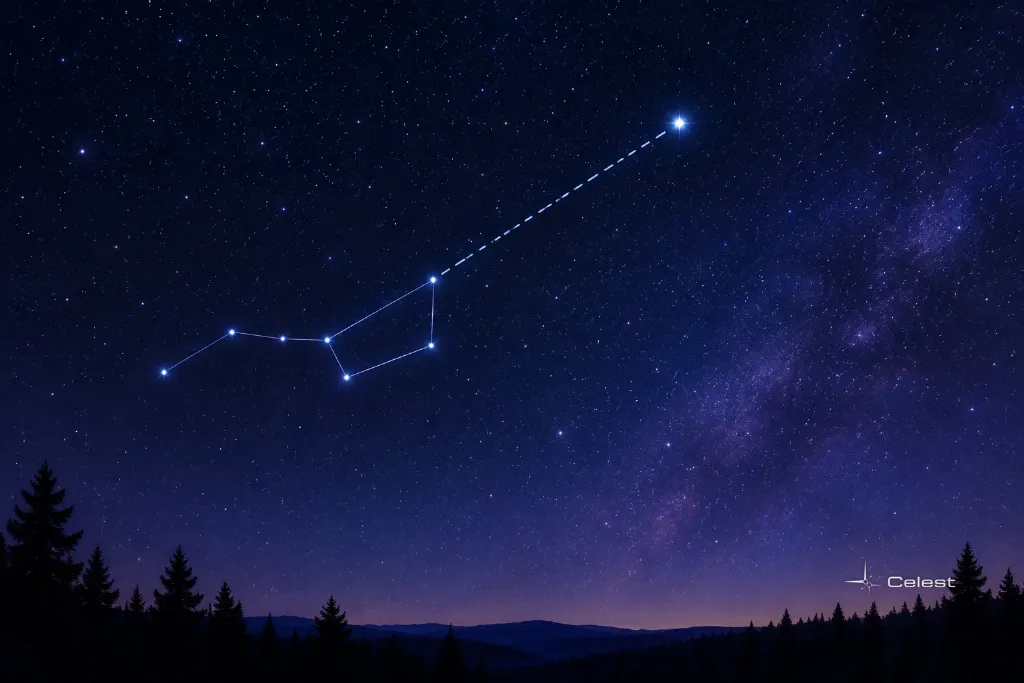
Polaris shines above a silhouetted forest, with the Big Dipper outlined by stars and a dotted line pointing to it.
Observing Guides

How to Find the North Star, Polaris

Use the Big Dipper's pointer stars to find Polaris in northern skies. The route works when those stars are above your horizon and clear of obstacles.

17 Oct 2026 · 5 min read
Planet Earth glows blue against a star-filled space scene, with the Americas visible and a violet Milky Way behind it.
Solar System

Planet Earth: What Makes Our Home World Unique

Earth is the third planet from the Sun: an ocean-covered rocky world with a breathable atmosphere, moving crust and the only life yet confirmed anywhere.

17 Oct 2026 · 5 min read
Mars, the Red Planet, appears large and rust-colored against a star-filled space scene with a glowing purple Milky Way.
Solar System

Mars, the Red Planet: A Complete Portrait

Mars is a rust-colored rocky world with giant volcanoes, two small moons and the remains of ancient rivers. Its changing distance from Earth transforms the view through a telescope.

16 Oct 2026 · 6 min read
Two people in a park wear opaque solar-viewing glasses over their eyes while looking upward in daylight.
Observing Guides

How to Watch a Solar Eclipse Safely

No telescope required — just the right filter or a simple projection trick, and a clear sense of what never belongs anywhere near your eyes.

16 Oct 2026 · 4 min read
A meteor shower streaks across a star-filled Milky Way sky above dark mountains, pine trees, and a calm lake at dusk.
Observing Guides

Meteor Shower Times: A Beginner's Field Guide

A meteor shower rewards patience more than gear. Here's the exact route — direction, timing, and posture — that turns a dark night into a handful of real streaks.

15 Oct 2026 · 5 min read
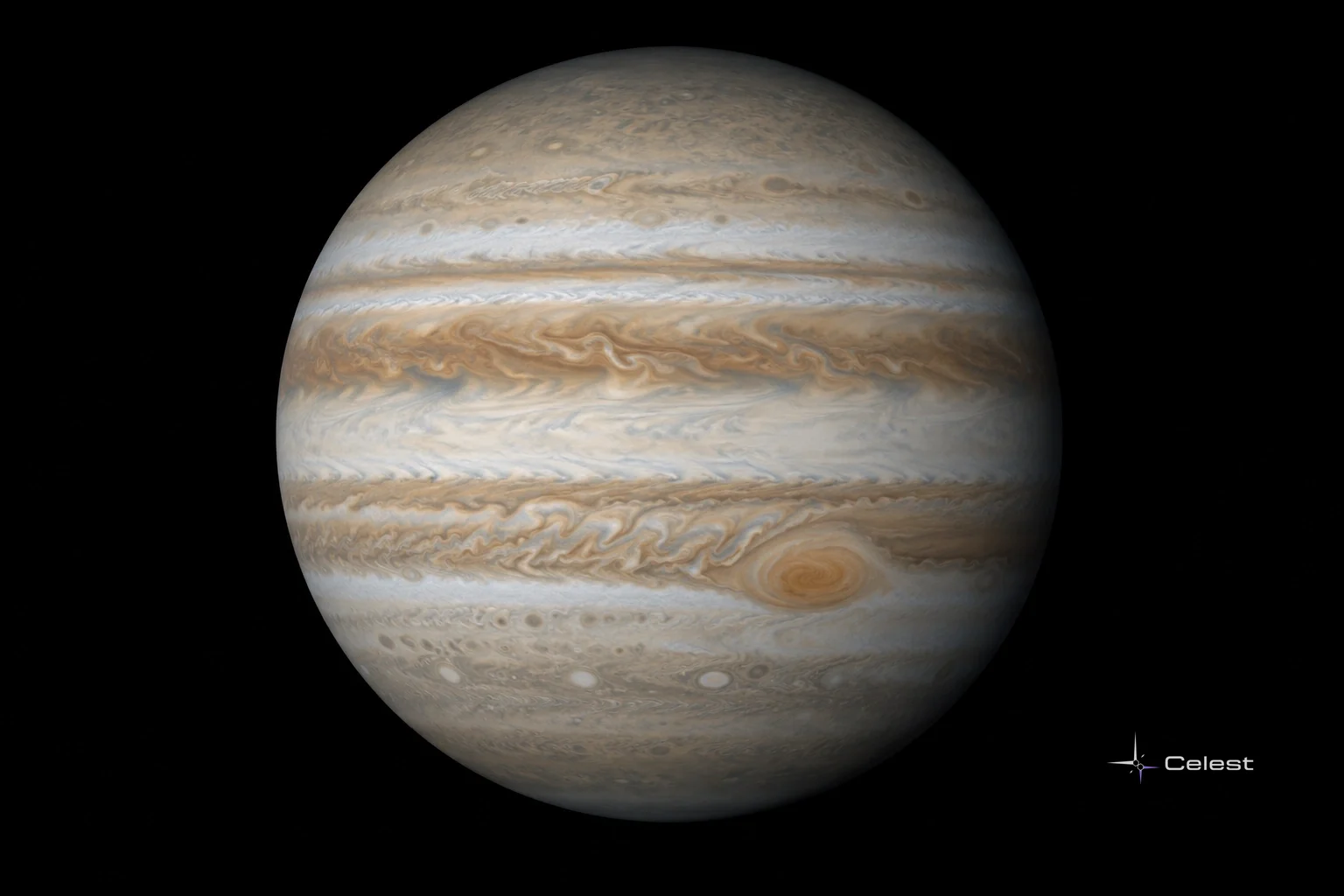
Jupiter's cream and tan cloud bands curve across its disk, with the Great Red Spot visible against black space.
Solar System

Jupiter: The Solar System's Largest Planet

Jupiter holds more than twice the mass of all the other planets combined. Its cloud bands, giant storms and four large moons make it a rewarding first telescope target.

15 Oct 2026 · 6 min read
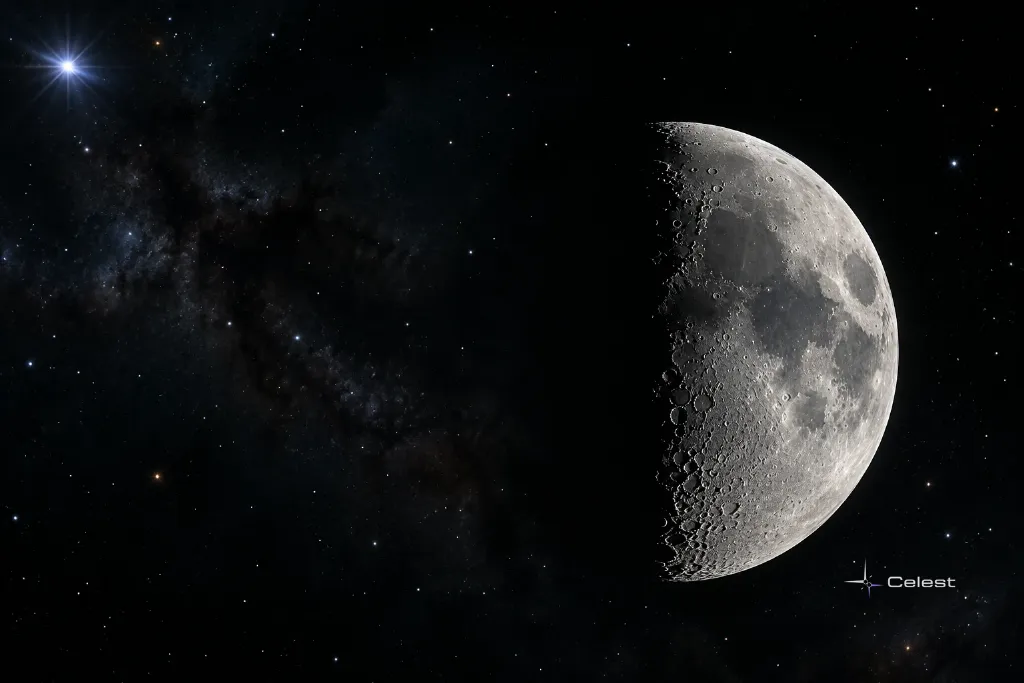
The Moon appears half illuminated against a star-filled black sky, with the Milky Way and a bright star behind it.
Astronomy Explained

What Causes the Moon's Phases?

A tour through the real mechanics behind new moons, full moons and everything in between — no shadows, no shrinking, just changing angles of sunlight.

4 Oct 2026 · 5 min read
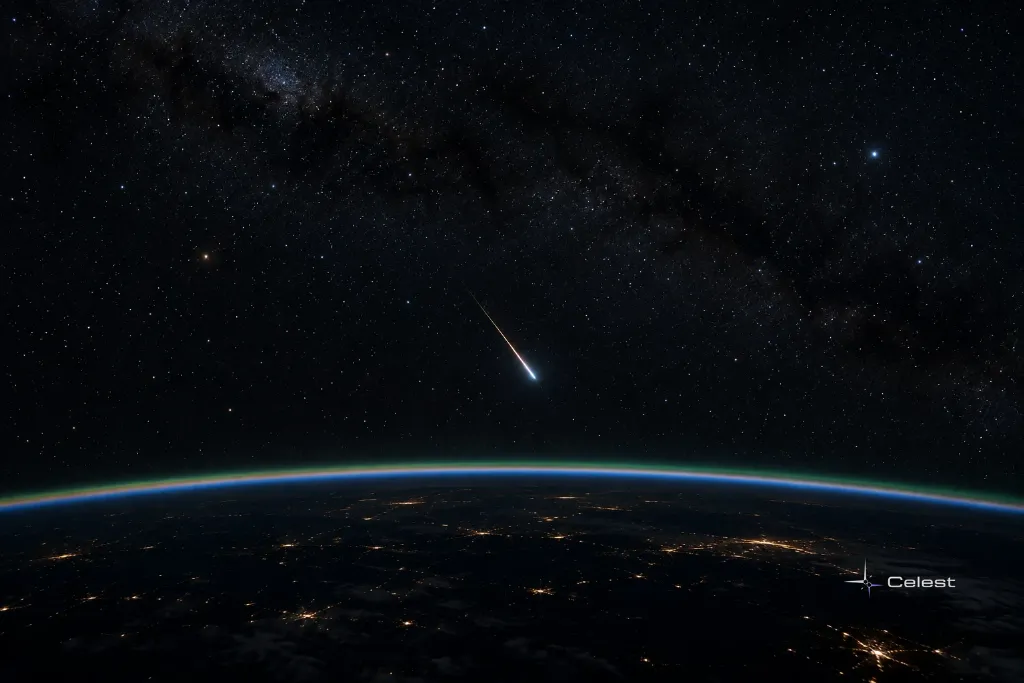
A bright meteor streaks across a star-filled sky above Earth's glowing blue horizon and scattered lights below.
Sky Events

When Is the Next Meteor Shower You Can See?

The Perseids lit up a moonless night in August 2026; now the countdown turns to December's Geminids and the annual pattern that brings a fresh shower every few weeks.

4 Oct 2026 · 5 min read
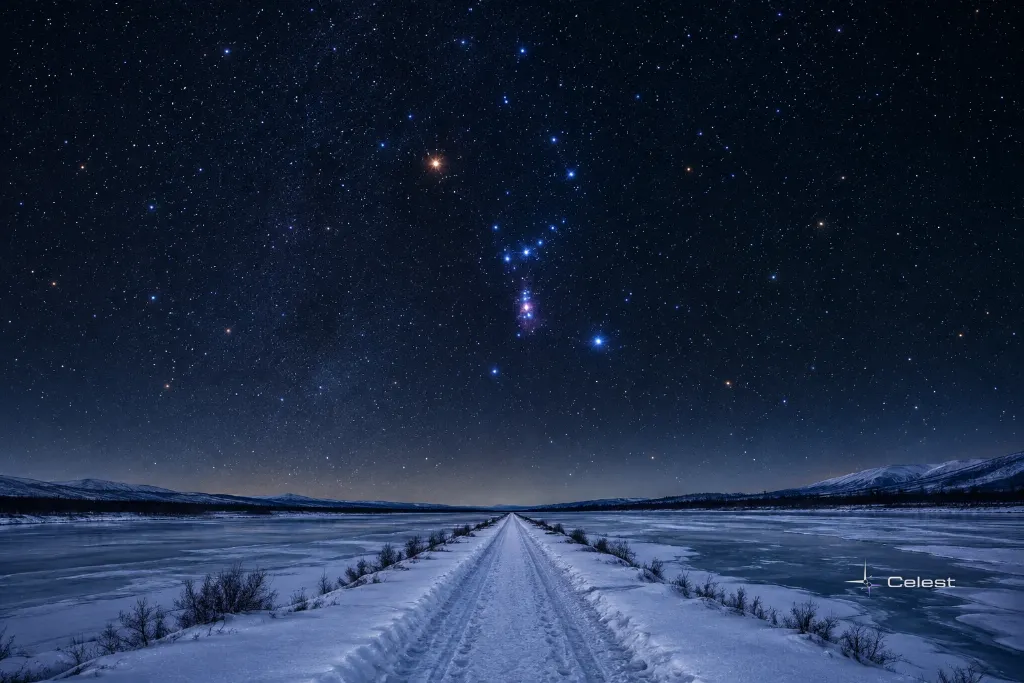
A bright constellation hangs above a snowy road, with blue stars scattered across a dark sky and hills on the horizon.
Astronomy Explained

What Is a Constellation, Really?

The 88 official constellations divide the whole sky into regions. Their familiar outlines connect stars that can lie at very different distances.

4 Oct 2026 · 4 min read