Meteor, Meteoroid or Meteorite: What Changes?
The object in space, the streak overhead and the rock on the ground are different parts of one possible journey. Learn what changes—and what a surviving sample can reveal.

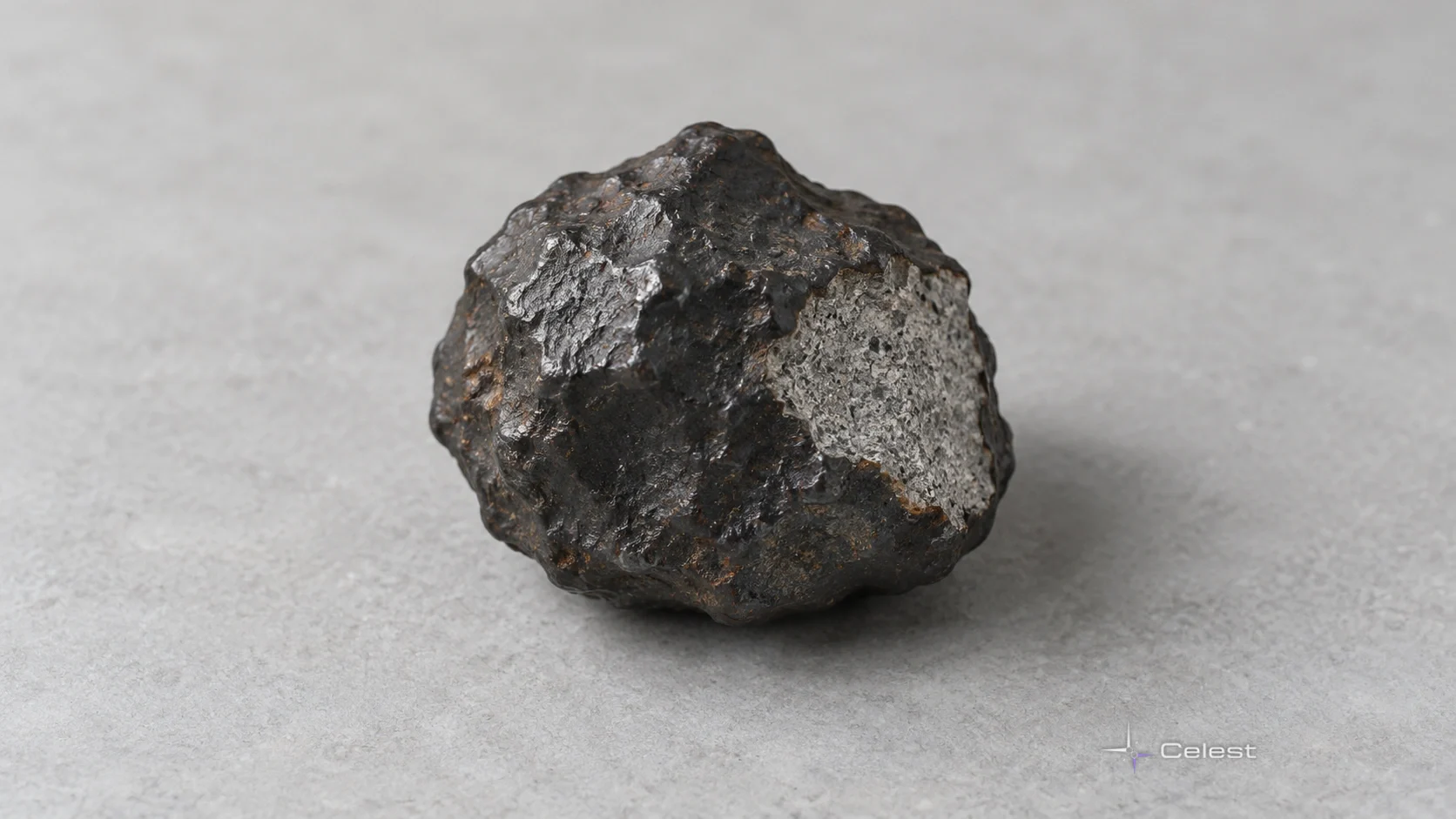
A meteoroid is the object in space, a meteor is the streak of light during its passage through an atmosphere, and a meteorite is material that survives to the ground.
The names describe different parts of an encounter, so one fragment can feature in all three explanations.
The distinction starts with the familiar “shooting star.” What flashes across your view is an atmospheric event, rather than one of the distant suns described in the guide to stars. Whether anything solid reaches the ground is a separate question.
What Is Travelling Through Space?
Meteoroids are small natural bodies, often pieces broken from larger objects. They can contain rock, metal or both. Some originate in asteroids or comets; impacts can also eject material from the Moon and planets that later travels through space.
The important point here is the setting: the object is still in space.
You do not need an exact size cutoff to understand the three names. Published definitions draw the boundary between a meteoroid and a small asteroid in somewhat different ways. The meteor–meteorite distinction instead concerns the atmospheric event and whatever survives it.
What Makes the Streak of Light?
A fast incoming fragment transfers energy as it encounters the atmosphere. Gas compressed in front of it heats strongly, the object slows, and material can be removed from its surface. This loss of surface material is called ablation. The body can also break into smaller pieces.
The meteor is the visible light associated with that passage.
A very bright meteor is called a fireball. Some bright events include fragmentation, but a dramatic flash does not tell you on its own how much material remained solid or whether a piece was subsequently recovered. Observations of the flight and examination of any sample provide different evidence.
Does a Meteor Shower Deliver Meteorites?
Usually, the small particles responsible for a shower do not survive to the ground. The annual displays in the meteor shower guide occur when Earth crosses debris streams left by comets or, in some cases, asteroids. Many incoming grains are small and fragile.
That is why watching numerous streaks does not automatically give you a field of stones to collect afterward.
The shower describes activity in the atmosphere. A meteorite requires surviving material at the end of the journey, not simply an especially memorable light trail.
What Makes a Surviving Rock a Meteorite?
Material becomes a meteorite when it survives the atmospheric passage and reaches the ground. It need not preserve the shape of the body that entered: pieces can separate during flight, and much of the incoming material may have been lost.
Some survivors carry a fusion crust, a thin skin that melted and solidified during passage. Fresh examples often have a dark outer surface. Weathering can change that appearance, so a photograph of one fresh specimen is not a universal template for every meteorite.
Meteorites also vary inside. Iron examples are mostly metal, stony ones are mainly rock-forming silicate minerals, and stony-irons contain substantial amounts of both. Those are composition groups, not extra stages after meteoroid, meteor and meteorite.
How Do Scientists Recognise a Meteorite?
They examine several lines of evidence together. The outer surface, interior minerals, texture and circumstances of the find can help distinguish a candidate from an ordinary terrestrial rock.
An unusual dark stone is a starting question, not a completed identification.
Photographing the location and preserving the specimen’s context can help an expert assess it. A laboratory can examine the material itself; a comparison with internet pictures cannot supply the same information. The purpose is to establish what the sample is before assigning a history to it.
Origin requires further evidence. Most recovered meteorites come from asteroids, while some come from the Moon or Mars. Compositions can be compared with returned lunar samples or Martian measurements.
A fragment’s chemistry can therefore connect ground-based research with exploration of other worlds.
What Can a Small Sample Reveal?
Some stony meteorites, called chondrites, contain tiny rounded mineral grains known as chondrules. Chondrites include material more than 4.5 billion years old, preserving evidence from the early Solar System. That age concerns the material, not the date on which it arrived on Earth.
Other meteorites record a different history: melting, the separation of dense metal toward an asteroid’s core, or later collisions. A fresh fall can therefore deliver material that has already experienced a long and complicated past.
The flash tells you about arrival. A surviving sample can tell you about what came before it.
That is the useful consequence of learning the three names. The event overhead may last briefly, while the rock left behind can preserve a record of processes that helped build planets. One encounter brings two very different timescales within reach.
Leave a comment
Comments appear after moderation.