Magnitude: Why Smaller Numbers Mean Brighter Stars
A smaller magnitude means a brighter appearance, but one number cannot tell the whole story. Learn the scale, the role of distance and the difference between a sharp point and a faint extended glow.

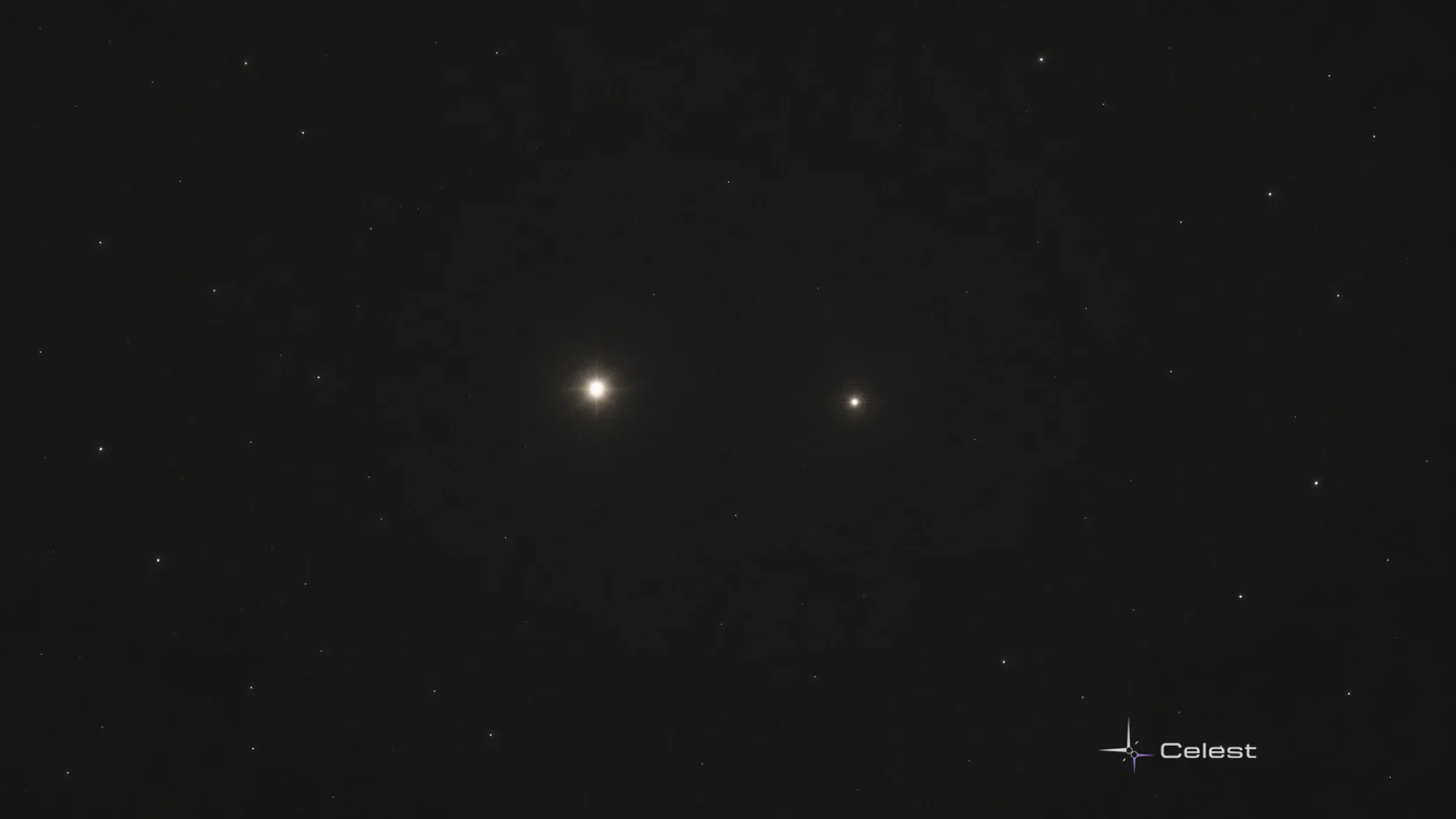
Magnitude is a scale for brightness, and a smaller number means a brighter object.
Apparent magnitude describes the light seen from Earth. A star listed at magnitude 1 appears brighter than one at magnitude 6, provided the values describe compatible measurements. The scale tells you about appearance before it tells you about the star itself.
The order feels backwards at first. Once you understand where it came from and what a step means, catalogue values become much easier to use. The star guide gives those values a home among the objects you can identify and explore.
Choose one star you can identify on the sky map before reading its catalogue entry. That gives the number a visible reference, while the scale explains which comparisons you can make.
Why Do the Numbers Run Backwards?
They grew from a ranking: the most conspicuous stars belonged to the first rank, while much fainter visible stars belonged to the sixth. Think of first place in a competition. Being first does not mean having the smallest achievement; the number marks the leading position.
Modern astronomy kept that direction while making the scale precise and extending it. Very bright objects can have negative magnitudes, and instruments measure objects far fainter than sixth magnitude. Zero is a reference on the scale, not the point at which light disappears.
What Does a Five-Step Difference Mean?
It means a factor of 100 in apparent brightness.
A hypothetical magnitude 1 star supplies 100 times as much light as a magnitude 6 star in the same measurement band. The stars are five magnitude steps apart, not five times apart in brightness.
That is the important numerical example.
One step corresponds to about a factor of 2.5. Astronomers call the scale *logarithmic*: the same numerical gap represents the same ratio of light. You can read a catalogue without calculating that ratio every time; remember first that lower means brighter and a modest number gap can hide a substantial difference.
Does a Brighter Appearance Mean More Power?
No. Distance changes how bright an object appears.
A nearby light can dominate your view while a much more powerful distant light looks faint. Apparent magnitude mixes the object’s output with the circumstances of our view, so it cannot identify intrinsic power on its own.
For stars, absolute magnitude answers a different question: how bright would each look from the same standard distance of 10 parsecs? A parsec is a distance unit used for stars. Giving every star that common reference removes the advantage of simply being nearer.
LCO illustrates the idea with the Sun: its apparent magnitude from Earth is about −26.7, while from 10 parsecs it would be about +4.7. The Sun has not changed its energy production in that comparison. We have changed the imagined viewing distance.
Why Should You Check the Measurement Band?
Because a magnitude can describe selected wavelengths rather than all the light together. Astronomers use filters to measure different parts of a star’s light. A visual-band value and a value measured through another filter do not automatically make a fair simple comparison.
For a beginner, the useful habit is straightforward: look for comparable visual values when comparing how two stars appear. More detailed colour measurements answer additional questions about the stars, beyond this first reading of brightness.
Why Can a Brightly Listed Galaxy Look Faint?
Its total light is spread out. A galaxy’s integrated magnitude adds light from across its apparent area. A stellar point concentrates its appearance into a much smaller region, so similar total light does not promise the same visual impression.
Surface brightness describes how that light is distributed across the apparent area. A broad, faint glow can blend into the background sky even when its total magnitude sounds encouraging. NASA’s 2026 image of ESO 490-017 offers a professional example: a diffuse stellar swarm behind more conspicuous foreground stars.
The distinction helps you interpret observing conditions sensibly. A catalogue number is part of choosing an object, while the background sky and the way light is distributed affect what you can distinguish. Compare like objects before treating one value as a complete difficulty rating.
Try a Comparison With Two Identified Stars
Use the sky map for your evening to identify two visible bright stars. Look up their compatible visual magnitudes and notice which appears stronger. Start with recognising the order, rather than claiming a precise decimal estimate from a first glance.
For systematic observations, organisations such as AAVSO provide calibrated comparison charts and instructions. Following those methods turns a casual impression into a consistent record. The comparison stars, observing details and uncertainty matter alongside the numerical result.
Brightness can then become a story over time.
Repeated measurements may reveal real stellar change rather than merely rank a beautiful point. A small number in a catalogue is the beginning of that investigation, not its conclusion.
Leave a comment
Comments appear after moderation.