When Is the Next Meteor Shower You Can See?
The Perseids lit up a moonless night in August 2026; now the countdown turns to December's Geminids and the annual pattern that brings a fresh shower every few weeks.

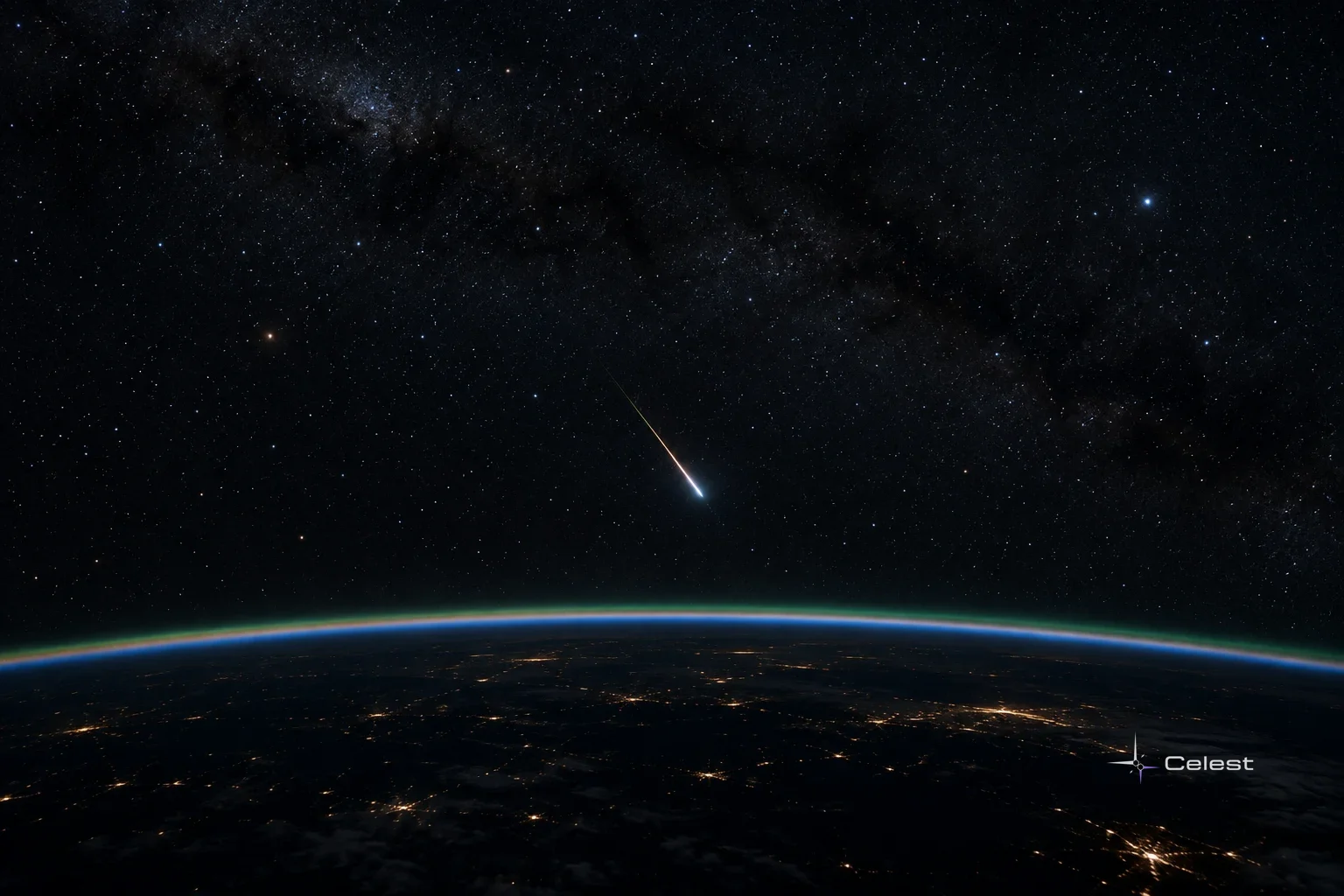
The next meteor shower with real staying power is the Geminids, active every year in a window centered on Dec 13-14, though a confirmed date and Moon phase for 2026 aren't out yet.
The clearest recent example of a shower done right was the Perseids, which crested on the night of Aug 12-13, 2026, under a moonless sky — a peak that's already come and gone by this date.
That's not bad news. The Perseid night shows exactly what a well-timed shower looks like, and the same pattern repeats every year with the Geminids in December and the Quadrantids in early January. Check the astronomy calendar for updates as those dates firm up, and use the meteor shower guide to track whichever one is active.
The quick plan
Here's the shape of a strong meteor shower night, drawn from the 2026 Perseid peak — the most fully worked example on record — plus the annual windows worth marking down.
Peak: Aug 12-13, 2026 for the Perseids, now past; the next widely reliable window is the Geminids around Dec 13-14 (2026 specifics not yet confirmed).
Best time: for a Perseid-type peak, plan to start around 11 p.m. local time, with rates climbing after midnight and peaking in the hour before dawn.
Where to look: you don't need to stare at the radiant, the point meteors seem to come from — the longest, brightest trails actually show up about 45 degrees away from it.
Moon: the 2026 Perseid peak fell on a new moon, so skies stayed dark all night; check the Moon guide closer to December, since the Geminids' 2026 Moon phase isn't confirmed yet.
What to expect: an ideal rate near 100 meteors an hour, but dozens per hour under dark, clear skies is the realistic number to plan around.
Equipment: none — bare eyes outperform binoculars or a telescope for meteors, which move too fast to track through an eyepiece.
What you'll actually see
Meteor rates get quoted as ZHR, the zenithal hourly rate: how many meteors a single observer would see in one hour under perfect conditions — a clear, moonless sky with the radiant directly overhead. It's a ceiling, not a promise.
During the Perseids' 2026 peak, with ZHR near 100, that ceiling worked out to about one meteor a minute. A full Moon can cut that number in half, and a radiant sitting low, below 30 degrees above the horizon, cuts it further still.
The 2026 Perseid peak had the Moon out of the way entirely, so dozens of meteors an hour was a realistic expectation, not just a theoretical one, for anyone under dark skies.
The Geminids and Quadrantids both carry a similarly high ZHR above 100 in a normal year, but without a confirmed 2026 Moon phase for either, treat dozens per hour as the working estimate rather than the ceiling.
How to watch
Watching a meteor shower well is less about gear and more about timing and patience.
- Pick a dark site away from city glow — check the light-pollution map to find one nearby; a darker sky reveals far more of the faint meteors.
- Arrive before your eyes need to work, and park somewhere oncoming headlights won't hit you; a single bright flash resets your night vision.
- Give your eyes about 30 minutes to adapt to the dark, and skip the phone screen once you're settled — even a quick glance undoes the adjustment.
- Face away from the radiant or just lie back with the horizon at the edge of your view; the longest trails show up away from that point, not staring straight at it.
- Stay out from around 11 p.m. to just before dawn if the shower behaves like the 2026 Perseids — rates build steadily after midnight and peak in the last dark hour.
A red-filtered flashlight helps if you need to check a chart without ruining your adaptation, and a chair or blanket makes the wait comfortable. Binoculars and telescopes only narrow your view, so leave them behind.
If clouds or moonlight get in the way
A single cloudy night doesn't end a meteor shower. The Perseids stayed active well beyond their 2026 peak, with meteors still turning up through Aug 24, so a shower's tail can run for a week or two after the headline date.
The same logic carries into the Geminids and Quadrantids: check the observing conditions tool for cloud cover and Moon interference before committing to a night. If the forecast looks poor, try again a night or two later — rates fall off gradually around a peak, they don't vanish.
Bright moonlight is the harder problem. It doesn't block meteors, but it does wash out anything short of the brightest ones, so a clear sky under a full Moon still underdelivers compared with numbers quoted for ideal conditions.
Why meteor showers happen
Every meteor shower starts with a comet. As a comet swings around the Sun, it sheds a trail of dust and rocky debris along its orbit, and that debris stream stays behind for as long as the comet keeps returning.
The Perseids come from Comet 109P/Swift-Tuttle. Tiny fragments — most no bigger than a grain of sand — slam into the atmosphere at around 133,000 mph (214,000 km/h) and burn up 30 to 80 miles above the ground, which is the streak of light you actually see.
Showers take their names from the constellation where their radiant sits: the Perseids radiate from Perseus, the same way the Leonids radiate from Leo. You don't need to find that constellation to enjoy the show — the meteors show up anywhere your eyes happen to be pointed.
Leave a comment
Comments appear after moderation.