Sagitta Constellation: The Arrow and a Star That Makes Dust
The small Arrow holds a binocular cluster and a massive star shedding material. WR 124 links a short stellar phase with a question about the dust available to future worlds.

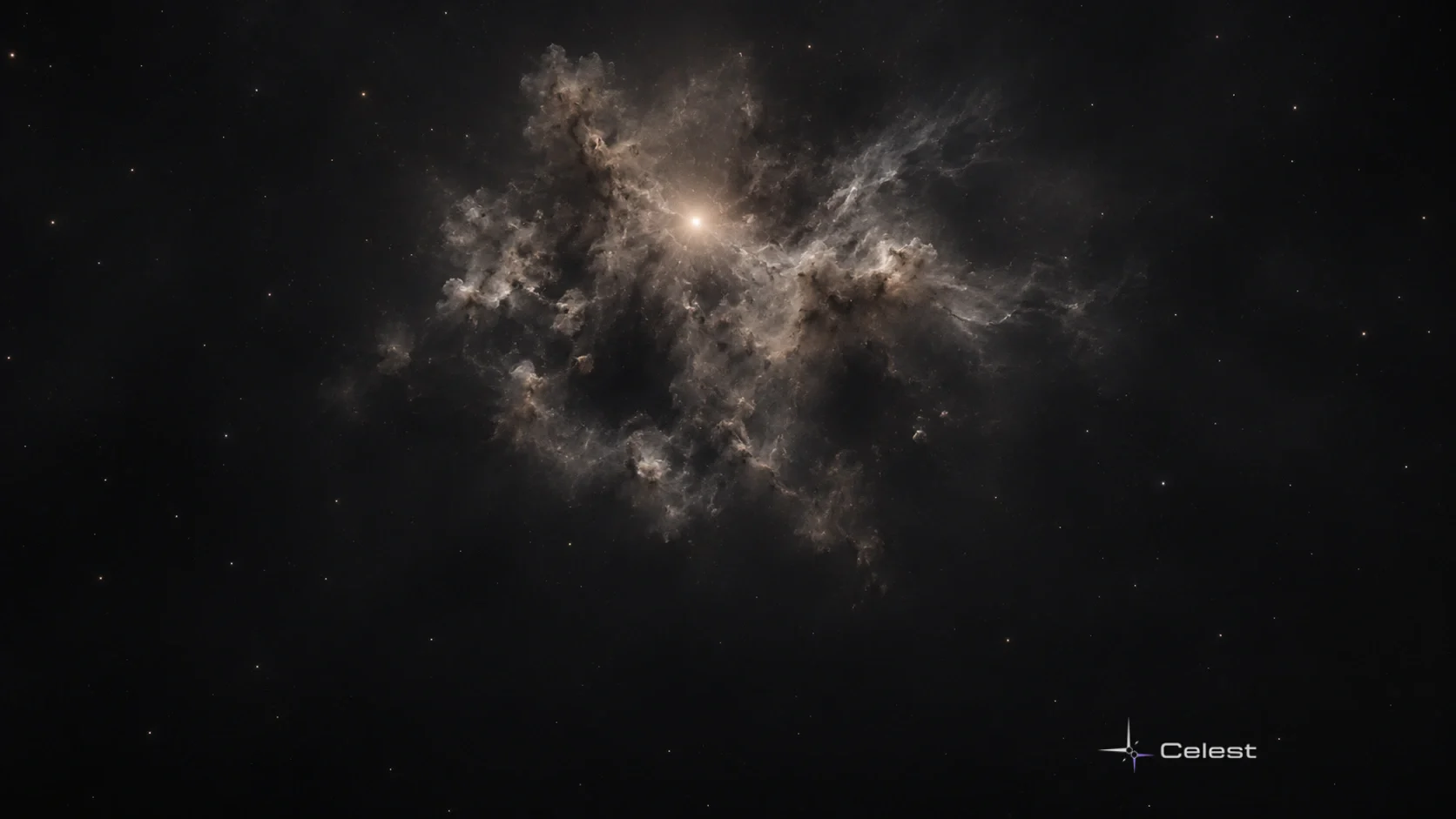
Sagitta, the Arrow, is a small northern constellation near the familiar stars of the Summer Triangle. Its region contains both M71, a cluster you can look for with binoculars, and WR 124, a massive star surrounded by material it has thrown into space.
Use the constellation guide to place Sagitta beside Aquila, Vulpecula, Hercules and Delphinus. Learning this compact region gives you two different ways into astronomy: recognising a faint stellar glow yourself and exploring what infrared instruments reveal around an evolving star.
Sagitta at a Glance
- Traditional figure: the Arrow.
- Evening season: northern summer or southern winter.
- Neighbours: Vulpecula, Hercules, Aquila and Delphinus.
- Cluster: M71, roughly 13,000 light-years away.
- Massive-star example: WR 124 and the nebula M1-67.
- Main scientific question: how much expelled dust survives?
How Can You Find Sagitta’s Region?
Start with the larger Summer Triangle. Vega, Deneb and Altair mark its corners, while Sagitta is one of the smaller patterns in the surrounding region. You can work towards it from Aquila rather than searching an unfamiliar patch without context.
Open the live sky map for your location and time. Northern summer or southern winter is the seasonal evening reference given by the IAU chart. The whole constellation can also be seen from equatorial and temperate southern locations.
Follow a few plotted stars at a time.
Chart lines suggest a figure; boundaries assign directions to a named region. Neither implies that all its stars occupy the same part of space. Larger dots generally indicate stars that look brighter from Earth.
What Can You See in M71?
A faint patch through binoculars. M71 is a relatively sparse globular cluster, a group of stars held together by gravity. NASA places it about 13,000 light-years away and roughly 27 light-years across.
Its apparent magnitude is 6.1: a measure of brightness as seen from Earth. The catalogue recommends September for observing it. Try recognising the unresolved glow first; photographs that separate individual stars provide a different kind of view.
M71’s sparse appearance once led to disagreement about its classification. By the 1970s, astronomers favoured a globular-cluster interpretation. Appearance alone did not immediately settle what kind of stellar group it was.
What Is WR 124?
A very hot, massive Wolf–Rayet star shedding its outer material. Its expelled gas and dust form the surrounding nebula M1-67. A nebula is an extended cloud of gas or dust in space.
The 2023 Webb account describes WR 124 as about thirty times the Sun’s mass and places it around 15,000 light-years away.
Sagitta and Sagittarius are different constellations; WR 124 belongs to Sagitta.
How Can Expelled Gas Become Dust?
As it moves away from the star, the gas cools and dust forms. This links the bright central source with the clumpy surrounding material: the cloud carries matter from the star’s earlier outer layers.
Dust here means small solid grains, not simply a dark region in a photograph. Their presence affects how the cloud absorbs and emits light. Studying the glow helps researchers investigate material that can later participate in other stages of cosmic evolution.
The star is changing its surroundings as well as itself.
Why Observe It in Infrared Light?
Infrared wavelengths extend beyond the red end of the light our eyes see. They are particularly useful for studying cooler dust, which emits at those wavelengths.
Webb observed WR 124 in June 2022. Its near-infrared camera records the bright star alongside fainter surrounding detail, while its mid-infrared instrument reveals the knotty structure of the expelled gas and dust.
The released composite combines information from different infrared bands. Its visible colours are assigned to that information for display. They help distinguish structure without representing the appearance your eye would see beside an ordinary telescope.
What Can a Dust Model Tell Us?
Which combinations of gas and grains can explain the observations. A 2020 study combined archived WISE, Spitzer and Herschel measurements with other infrared and optical data.
The researchers modelled both the gas distribution and the range of grain sizes. Their fit included a population of larger grains as well as smaller ones, supporting an eruptive interpretation for the nebula’s origin.
Those are results of a physical model fitted to light, rather than a direct photograph of individual grains. The distinction matters when using the model to investigate how the material formed and what may happen to it.
Will the Dust Become Part of Future Planets?
That is a possible contribution, with survival still an important question. The Webb account specifically asks whether grains around stars such as WR 124 are abundant and robust enough to survive a later supernova, a powerful stellar explosion, and add substantially to the wider supply of cosmic dust.
Producing material and preserving it are separate steps.
Dust can help assemble planets, shelter forming stars and provide surfaces on which molecules gather. Learning what survives therefore connects a short-lived stellar phase with the resources available to later generations.
Check the observing conditions when choosing an evening for Sagitta. M71 offers a practical binocular subject, while WR 124 offers a broader perspective: a star’s discarded material may matter long after the phase that released it.
Leave a comment
Comments appear after moderation.